

How to Separate Personal and Business Finances Effectively
Staying on top of finances can feel overwhelming for Kansas City home service business owners, especially when personal and business expenses start to mix together. Proper separation of business and personal finances is not just smart, it is a protective move that supports tax filing and shields your assets. This guide shares clear steps and practical tips for setting up a business bank account, establishing strong payment policies, and using tools like QuickBooks Online so you can achieve accurate records and true financial peace of mind.
Table of Contents
- Step 1: Set Up a Dedicated Business Bank Account
- Step 2: Establish Clear Payment and Expense Policies
- Step 3: Integrate QuickBooks Online for Accurate Tracking
- Step 4: Maintain Consistent Transaction Separation
- Step 5: Regularly Review and Reconcile Accounts
Quick Summary
| Key Takeaway | Explanation |
|---|---|
| 1. Set Up a Business Bank Account | Establishing a dedicated business bank account helps maintain financial boundaries and simplifies accounting. |
| 2. Create Payment and Expense Policies | Comprehensive policies guide spending and enhance transparency, supporting financial discipline in your business. |
| 3. Integrate QuickBooks Online | Using QuickBooks Online automates financial tracking and provides real-time insights into your business performance. |
| 4. Maintain Transaction Separation | Keeping personal and business transactions distinct protects personal assets and avoids legal issues. |
| 5. Regularly Review and Reconcile Accounts | Monthly account reconciliations help ensure accuracy and catch discrepancies early to maintain financial health. |
Step 1: Set Up a Dedicated Business Bank Account
Setting up a dedicated business bank account is a critical first step in maintaining clear financial boundaries between your personal and professional finances. This process helps protect your personal assets and simplifies accounting, tax reporting, and overall financial management.
To establish a business bank account, you’ll need to follow these strategic steps:
- Gather required documentation, including your Employer Identification Number (EIN) and business registration papers
- Research banks offering accounts specifically designed for small businesses
- Compare account features like transaction fees, minimum balance requirements, and online banking capabilities
When selecting a bank, prioritize institutions that understand small business needs and offer business banking solutions tailored to entrepreneurs. Most banks will require you to provide:
- Your business’s legal formation documents
- Your EIN verification letter
- Personal identification for all business owners
- Initial deposit amount
Separating your business and personal finances isn’t just a good practice—it’s a fundamental strategy for protecting your financial future.
Many local banks and credit unions offer personalized services for small businesses, so don’t hesitate to schedule consultations and ask detailed questions about their business banking options.
Pro tip: Consider opening a business checking account with a bank that offers integrated accounting software connections to streamline your financial record-keeping.
Here’s a summary of common business bank account features and their business value:
| Feature | Why It Matters | Typical Benefit |
|---|---|---|
| Transaction Fees | Impacts cost management | Reduces unnecessary expenses |
| Minimum Balance | Prevents account charges | Helps maintain liquidity |
| Online Banking | Streamlines access | Enables efficient monitoring |
| Accounting Integration | Simplifies bookkeeping | Speeds up tax preparation |
Step 2: Establish Clear Payment and Expense Policies
Creating comprehensive payment and expense policies is essential for maintaining financial discipline and transparency in your small business. These guidelines will help you control spending, ensure proper documentation, and protect your company’s financial integrity.
Your payment and expense policies should address several critical areas to effectively manage financial controls. Start by defining key elements such as:
- Allowable expenses for different business activities
- Procedures for expense submission and approval
- Documentation requirements for reimbursements
- Spending limits for different employee roles
- Guidelines for using company credit cards
When developing these policies, consider the specific needs of your home service business. Create a detailed expense reporting process that includes:
- Standard expense report templates
- Clear instructions for receipt documentation
- Specific timelines for expense submission
- Approval workflow for different expense levels
A well-designed expense policy is not just about control—it’s about creating a transparent financial culture that protects both your business and your employees.
Remember that your policies should be flexible enough to accommodate your business’s unique needs while providing clear, enforceable guidelines. Regularly review and update these policies to ensure they remain relevant and effective.
Pro tip: Consider creating a simple, one-page quick reference guide for employees that summarizes the key points of your expense and payment policies.
Step 3: Integrate QuickBooks Online for Accurate Tracking
Transitioning your small business finances to QuickBooks Online can transform how you manage and track your financial data. By leveraging accounting technology effectively, you’ll gain powerful insights into your business’s financial health and streamline your bookkeeping processes.
To successfully integrate QuickBooks Online, follow these strategic steps:
- Connect your business bank accounts for automatic transaction importing
- Set up expense tracking categories specific to your home service business
- Configure automatic transaction categorization rules
- Link your credit card accounts for comprehensive expense monitoring
- Enable receipt capture and digital document storage
When setting up your QuickBooks Online account, pay special attention to:
- Selecting the most appropriate subscription tier for your business size
- Importing historical financial data accurately
- Customizing income and expense categories
- Setting up user permissions for team members
QuickBooks Online isn’t just a bookkeeping tool—it’s your financial command center that provides real-time insights into your business performance.
Consider scheduling a training session with a QuickBooks expert to maximize the platform’s potential and ensure you’re utilizing all relevant features for your specific business needs.

Pro tip: Schedule a monthly review of your QuickBooks Online dashboard to catch any miscategorized transactions and maintain pristine financial records.
This table compares QuickBooks Online with manual bookkeeping for small businesses:
| Method | Accuracy | Reporting Capabilities | Ease of Use |
|---|---|---|---|
| QuickBooks Online | Automated, high accuracy | Real-time financial insights | User-friendly dashboard |
| Manual Bookkeeping | Prone to human error | Limited, slower data analysis | Time-consuming paperwork |
Step 4: Maintain Consistent Transaction Separation
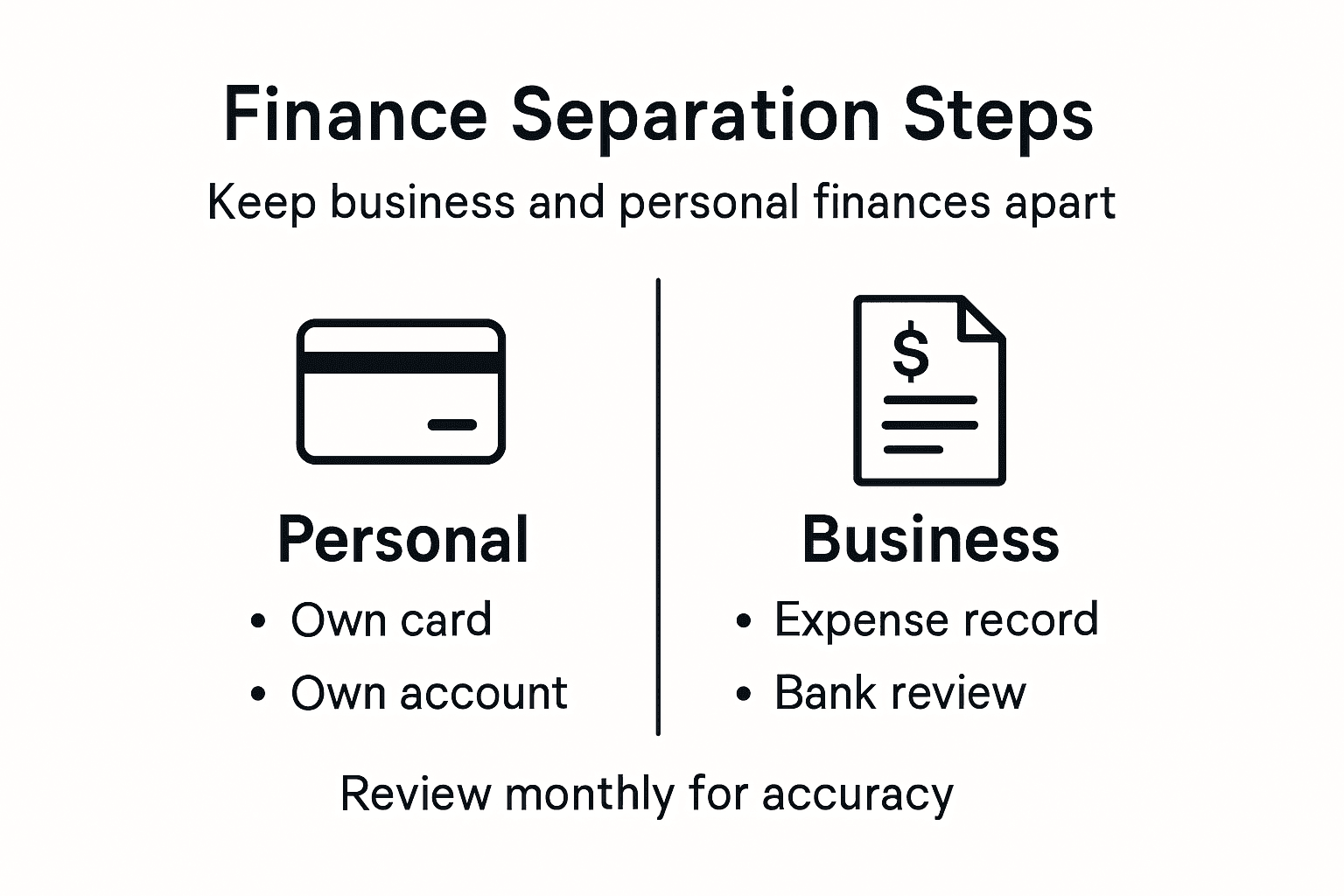
Keeping a clear boundary between your personal and business transactions is fundamental to financial management for small business owners. Protecting your financial assets requires disciplined and intentional practices that prevent fund co-mingling and potential legal complications.
To maintain consistent transaction separation, implement these strategic approaches:
- Use separate bank accounts exclusively for business transactions
- Apply for business credit cards distinct from personal cards
- Establish clear spending guidelines for business expenses
- Create a systematic process for expense categorization
- Document all transactions with digital receipts and records
When managing your financial boundaries, focus on these critical actions:
- Never use personal accounts for business purchases
- Set up automatic transfers for business income and expenses
- Develop a consistent reconciliation process
- Train team members on financial separation protocols
Consistent transaction separation is not just a bookkeeping practice—it’s a fundamental strategy for protecting your business’s financial integrity.
Regularly audit your transactions to ensure you’re maintaining strict separation and catching any potential crossover expenses early in the process.
Pro tip: Create a monthly checklist to review and confirm that no personal expenses have inadvertently been charged to your business accounts.
Step 5: Regularly Review and Reconcile Accounts
Regular account reconciliation is critical for maintaining accurate financial records and catching potential discrepancies before they become significant issues. Ensuring financial accuracy requires a systematic approach to reviewing and matching your business transactions across all financial accounts.
To effectively reconcile your accounts, implement these key strategies:
- Schedule monthly reconciliation sessions
- Compare bank statements with internal financial records
- Investigate and document any discrepancies
- Utilize accounting software for streamlined tracking
- Maintain digital copies of all financial documentation
When conducting your account reconciliation, follow these detailed steps:
- Download recent bank and credit card statements
- Cross-reference transactions with your accounting records
- Mark and investigate any unmatched transactions
- Adjust your accounting records if necessary
- Document the entire reconciliation process
Consistent account reconciliation is not just a bookkeeping task—it’s your financial early warning system.
Consider setting aside dedicated time each month specifically for reviewing and reconciling your business finances, treating it as a critical business operations task.
Pro tip: Create a digital folder for each month’s reconciliation documents to maintain a clear, organized audit trail for future reference and potential tax purposes.
Take Control of Your Business Finances with Expert Bookkeeping Support
Managing the separation of your personal and business finances can feel overwhelming but it is critical to protect your financial health and simplify your accounting processes. If you struggle with consistent transaction separation, accurate bank reconciliations, or leveraging QuickBooks Online effectively, you are not alone. These challenges often lead to stress, missed deductions, and blurred financial boundaries.
Kenworthy Bookkeeping specializes in making this process effortless for small business owners. Our expert team helps you maintain clear financial separation through precise bank reconciliations and tailored categorization that aligns perfectly with the payment and expense policies described in your business. Using QuickBooks Online to its fullest, we deliver real-time insights and organized records so you can focus on growing your business without worries.

Ready to streamline your finances and reinforce the financial protection your business deserves? Connect with Kenworthy Bookkeeping today for a personalized consultation at https://kenworthybookkeeping.com/consult and regain control with trusted bookkeeping services designed for Kansas City area businesses. Your financial clarity starts now.
Frequently Asked Questions
How can I set up a dedicated business bank account?
To set up a dedicated business bank account, gather necessary documentation such as your Employer Identification Number (EIN) and business registration papers. Research banks that offer accounts suited for small businesses, and compare their features like transaction fees and online banking options before making a choice.
What are effective ways to establish clear payment and expense policies?
You can establish effective payment and expense policies by defining allowable expenses and creating a structured process for expense submission and approval. Document everything clearly and ensure employees understand the guidelines, perhaps by providing a one-page summary of essential points to follow.
How do I integrate QuickBooks Online for tracking my business finances?
To integrate QuickBooks Online, start by connecting your business bank accounts for automatic transaction importing. Set up expense tracking categories relevant to your business and categorize transactions automatically to ensure accurate tracking and streamlined bookkeeping.
What steps can I take to maintain consistent transaction separation?
To maintain consistent transaction separation, use separate bank accounts and credit cards exclusively for business transactions. Establish guidelines for business spending and regularly audit your accounts to ensure no personal expenses are mistakenly charged to your business accounts.
Why is regular account reconciliation important?
Regular account reconciliation is crucial to catching financial discrepancies early, which helps maintain accurate records. Schedule monthly sessions to compare bank statements with your internal records, investigating any mismatches to prevent larger issues down the road.