

Role of Bookkeeping for Small Business Success
Nearly half of American small businesses admit their bookkeeping is outdated or incomplete at least once a year. For any owner, understanding the true story behind those numbers can make or break daily operations and long-term plans. Mastering bookkeeping goes far beyond basic record-keeping, offering tools for better decision making, smoother tax seasons, and greater financial confidence.
Table of Contents
- Defining Bookkeeping For Small Businesses
- Key Tasks In Effective Bookkeeping
- Types Of Bookkeeping Methods Explained
- How Bookkeeping Supports Tax Preparation
- Common Small Business Bookkeeping Mistakes
- Advantages Of Professional Bookkeeping Services
Key Takeaways
| Point | Details |
|---|---|
| Importance of Bookkeeping | Bookkeeping is essential for small businesses as it provides a clear financial narrative and helps in strategic decision-making. |
| Key Bookkeeping Tasks | Essential tasks include recording transactions, maintaining organized records, and preparing financial statements for better cash flow management. |
| Choosing a Method | Selection between single-entry and double-entry bookkeeping depends on business size and complexity, affecting financial insights. |
| Professional Support | Hiring professional bookkeeping services enhances financial accuracy and provides strategic insights, allowing entrepreneurs to focus on business growth. |
Defining Bookkeeping for Small Businesses
Bookkeeping is the systematic process of recording and organizing financial transactions that form the financial backbone of any small business. It goes far beyond simple number tracking – it’s about creating a clear financial narrative that helps business owners understand their financial health and make strategic decisions.
At its core, bookkeeping involves meticulously documenting every financial movement within a business, including purchases, sales, receipts, and payments. Unlike accounting, which interprets and analyzes these records, bookkeeping focuses on accurate and comprehensive transaction documentation. This foundational work provides the raw financial data that accountants later transform into comprehensive financial statements and reports.
Key elements of effective bookkeeping for small businesses include:
- Tracking all income and expense transactions
- Maintaining organized financial records
- Categorizing expenses accurately
- Reconciling bank statements monthly
- Preparing documentation for tax purposes
Successful bookkeeping isn’t just about compliance – it’s a strategic tool that provides real-time insights into your business’s financial performance. By maintaining precise financial records, small business owners can identify spending patterns, forecast cash flow, and make informed decisions that drive growth and profitability.
Key Tasks in Effective Bookkeeping
Effective bookkeeping requires a systematic approach to maintaining accurate financial records and transactions. Small business owners must develop consistent practices that transform raw financial data into meaningful insights that drive strategic decision making and ensure long-term financial health.
The fundamental bookkeeping tasks encompass several critical components. These include designing comprehensive spreadsheets, managing the general ledger, handling accounts receivable and payable, and completing regular financial reporting. Each task plays a crucial role in providing a clear financial picture of the business’s performance and potential.
Key bookkeeping responsibilities break down into specific areas:
- Recording all financial transactions
- Tracking income and expenses
- Managing bank account reconciliations
- Preparing monthly and quarterly financial statements
- Organizing documentation for tax preparation
Accurate bookkeeping goes beyond simple record keeping. It serves as a strategic tool that helps small business owners understand cash flow patterns, identify potential financial challenges, and make informed decisions about investments, spending, and growth strategies. By dedicating time and attention to these essential tasks, entrepreneurs can transform their financial data into a roadmap for business success.
Types of Bookkeeping Methods Explained
Bookkeeping methods provide small businesses with flexible approaches to tracking financial transactions and maintaining accurate records. Small businesses typically utilize two primary entry systems: single-entry and double-entry bookkeeping, each offering unique advantages for different business needs and complexity levels.

The two fundamental approaches to recording financial transactions include cash and accrual accounting methods. Single-entry bookkeeping represents a straightforward approach where each financial transaction is recorded only once, typically suitable for very small businesses with minimal financial complexity. In contrast, double-entry bookkeeping provides a more comprehensive system where each transaction is recorded twice – as a credit in one account and a debit in another – ensuring mathematical accuracy and providing a more detailed financial snapshot.
Key bookkeeping method characteristics include:
- Single-entry method:
- Simple and easy to maintain
- Best for small, cash-based businesses
- Minimal record-keeping requirements
- Double-entry method:
- More complex and detailed
- Provides comprehensive financial tracking
- Allows for more sophisticated financial analysis
Choosing the right bookkeeping method depends on your business size, transaction volume, and financial reporting needs. Smaller businesses might start with single-entry systems, while growing enterprises often transition to double-entry methods to gain deeper financial insights and maintain more rigorous accounting practices. The goal is always to create a clear, accurate representation of your business’s financial health that supports strategic decision making.
How Bookkeeping Supports Tax Preparation
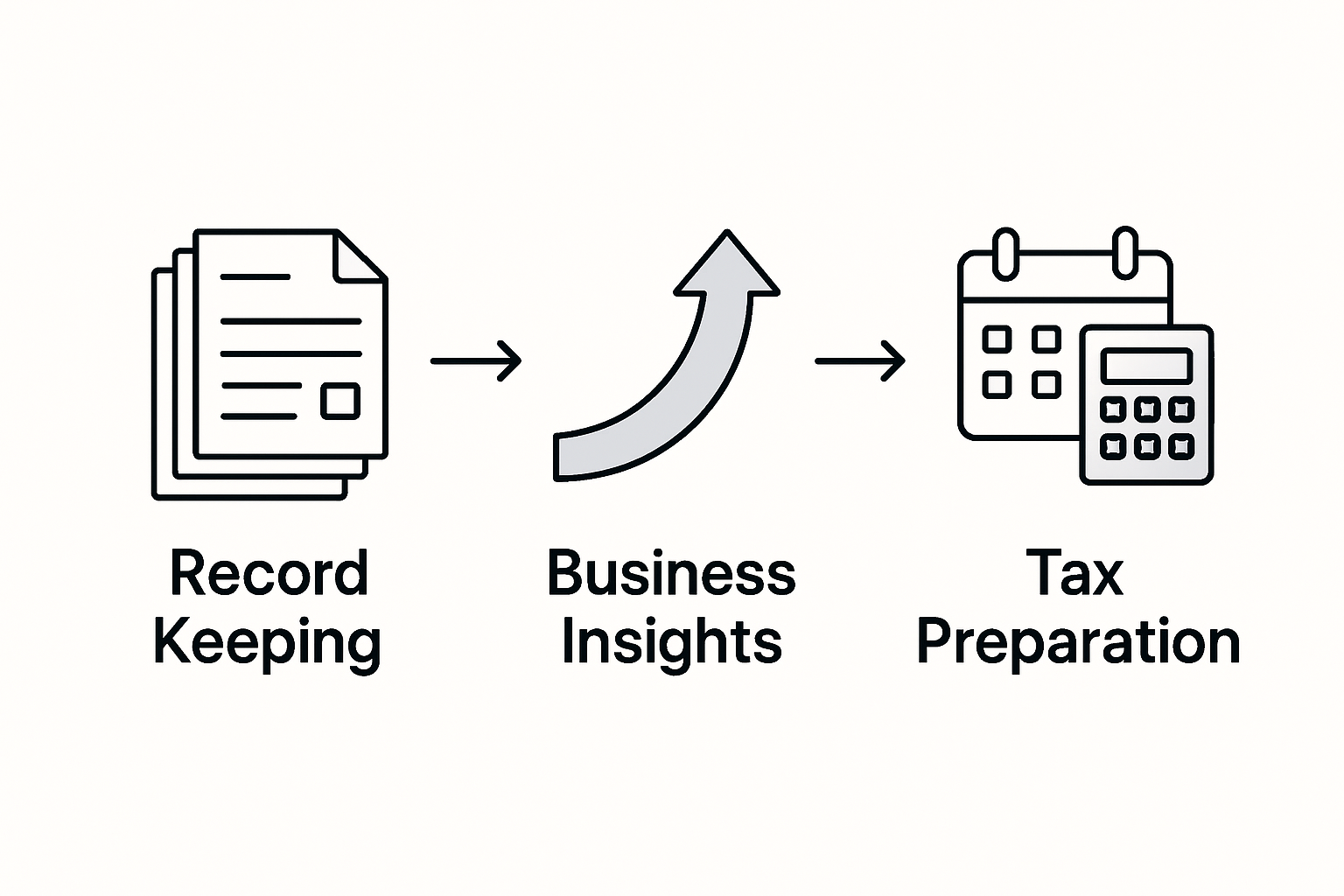
Proper bookkeeping is fundamental to smooth and stress-free tax preparation, serving as the critical foundation for meeting tax obligations efficiently and accurately. Small business owners who maintain meticulous financial records can transform what is often a complex and overwhelming process into a streamlined, manageable task.
Tax documentation requires comprehensive and organized financial tracking. Accurate bookkeeping ensures all financial data is systematically organized, making compliance with tax regulations significantly easier. By maintaining detailed records throughout the year, businesses can quickly compile the necessary documentation when tax season arrives, reducing the potential for errors and minimizing the risk of costly penalties.
Key ways bookkeeping supports tax preparation include:
- Tracking all income and expense transactions
- Maintaining organized receipts and financial documents
- Separating business and personal expenses
- Creating accurate profit and loss statements
- Documenting potential tax deductions
Consistent bookkeeping transforms tax preparation from a dreaded annual challenge into a smooth, predictable process. By treating financial record-keeping as an ongoing practice rather than a last-minute scramble, small business owners can gain greater financial clarity, reduce stress, and potentially minimize their tax liability through strategic documentation and expense tracking.
Common Small Business Bookkeeping Mistakes
Navigating financial record-keeping presents numerous challenges for small business owners, with critical mistakes often arising from poor planning and task management. Many entrepreneurs find themselves overwhelmed by the complexity of maintaining accurate financial records, leading to potentially costly errors that can impact their business’s financial health.
Bookkeeping errors can significantly undermine a business’s financial stability. Reducing these mistakes requires implementing systematic approaches, including periodic audits, consistent monitoring of key performance indicators, and regularly reviewing financial records. The most common pitfalls often stem from disorganization, lack of consistent processes, and inadequate attention to financial details.
Most frequent bookkeeping mistakes include:
- Mixing personal and business expenses
- Failing to track receipts and documentation
- Inconsistent record-keeping
- Neglecting to reconcile bank statements monthly
- Improper categorization of expenses
- Not setting up a reliable backup system for financial records
- Overlooking small transactions
Preventing bookkeeping mistakes requires a proactive approach. Small business owners should invest time in developing robust financial systems, consider professional bookkeeping support, and create a consistent routine for managing financial records. By treating bookkeeping as a critical business function rather than an afterthought, entrepreneurs can avoid costly errors and gain greater insight into their business’s financial performance.
Advantages of Professional Bookkeeping Services
Professional bookkeeping services transform financial management from a complex challenge into a strategic business advantage. Effective bookkeeping helps businesses organize income and expenses, creating a clear and manageable financial blueprint, enabling entrepreneurs to focus on growth and strategic decision-making.
Financial expertise brings precision and depth to a business’s financial tracking. Professional bookkeepers provide more than just number crunching – they offer comprehensive insights that help small businesses understand their financial landscape, identify potential cost-saving opportunities, and develop robust financial strategies. Their specialized skills ensure accurate record-keeping, minimize errors, and provide a level of financial clarity that most business owners cannot achieve on their own.
Key advantages of professional bookkeeping services include:
- Accurate and timely financial reporting
- Comprehensive tax preparation support
- Detailed expense tracking and categorization
- Cash flow management and forecasting
- Reduced risk of financial errors and penalties
- Strategic financial insights and recommendations
Investing in professional bookkeeping is not an expense, but a strategic investment in your business’s financial health. By leveraging expert services, small business owners can gain peace of mind, redirect their energy toward core business activities, and build a more financially stable and insightful enterprise. Stay informed about financial management through our blog to continue learning about effective financial strategies for your business.
Take Control of Your Small Business Finances with Expert Bookkeeping
Navigating the complexities of bookkeeping can feel overwhelming for many small business owners. From accurate transaction recording to bank reconciliations and tax preparation, each task demands time and attention. The article highlights how poor planning and inconsistent record keeping often lead to costly mistakes that stall growth and cause unnecessary stress. If you want to avoid mixing personal and business expenses or improper categorization and instead gain clarity over your finances, it is crucial to implement a strategic bookkeeping system.

Kenworthy Bookkeeping offers tailored services designed specifically to address these challenges for businesses in the Kansas City area. We use QuickBooks Online to simplify your financial management with precise categorization, thorough bank reconciliations, and clear profit and loss reports. By partnering with us, you can regain control of your business finances and reduce errors that could hurt your bottom line. Don’t wait until tax season feels overwhelming. Start building a solid financial foundation today by scheduling a consultation at Kenworthy Bookkeeping. Discover how expert support can turn your bookkeeping from a headache into a powerful business advantage.
Frequently Asked Questions
What is the importance of bookkeeping for small businesses?
Bookkeeping is crucial for small businesses as it provides a systematic way to record and organize financial transactions. This helps in understanding financial health, making informed decisions, and preparing for taxes.
What are the key tasks involved in effective bookkeeping?
Key tasks of effective bookkeeping include recording all financial transactions, tracking income and expenses, managing bank reconciliations, preparing monthly financial statements, and organizing documentation for tax preparation.
What bookkeeping methods should small businesses consider?
Small businesses can consider two main bookkeeping methods: single-entry and double-entry bookkeeping. Single-entry is simpler and suitable for small businesses, while double-entry offers more detailed insights and is useful for growing enterprises.
How can proper bookkeeping assist during tax preparation?
Proper bookkeeping streamlines tax preparation by keeping financial data organized and easily accessible. It helps businesses track income and expenses accurately, prepare profit and loss statements, and document potential tax deductions, reducing errors and making compliance easier.






12 Comments
Comments are closed.