

Why Bookkeeping Matters for Kansas City Businesses
Over 60 percent of American small business owners admit they find managing finances more stressful than running the business itself. Bookkeeping plays a critical role in bringing order and clarity to your Kansas City operations. With precise records, you not only meet tax requirements but also make confident decisions backed by real data. Discover how a smart bookkeeping strategy can simplify your numbers and keep your American business on solid financial ground.
Table of Contents
- Bookkeeping Defined For Small Businesses
- Essential Bookkeeping Tasks And Tools
- How Bookkeeping Supports Tax Compliance
- Impact On Financial Health And Decision-Making
- Common Bookkeeping Mistakes To Avoid
Key Takeaways
| Point | Details |
|---|---|
| Importance of Bookkeeping | Systematic bookkeeping is essential for small businesses to maintain accurate financial records, aiding in informed decision-making and ensuring financial health. |
| Essential Tasks | Key bookkeeping tasks include recording transactions, categorizing income and expenses, and generating financial reports to support business operations. |
| Tax Compliance | Maintaining organized financial records alleviates stress during tax preparation and ensures compliance with local and federal regulations. |
| Common Mistakes | Small businesses should avoid pitfalls such as mixing personal and business expenses and delaying transaction recordings to maintain financial integrity. |
Bookkeeping Defined for Small Businesses
Bookkeeping is the systematic process of recording, tracking, and organizing a business’s financial transactions to maintain accurate and transparent financial records. Bookkeeping systematically records financial activities that show how money moves through a company, providing crucial insights into its financial health and performance.
For small businesses in Kansas City, bookkeeping involves meticulously documenting every financial transaction, including sales, purchases, payments, and receipts. Effective bookkeeping ensures businesses can track income and expenses with precision, helping owners understand their financial standing at any given moment. This practice goes beyond simple record-keeping and serves as a strategic tool for making informed business decisions.
The key components of bookkeeping for small businesses typically include:
- Recording daily financial transactions
- Categorizing expenses and income
- Tracking accounts payable and receivable
- Maintaining accurate financial statements
- Preparing documentation for tax purposes
Pro Tip: Financial Tracking Strategy: Dedicate 30 minutes each week to update your financial records, preventing overwhelming backlog and ensuring real-time financial visibility for your Kansas City business.
Bookkeeping ultimately provides small businesses with a clear financial roadmap, enabling better budgeting, strategic planning, and sustainable growth.
Essential Bookkeeping Tasks and Tools
For small businesses in Kansas City, managing financial records requires a systematic approach to tracking critical financial information. Bookkeepers manage financial records including expenditures, receipts, and accounts payable, ensuring accurate insights into the company’s financial performance. These tasks form the backbone of financial management for growing businesses.

Essential bookkeeping tasks encompass several key areas that help maintain financial transparency and support strategic decision-making. Small business bookkeeping involves tracking expenses, managing invoices, and reconciling bank statements using modern accounting tools and software. These processes help business owners maintain a clear picture of their financial health.
Key bookkeeping tasks for small businesses include:
- Recording all financial transactions
- Categorizing expenses and income streams
- Managing accounts payable and receivable
- Reconciling bank and credit card statements
- Generating monthly financial reports
- Preparing documents for tax filing
Modern bookkeeping tools can significantly streamline these processes, with options like bookkeeping organization tips helping businesses improve their financial tracking efficiency.
Here’s how popular bookkeeping tools differ in their benefits for small businesses:
| Bookkeeping Tool Type | Automation Level | Ease of Use | Ideal For |
|---|---|---|---|
| Spreadsheet Software | Low | Moderate | Very small businesses |
| Cloud Accounting Apps | High | Very easy | Rapidly growing companies |
| Desktop Accounting | Medium | Moderate | Companies with complex needs |
| Outsourced Bookkeepers | Depends on provider | High | Owners seeking expertise |
Pro Tip: Digital Documentation Strategy: Implement a cloud-based accounting system that automatically captures and categorizes financial transactions, reducing manual data entry and minimizing human error.
By mastering these essential bookkeeping tasks, Kansas City small businesses can transform financial management from a tedious chore into a strategic advantage for growth and sustainability.
How Bookkeeping Supports Tax Compliance
For Kansas City small businesses, tax compliance is a critical aspect of financial management that requires meticulous attention to detail. Accurate bookkeeping ensures proper recording and organization of financial transactions, which directly supports meeting complex tax reporting requirements and avoiding potential legal complications.
Tax preparation becomes significantly less stressful when businesses maintain organized financial records throughout the year. Maintaining organized books simplifies tax calculations and reduces the risk of late payments and penalties, ensuring businesses remain compliant with local and federal tax regulations.
Key ways bookkeeping supports tax compliance include:
- Tracking all income and expense transactions
- Maintaining accurate receipts and financial documentation
- Separating personal and business expenses
- Documenting potential tax deductions
- Generating precise financial reports
- Preparing comprehensive tax documentation
Small businesses can further streamline their tax compliance by leveraging bookkeeping strategies for tax season, which help optimize financial reporting and minimize potential audit risks.
Pro Tip: Documentation Defense Strategy: Create a dedicated digital folder for tax-related documents and update it monthly, ensuring all financial records are organized, accessible, and audit-ready.
By prioritizing systematic bookkeeping, Kansas City businesses can transform tax preparation from a dreaded annual challenge into a smooth, predictable process that supports long-term financial health.
Impact on Financial Health and Decision-Making
Financial health represents the critical foundation for sustainable business success in Kansas City’s competitive marketplace. Bookkeeping provides comprehensive insights into a business’s financial performance through detailed balance sheets, income statements, and cash flow analysis, enabling business owners to make informed strategic decisions with confidence.
Effective bookkeeping empowers start-ups to make strategic decisions based on accurate financial data, particularly through critical capabilities like monitoring revenue streams, tracking expenses, and analyzing profitability. This systematic approach transforms raw financial information into actionable intelligence that drives business growth and operational efficiency.
Key financial insights generated through robust bookkeeping include:
- Identifying profitable revenue streams
- Detecting unnecessary expense patterns
- Understanding cash flow dynamics
- Measuring business performance metrics
- Forecasting potential financial challenges
- Evaluating investment opportunities
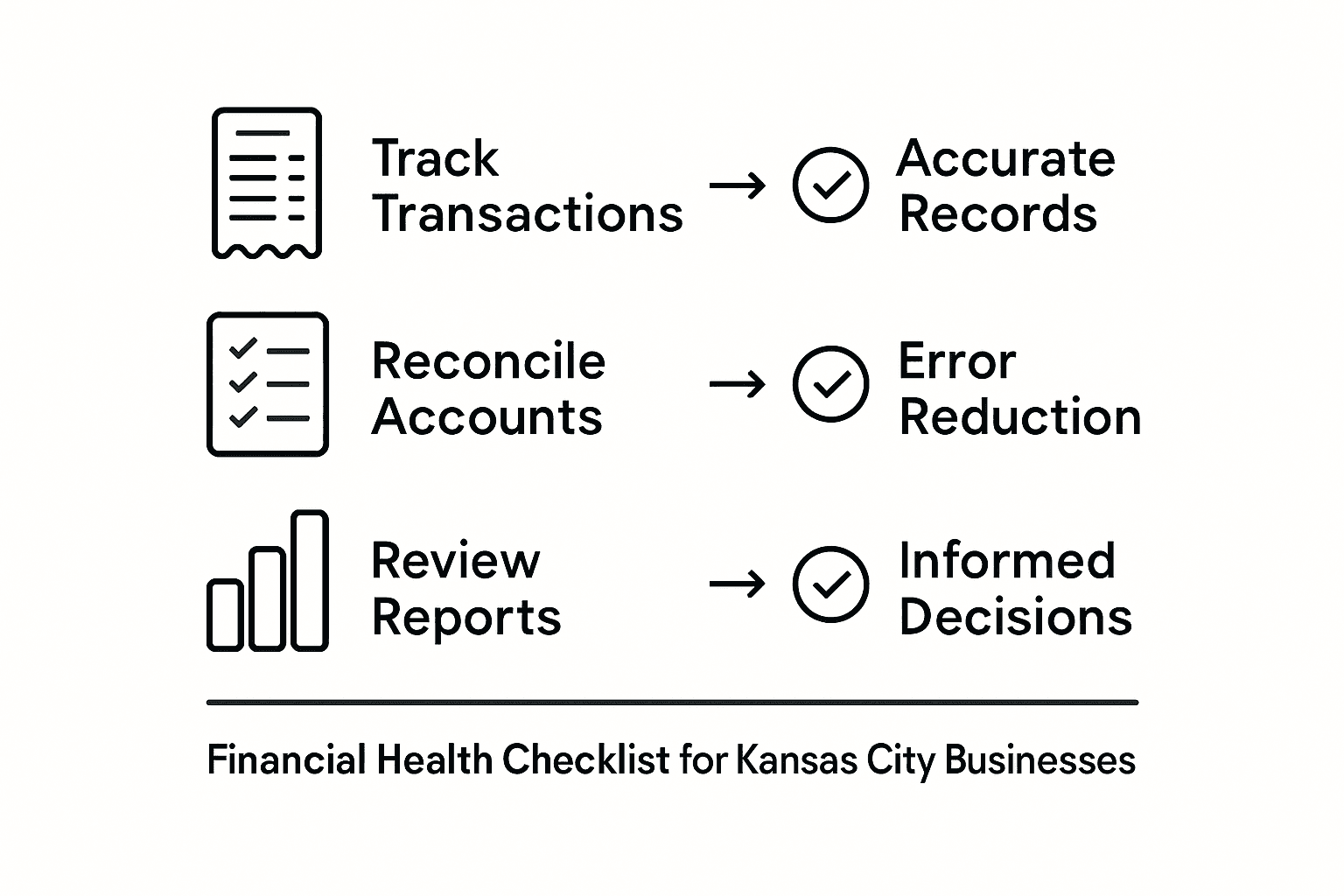
Small businesses can further enhance their financial strategy by developing a comprehensive financial health checklist, which provides a structured approach to financial management.
Pro Tip: Financial Insight Strategy: Schedule a monthly review of your key financial reports, treating them as a strategic planning session that reveals your business’s financial story and potential growth opportunities.
By treating bookkeeping as more than just number-tracking, Kansas City businesses can transform financial data into a powerful decision-making tool that drives sustainable growth and long-term success.
Common Bookkeeping Mistakes to Avoid
Kansas City small businesses frequently encounter critical bookkeeping challenges that can compromise their financial stability and growth potential. Common bookkeeping mistakes include neglecting expense tracking, failing to reconcile bank statements, and not maintaining accurate financial records, which can lead to significant financial mismanagement and potential regulatory complications.
Navigating the complex landscape of financial record-keeping requires strategic attention to detail and systematic processes. Understanding and avoiding these common pitfalls can help small businesses maintain financial integrity and make informed decisions. The role of a bookkeeper in Kansas City small businesses becomes crucial in preventing these critical errors.
The most prevalent bookkeeping mistakes small businesses should vigilantly avoid include:
- Mixing personal and business expenses
- Inconsistent or delayed transaction recording
- Neglecting to save receipts and financial documentation
- Improper categorization of income and expenses
- Failing to backup financial records
- Overlooking potential tax deductions
- Relying solely on manual tracking methods
Small businesses can mitigate these risks by understanding the critical role of reconciliation in bookkeeping, which helps identify and correct potential financial discrepancies.
This table highlights the potential impact of common bookkeeping mistakes and offers a corrective strategy:
| Mistake Example | Possible Consequence | Prevention Strategy |
|---|---|---|
| Mixing business and personal funds | Tax problems and confusion | Use separate business accounts |
| Delayed record entry | Missed expenses, inaccurate data | Set weekly bookkeeping reminders |
| Not saving receipts | Audit risk, lost deductions | Store digital copies of receipts |
Pro Tip: Error Prevention Strategy: Implement a weekly 30-minute financial review session to catch and correct bookkeeping mistakes early, ensuring ongoing accuracy and reducing long-term financial risks.
By proactively addressing these common bookkeeping challenges, Kansas City businesses can build a robust financial foundation that supports sustainable growth and operational excellence.
Take Control of Your Kansas City Business Finances Today
Bookkeeping challenges like keeping accurate transaction records, managing tax documentation, and avoiding costly mistakes can overwhelm many small business owners in Kansas City. These pain points create uncertainty and drain valuable time that could be better spent growing your business. If you want to stop juggling complicated financial tasks and start making confident decisions with clear, up-to-date reports, expert support is within reach.

Discover how Kenworthy Bookkeeping transforms the bookkeeping process into a seamless experience using QuickBooks Online for tasks like categorization, bank reconciliations, and profit and loss reporting. Don’t let bookkeeping mistakes or tax season stress slow you down. Partner with a trusted Kansas City service that prioritizes care and precision. Take your first step toward financial clarity and increased profitability by scheduling your personalized consultation now at Kenworthy Bookkeeping. Learn more about how a dedicated bookkeeper can help you avoid common pitfalls in bookkeeping mistakes to avoid and ensure your tax season preparation runs smoothly.
Frequently Asked Questions
What are the main tasks involved in bookkeeping for small businesses?
Key bookkeeping tasks for small businesses include recording all financial transactions, categorizing expenses and income streams, managing accounts payable and receivable, reconciling bank and credit card statements, generating monthly financial reports, and preparing documents for tax filing.
How can bookkeeping help with tax compliance for small businesses?
Accurate bookkeeping supports tax compliance by tracking all income and expenses, maintaining proper receipts and documentation, separating personal and business expenses, documenting potential tax deductions, and preparing comprehensive financial reports for tax filings.
What are common bookkeeping mistakes that small businesses should avoid?
Common bookkeeping mistakes include mixing personal and business expenses, inconsistent record-keeping, neglecting to save receipts, improper categorization of transactions, failing to backup records, and overlooking potential tax deductions.
What tools can small businesses use for effective bookkeeping?
Small businesses can use various tools such as spreadsheet software for basic tracking, cloud accounting apps for high automation and ease of use, desktop accounting software for medium complexity, or outsourced bookkeepers for expert financial management.
Recommended
- Role of a Bookkeeper: Impact on Kansas City Small Businesses – Kenworthy Bookkeeping Blog
- Role of Bookkeeping for Tax Season – Impact on Small Businesses – Kenworthy Bookkeeping Blog
- Small Business Accounting: Streamlining Your Kansas City Finances – Kenworthy Bookkeeping Blog
- Kenworthy Bookkeeping Blog






4 Comments
Comments are closed.