

Bookkeeping and Profitability: Strategies for Small Businesses
Over 60 percent of American small business owners admit they struggle to keep track of their finances. For Kansas City home service businesses with small teams, these bookkeeping challenges can eat away at profits and cause unnecessary stress. Mastering smart financial tracking turns chaos into clarity and gives your business the foundation it needs to grow. Discover how simple shifts in your daily bookkeeping approach can help you make stronger financial choices and boost bottom-line results.
Table of Contents
- What Bookkeeping Means for Small Businesses
- Types of Bookkeeping Systems and Tools
- Essential Bookkeeping Processes for Profits
- Bookkeeping’s Impact on Cash Flow and Growth
- Risks and Mistakes That Hurt Profitability
Key Takeaways
| Point | Details |
|---|---|
| Importance of Bookkeeping | Bookkeeping is essential for small businesses, offering insights into financial health and aiding in informed decision-making. |
| Types of Bookkeeping Systems | Single-entry and double-entry bookkeeping systems cater to different business sizes, with double-entry offering better accuracy and detail. |
| Key Processes for Profitability | Critical processes such as transaction categorization, bank reconciliation, and monthly reporting are vital for enhancing business profitability. |
| Risks of Poor Bookkeeping | Common errors like mixing personal and business finances can result in significant financial setbacks and hinder business credibility. |
What Bookkeeping Means for Small Businesses
Bookkeeping is the systematic process of recording, tracking, and organizing a business’s financial transactions. For small businesses in Kansas City, it’s more than just number crunching—it’s a critical strategy for understanding financial health and making informed decisions. Tracking every financial detail provides a comprehensive view of your business’s monetary performance.
At its core, bookkeeping involves meticulously documenting all income and expenses, which helps small business owners understand their cash flow, identify potential tax deductions, and create accurate financial reports. Unlike general accounting, bookkeeping focuses on the day-to-day recording of financial activities. This means tracking everything from client payments and supply purchases to operational expenses and equipment investments.
Small businesses benefit from bookkeeping through several key advantages. First, it provides transparency into financial performance, allowing owners to see exactly where money is coming from and going. Second, it simplifies tax preparation by maintaining organized financial records. Third, it helps in creating budgets, forecasting future revenue, and making strategic growth decisions. Historically, bookkeeping has been fundamental to business financial management, evolving from manual ledgers to sophisticated digital tracking systems.
Pro tip: Invest in a digital bookkeeping system that automatically categorizes transactions to save time and reduce manual data entry errors.
Types of Bookkeeping Systems and Tools
Small businesses have several options when it comes to bookkeeping systems and methodologies. The two primary approaches are single-entry and double-entry bookkeeping, each offering unique advantages for different business sizes and complexity levels. Single-entry bookkeeping represents the most straightforward method, where each financial transaction is recorded only once, typically in a simple spreadsheet or cash book.
Double-entry bookkeeping provides a more comprehensive financial tracking system. This method requires recording each transaction in two separate accounts, creating a balanced approach that helps detect errors and provides a more detailed financial picture. Most medium to large businesses prefer this system because it offers greater accuracy and helps in generating more complex financial statements. Modern bookkeeping increasingly relies on digital tools and software that can automate much of this process, reducing manual data entry and minimizing human error.
When selecting bookkeeping tools, Kansas City small business owners should consider factors like transaction volume, budget, and specific business needs. Computerized bookkeeping systems now offer advanced features such as real-time reporting, cloud storage, and integration with tax preparation software. Many small businesses find success with cloud-based solutions that allow remote access and automatic backup, ensuring financial data remains secure and easily accessible.
Here’s a quick comparison of single-entry and double-entry bookkeeping systems for small businesses:
| Feature | Single-Entry Bookkeeping | Double-Entry Bookkeeping |
|---|---|---|
| Record Method | One entry per transaction | Two entries per transaction |
| Suitable For | Sole proprietors, very small firms | Growing or complex businesses |
| Error Detection | Basic, limited tracking | Advanced error detection |
| Financial Reports | Simple profit and loss | Detailed balance sheets |
| Setup Complexity | Easy to adopt | More setup, extra detail |
Pro tip: Choose a bookkeeping tool that can grow with your business and offers easy integration with your existing financial systems and tax preparation software.
Essential Bookkeeping Processes for Profits
Understanding critical bookkeeping processes is fundamental to driving business profitability for small enterprises in Kansas City. Accurate financial tracking begins with establishing a robust system that captures every financial transaction systematically. This involves creating a general ledger, setting up dedicated business accounts, and developing a consistent method for recording income and expenses.
The core bookkeeping processes that directly impact profitability include several key steps. First, meticulously categorize all financial transactions to understand spending patterns and revenue streams. Second, conduct regular bank reconciliations to ensure every transaction is accurately recorded and identify any discrepancies early. Third, generate monthly financial reports that provide insights into business performance, highlighting areas of potential cost reduction or revenue enhancement.

Systematic financial documentation plays a critical role in maintaining business health. This means not just recording transactions, but organizing them in a way that provides clear visibility into cash flow, helps predict future financial needs, and supports strategic decision-making. Small businesses benefit from creating a standardized process for invoice management, expense tracking, and financial reporting that can help minimize tax liabilities and maximize potential deductions.
Below is a summary of essential bookkeeping processes and their impact on profitability:
| Process | How It Works | Business Impact |
|---|---|---|
| Categorizing Transactions | Assigns each transaction to a category | Informs expense control, boosts deductions |
| Bank Reconciliation | Matches records with bank statements | Finds errors, prevents cash leaks |
| Monthly Reporting | Summarizes financial data each month | Highlights growth, guides decisions |
Pro tip: Set up a dedicated business bank account and implement a consistent monthly review process to catch financial irregularities and maintain accurate records.
Bookkeeping’s Impact on Cash Flow and Growth
Monitoring cash flow is the critical lifeline for small businesses seeking sustainable growth and financial stability. Cash flow management goes beyond simple number tracking, serving as a strategic tool that provides real-time insights into a business’s financial health. By maintaining accurate and up-to-date financial records, Kansas City entrepreneurs can make informed decisions about spending, investment, and expansion opportunities.
Effective bookkeeping enables businesses to anticipate potential financial challenges before they become critical problems. This includes identifying seasonal revenue fluctuations, tracking recurring expenses, and understanding the timing of cash inflows and outflows. By creating detailed financial reports and conducting regular analysis, small business owners can develop proactive strategies to maintain liquidity, manage debt, and invest in growth initiatives.
Systematic financial documentation plays a transformative role in business growth. Proper bookkeeping provides a comprehensive view of financial performance, helping business owners identify profitable revenue streams, cut unnecessary expenses, and allocate resources more effectively. This strategic approach allows small businesses to make data-driven decisions that directly contribute to long-term financial sustainability and competitive advantage.
Pro tip: Create a monthly cash flow forecast that projects income and expenses for the next 12 months, allowing you to anticipate and prepare for potential financial challenges.
Risks and Mistakes That Hurt Profitability
Bookkeeping mistakes can silently erode a small business’s financial foundation, creating long-term challenges that extend far beyond simple accounting errors. Financial mismanagement represents a critical risk for Kansas City entrepreneurs, with seemingly minor oversights potentially leading to significant profitability setbacks. The most dangerous mistakes often emerge from a lack of systematic financial tracking and inadequate understanding of business financial dynamics.
Small businesses frequently encounter several recurring bookkeeping pitfalls that directly impact their bottom line. These include mixing personal and business finances, neglecting to record all transactions comprehensively, failing to reconcile bank statements regularly, and overlooking potential tax deductions. Such errors can create substantial financial blind spots, making it difficult to understand true business performance and identify areas for potential cost savings or revenue enhancement.
Common bookkeeping errors can trigger a cascade of financial complications. Inaccurate record-keeping can lead to unexpected tax penalties, cash flow disruptions, and missed opportunities for strategic investment. Moreover, these mistakes can damage a business’s credibility with potential investors, lenders, and financial partners who rely on accurate financial documentation to assess business health and potential.
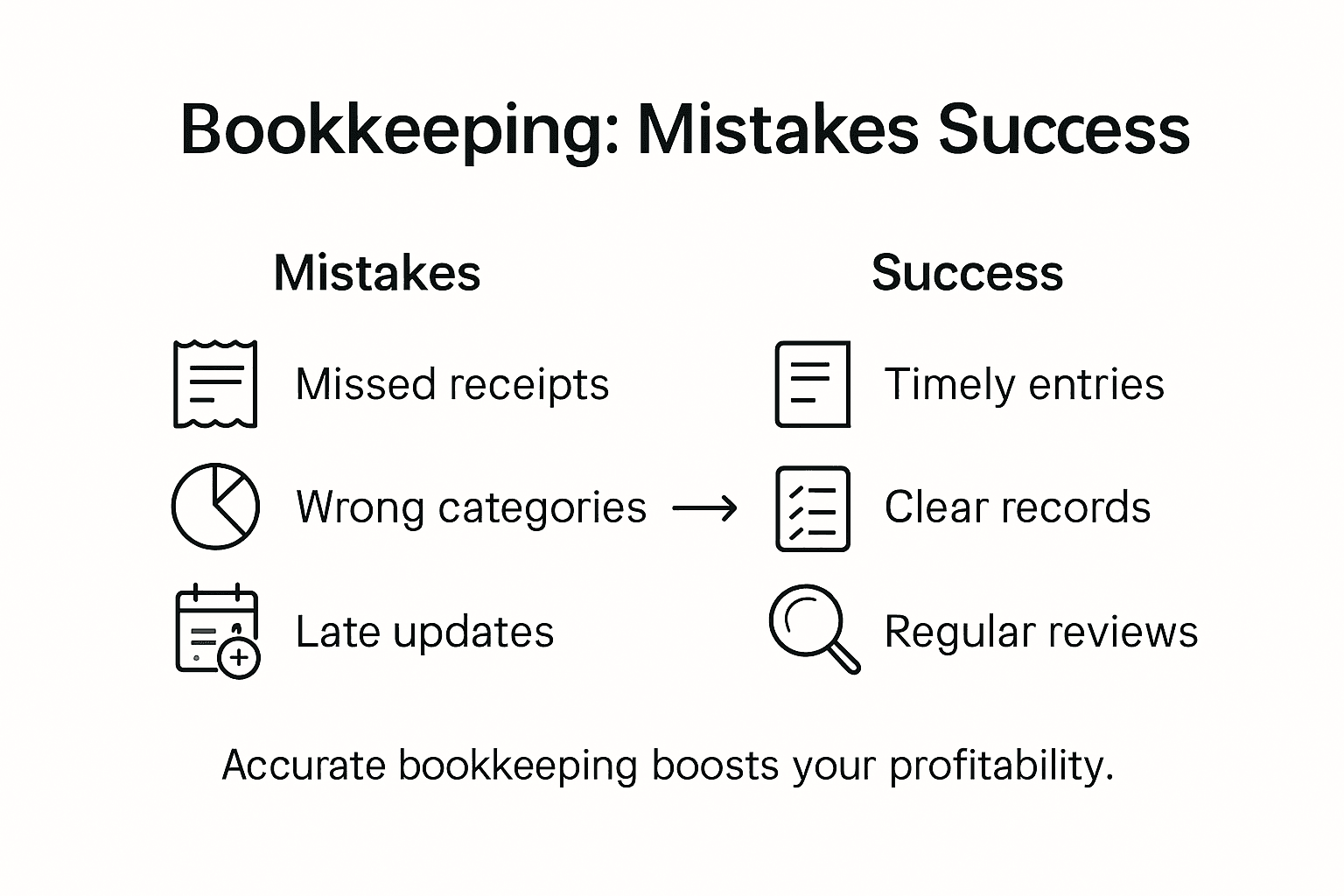
Pro tip: Implement a monthly financial review process that includes cross-checking bank statements, categorizing all expenses, and reconciling accounts to catch and correct potential errors early.
Take Control of Your Small Business Finances Today
The challenges of maintaining accurate bookkeeping and understanding your cash flow can hold back your small business growth. You face the risk of missed deductions, cash flow surprises, and overwhelming monthly reconciliations. The article highlighted the importance of meticulous categorization, bank reconciliation, and consistent financial reporting to boost profitability and avoid critical mistakes.
Kenworthy Bookkeeping offers tailored solutions designed to eliminate these pain points for Kansas City small businesses. With expertise in QuickBooks Online, our services include precise categorization of transactions, thorough bank reconciliations, and clear profit and loss reports to keep you confidently in control of your financial health. Let us help you reduce errors, keep thorough records, and prepare you for tax season. Learn how professional bookkeeping can transform your business outcomes by visiting our consultation page.

Stop risking your profitability by trying to manage complex bookkeeping alone. Gain peace of mind and valuable financial clarity now with Kenworthy Bookkeeping. Schedule your personalized consultation and start making smarter financial decisions today.
Frequently Asked Questions
What is bookkeeping and why is it important for small businesses?
Bookkeeping is the systematic process of recording and tracking a business’s financial transactions. It is important for small businesses because it provides transparency into financial performance, simplifies tax preparation, and aids in budgeting and strategic decision-making.
What are the different types of bookkeeping systems available for small businesses?
The two primary types of bookkeeping systems are single-entry and double-entry bookkeeping. Single-entry bookkeeping is simpler and records each transaction only once, making it suitable for very small businesses. Double-entry bookkeeping records each transaction in two accounts, providing a more accurate and detailed financial picture, typically preferred by growing businesses.
How can bookkeeping affect a business’s cash flow and growth?
Proper bookkeeping enables businesses to monitor cash flow effectively, identify financial challenges early, and make data-driven decisions. By maintaining accurate financial records, small business owners can allocate resources effectively, manage debt, and invest in growth opportunities.
What common mistakes do small businesses make in bookkeeping?
Common bookkeeping mistakes include failing to record all transactions, mixing personal and business finances, not reconciling bank statements regularly, and overlooking potential tax deductions. These mistakes can lead to cash flow disruptions, unexpected tax penalties, and a lack of understanding of true business performance.