

Bookkeeping for Startups: Boost Cash Flow and Compliance
Running a growing home service startup in Kansas City often means the financial paperwork piles up faster than the next job call. At this stage, accurate bookkeeping is more than just itemized receipts—it is the key to understanding income, expenses, and cash flow. For small teams, adopting systematic financial tracking lets you spot trends, avoid compliance headaches, and confidently prepare for tax season. This guide breaks down essential bookkeeping processes, digital tools, and real-world strategies to help you manage money smarter and set up your business for success.
Table of Contents
- Defining Bookkeeping For Startup Businesses
- Core Functions In Startup Bookkeeping
- Key Processes: Quickbooks And Online Tools
- Cash Flow, Tax Prep, And Reporting Impact
- Common Pitfalls And Compliance Risks
Key Takeaways
| Point | Details |
|---|---|
| Importance of Bookkeeping | Effective bookkeeping transforms raw financial data into strategic business intelligence essential for startups. |
| Core Functions | Consistent income tracking, expense categorization, and financial reporting are critical for informed decision-making in startups. |
| Digital Tools | Investing in digital bookkeeping solutions streamlines financial management and enhances real-time insights for proactive decision-making. |
| Compliance Risks | Poor bookkeeping can lead to compliance issues and financial penalties, emphasizing the need for meticulous record-keeping and regular reviews. |
Defining Bookkeeping for Startup Businesses
Bookkeeping represents the systematic financial recordkeeping process that transforms raw financial data into meaningful insights for startup businesses. Essential financial tracking involves meticulously documenting every financial transaction, creating a comprehensive financial narrative that guides strategic decision-making.
At its core, bookkeeping for startups involves several critical components that establish a robust financial foundation:
- Recording transactions with precision and consistency
- Categorizing income and expenses accurately
- Tracking cash flow in real-time
- Preparing financial statements for tax and management purposes
- Maintaining compliance with legal and tax regulations
Startup businesses operate in complex financial environments where every dollar matters. Proper bookkeeping transforms financial chaos into structured, actionable intelligence. Without systematic financial tracking, entrepreneurs risk making decisions based on incomplete or inaccurate information, potentially jeopardizing their business’s growth and sustainability.
Effective bookkeeping isn’t just about recording numbers – it’s about understanding the financial story behind those numbers.
The process goes beyond simple data entry. Modern bookkeeping integrates technological tools and strategic analysis to provide real-time financial insights. For home service startups in Kansas City, this means having instant visibility into profit margins, expense patterns, and potential financial risks.

Pro tip: Invest in digital bookkeeping solutions early to establish consistent financial tracking habits and minimize future reconciliation challenges.
Core Functions in Startup Bookkeeping
Startup bookkeeping involves much more than simple number tracking. Consistently updating financial records is crucial for maintaining accurate financial insights that drive strategic business decisions. These core functions form the backbone of financial management for emerging businesses.
The primary functions of startup bookkeeping encompass several critical areas:
- Income tracking for all revenue streams
- Expense categorization with precise documentation
- Cash flow management to monitor financial health
- Tax preparation and compliance documentation
- Financial reporting for internal and external stakeholders
- Payroll processing and employee compensation records
Each of these functions plays a vital role in establishing a solid financial foundation. Accurate income tracking helps startups understand their revenue potential, while meticulous expense categorization provides clarity on spending patterns and potential areas for cost optimization. Without comprehensive financial documentation, startups risk making uninformed decisions that could compromise their long-term sustainability.
Effective bookkeeping transforms raw financial data into strategic business intelligence.
For home service startups in Kansas City, bookkeeping goes beyond mere record-keeping. It becomes a strategic tool for understanding business performance, identifying growth opportunities, and maintaining financial transparency. Detailed financial records can be crucial when seeking investments, applying for loans, or planning future business expansion.
Pro tip: Implement a digital bookkeeping system from day one to create consistent, scalable financial tracking processes that will support your startup’s growth.
Key Processes: QuickBooks and Online Tools
Startup businesses need robust digital tools to streamline their financial management, and online bookkeeping solutions have become essential for modern entrepreneurs. These digital platforms transform complex financial tracking into accessible, real-time insights that empower business decision-making.
The core features of digital bookkeeping tools typically include:
- Automated transaction recording
- Real-time financial reporting
- Invoice and expense tracking
- Tax preparation support
- Cloud-based data storage
- Multi-user access permissions
Digital bookkeeping platforms like QuickBooks offer comprehensive solutions tailored for home service startups. They enable precise financial documentation, allowing business owners to monitor cash flow, categorize expenses, and generate professional financial statements with minimal manual intervention. The ability to integrate bank accounts, credit cards, and payment systems creates a seamless financial ecosystem.
Here’s a summary of how modern bookkeeping tools can benefit startup businesses:
| Benefit Area | Traditional Bookkeeping | Digital Bookkeeping Tools |
|---|---|---|
| Data Entry | Manual, time-consuming | Automated, efficient |
| Error Risk | Higher due to manual inputs | Lower with automation |
| Real-Time Insights | Delayed, periodic | Instant, up-to-date |
| Collaboration | Single-user, paper-based | Multi-user, cloud-based |
| Scalability | Limited by resources | Grows with the business |
Digital bookkeeping tools are not just software – they’re strategic business intelligence platforms.
For Kansas City home service startups, these tools provide more than basic number-crunching. They offer granular insights into business performance, helping entrepreneurs identify profitable service lines, track customer acquisition costs, and make data-driven strategic decisions. The real-time reporting capabilities allow for immediate financial visibility and proactive management.
Pro tip: Choose a bookkeeping tool with robust mobile functionality to manage your finances efficiently, even when you’re out in the field serving clients.
Cash Flow, Tax Prep, and Reporting Impact
Startup businesses must understand how strategic bookkeeping directly influences financial sustainability. Cash flow statements reveal critical business insights by tracking the movement of money through operating, investing, and financing activities, providing a comprehensive view of financial health.
The three primary areas of financial impact include:
- Cash flow management tracking income and expenses
- Tax preparation documentation
- Financial reporting for stakeholders
- Compliance monitoring
- Strategic decision-making support
For home service startups in Kansas City, detailed bookkeeping provides more than historical record-keeping. It becomes a predictive tool that helps entrepreneurs anticipate financial challenges, plan for seasonal fluctuations, and make informed investment decisions. Accurate financial documentation enables business owners to demonstrate fiscal responsibility to potential investors, loan officers, and tax authorities.
Effective bookkeeping transforms financial data from a rear-view mirror into a strategic navigation system.
Proper bookkeeping creates a robust framework for understanding business performance. By meticulously tracking every financial transaction, startups can identify profitable service lines, optimize pricing strategies, and minimize unnecessary expenses. The granular insights derived from comprehensive financial records empower entrepreneurs to make data-driven decisions that directly impact bottom-line growth.
Pro tip: Allocate at least one hour each week to review and categorize financial transactions to maintain accurate and up-to-date financial records.
Common Pitfalls and Compliance Risks
Startup businesses face significant challenges in maintaining accurate financial records, with compliance risks threatening business sustainability. These potential pitfalls can create substantial financial and legal complications that may derail even the most promising home service ventures in Kansas City.
The most critical compliance risks and bookkeeping pitfalls include:
- Incomplete transaction documentation
- Inconsistent record-keeping
- Missed tax filing deadlines
- Improper expense categorization
- Lack of financial reconciliation
- Poor cash flow tracking
Home service startups are particularly vulnerable to these risks due to the complex and dynamic nature of their business operations. Entrepreneurs often juggle multiple responsibilities, which can lead to financial record neglect. Systematic bookkeeping requires dedicated attention and a structured approach to prevent costly errors that could trigger audits or legal complications.
Compliance isn’t just about avoiding penalties – it’s about building a foundation of financial integrity.
The consequences of poor bookkeeping extend beyond immediate financial penalties. Inaccurate records can damage a startup’s credibility with potential investors, banks, and government agencies. Maintaining meticulous financial documentation demonstrates professionalism and commitment to fiscal responsibility, which can significantly impact long-term business success.
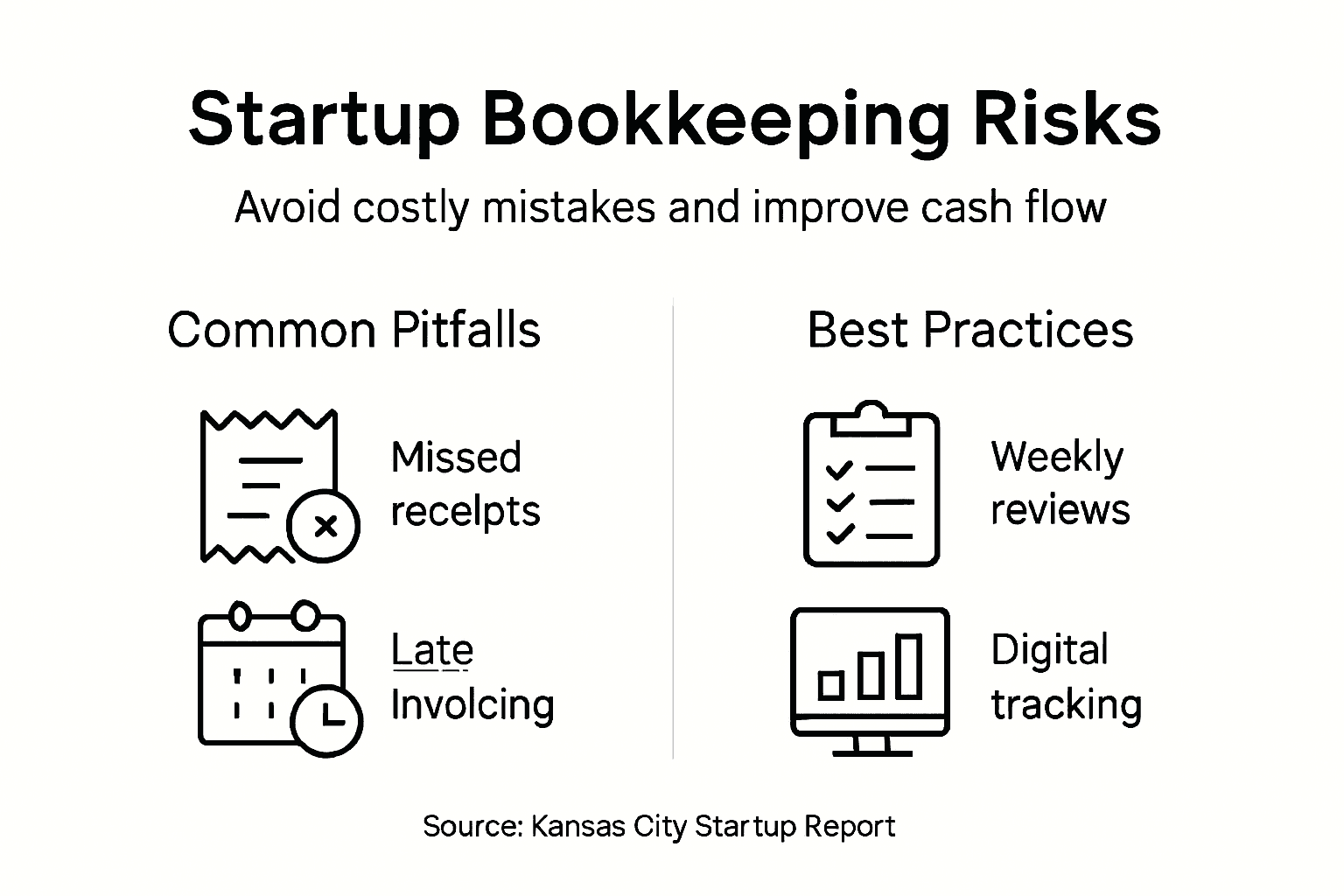
The following table highlights the consequences of poor versus excellent bookkeeping for startups:
| Bookkeeping Quality | Short-Term Impact | Long-Term Impact |
|---|---|---|
| Poor | Missed tax deadlines, confusion | Audits, loss of investor trust |
| Excellent | Accurate insights, compliance | Better funding, business growth |
Pro tip: Implement a monthly financial review process to catch and correct potential bookkeeping discrepancies before they become significant compliance issues.
Take Control of Your Startup’s Finances with Expert Bookkeeping Support
Starting and growing a home service business in Kansas City means you cannot afford to let poor bookkeeping jeopardize your cash flow or compliance. This article highlights critical challenges like inconsistent record-keeping, tax preparation hurdles, and missed insights into your real-time financial health. Kenworthy Bookkeeping understands these pain points and offers tailored QuickBooks Online services designed to bring clarity and control to startup financial management. Imagine having seamless transaction categorization, accurate bank reconciliations, and timely P&L reports that simplify tax season and boost your profitability.

If you want to turn your bookkeeping from a source of stress into a strategic asset, now is the time to act. Don’t let incomplete transaction tracking or compliance risks hold your business back. Explore how Kenworthy Bookkeeping’s expert services can make your financial record keeping effortless and reliable. Take the first step toward financial confidence and schedule your consultation today at https://kenworthybookkeeping.com/consult. Your startup’s future depends on the decisions you make right now.
Frequently Asked Questions
What is bookkeeping for startups?
Bookkeeping for startups is the systematic process of recording and managing financial transactions to provide insights for decision-making. It involves tracking income and expenses, managing cash flow, preparing financial statements, and ensuring compliance with legal and tax regulations.
Why is cash flow management important for startups?
Cash flow management is crucial for startups as it helps track the movement of money in and out of the business. Effective cash flow management ensures that a startup can meet its financial obligations, identify potential shortfalls, and make informed decisions to sustain growth.
How can digital bookkeeping tools benefit startups?
Digital bookkeeping tools streamline financial management by automating transaction recording, providing real-time insights, and enabling collaboration. These tools can reduce manual errors, enhance financial visibility, and support scalable operations as the business grows.
What are common pitfalls in startup bookkeeping?
Common pitfalls include incomplete transaction documentation, inconsistent record-keeping, missed tax deadlines, and improper expense categorization. These can lead to compliance risks, financial inaccuracies, and damage to a startup’s credibility with investors and tax authorities.