

How to Track Cash Flow for Small Businesses Easily
Most American small businesses in Kansas City close within five years, and cash flow issues are often to blame. For owners of home service companies with fewer than 20 employees, taking control of your cash flow means more than tracking numbers—it brings peace of mind and keeps your business running smoothly. By setting up reliable systems to monitor every dollar, you can spot trouble early and make smarter decisions to protect your bottom line.
Table of Contents
- Step 1: Set Up Your Cash Flow Tracking System
- Step 2: Categorize Income and Expenses Accurately
- Step 3: Regularly Record Cash Transactions
- Step 4: Monitor Cash Inflows and Outflows Consistently
- Step 5: Review and Adjust Cash Flow Practices
Quick Summary
| Key Point | Explanation |
|---|---|
| 1. Separate Business and Personal Accounts | Clearly distinguish between personal and business finances to prevent confusion and improve tracking accuracy. |
| 2. Categorize Financial Transactions | Create distinct categories for income and expenses to facilitate accurate financial analysis and tax reporting. |
| 3. Record Transactions Regularly | Maintain a routine for documenting cash transactions to ensure accuracy and provide real-time financial insights. |
| 4. Monitor Cash Flow Consistently | Regularly track cash inflows and outflows to anticipate financial issues and improve decision-making. |
| 5. Review Practices Periodically | Conduct quarterly evaluations of cash flow statements to identify improvements and adapt financial strategies effectively. |
Step 1: Set Up Your Cash Flow Tracking System
Tracking your small business cash flow requires a systematic approach to understand and predict your financial movements. Creating a robust tracking system helps you make informed decisions and maintain financial stability.
Start by separating your personal and business bank accounts immediately. This fundamental step prevents financial confusion and provides clear insights into your business transactions. Establish bookkeeping practices that systematically record every financial transaction. Choose an accounting method that fits your business type whether cash or accrual based. Consider using accounting software or hiring a professional bookkeeper who can help you maintain accurate records.
Here’s how common accounting methods differ for small businesses:
| Accounting Method | Main Feature | Best For | Potential Drawback |
|---|---|---|---|
| Cash Basis | Records income when received | Simple businesses | May distort long-term view |
| Accrual Basis | Records income when earned | Growing or complex businesses | More complex reporting |
| Hybrid Approach | Mixes both methods | Unique or niche businesses | Can cause inconsistency |
Regular bank statement reconciliation is crucial for tracking cash flow effectively. Compare your recorded transactions against bank statements monthly to catch any discrepancies early. This practice helps you identify potential issues with customer payments or unexpected expenses. Cash flow forecasting allows you to predict future cash levels and spot potential shortfalls before they become critical problems.
Pro Tip: Create a dedicated spreadsheet or use cloud based accounting software to track your income and expenses in real time, ensuring you always have an updated snapshot of your business financial health.
Step 2: Categorize Income and Expenses Accurately
Accurately categorizing your business income and expenses is crucial for understanding your financial health and maximizing tax benefits. This process transforms your financial records from a jumble of numbers into a clear, actionable roadmap for business success.
Start by creating distinct categories for your business transactions. Income and expense accounts must be recorded separately to measure your profit or loss accurately. Common income categories include product sales, service revenue, and consulting fees. Expense categories might encompass operational costs like rent, utilities, employee wages, marketing expenses, and equipment purchases. The IRS requires detailed record keeping, so be meticulous about categorizing business expenses such as home office use, transportation, meals, and entertainment to ensure proper tax reporting.

Consider using accounting software or spreadsheets that allow you to tag and track each transaction systematically. Regularly review and reconcile these categories to ensure accuracy and identify potential areas for cost reduction or revenue improvement. By maintaining clear, consistent categorization, you create a powerful tool for financial analysis and strategic decision making.
Pro Tip: Create a standardized chart of accounts with clear, specific subcategories to make tracking and reporting more efficient and reduce confusion during tax season.
Step 3: Regularly Record Cash Transactions
Recording cash transactions consistently is fundamental to maintaining accurate financial records and understanding your business’s financial health. This process helps you track every dollar that moves through your business and provides critical insights into your financial performance.
Journal entries for cash transactions serve as the backbone of your accounting system. Each transaction must be documented with precise debits and credits, creating a chronological record of your business dealings. Pay special attention to cash transaction reporting rules, particularly for transactions over $10,000, which require specific documentation. Use reliable tools like computer terminals, cash registers, or pre-numbered receipts to ensure consistent and accurate recording.
Establish a routine for recording transactions daily or weekly, depending on your business volume. Allocate specific time slots for entering financial data, reconciling bank statements, and reviewing transaction records. This disciplined approach prevents backlog, reduces errors, and provides real time visibility into your business finances. Consistency is key to maintaining clean, actionable financial records that support strategic decision making.
Pro Tip: Set up automatic bank feeds in your accounting software to minimize manual data entry and reduce the likelihood of human error in transaction recording.
Step 4: Monitor Cash Inflows and Outflows Consistently
Successfully tracking your business cash flow requires a systematic approach to understanding every financial movement through your company. By consistently monitoring inflows and outflows, you gain crucial insights that help prevent financial surprises and support strategic decision making.
Cash flow forecasting allows you to predict your business liquidity and anticipate potential financial challenges before they arise. Break down your cash movements into three primary categories: operating activities (daily business transactions), investing activities (equipment purchases or investments), and financing activities (loans or investor funds). According to international accounting standards, reporting cash flows requires meticulous tracking of gross cash receipts and payments. Use spreadsheets or accounting software to create a comprehensive view of money entering and leaving your business.
Establish a regular review schedule to analyze your cash flow patterns. Weekly or monthly reviews can help you identify trends, seasonal fluctuations, and potential areas for improving financial efficiency. Pay close attention to timing disparities between cash inflows and outflows, ensuring you maintain sufficient working capital to cover operational expenses and unexpected costs.
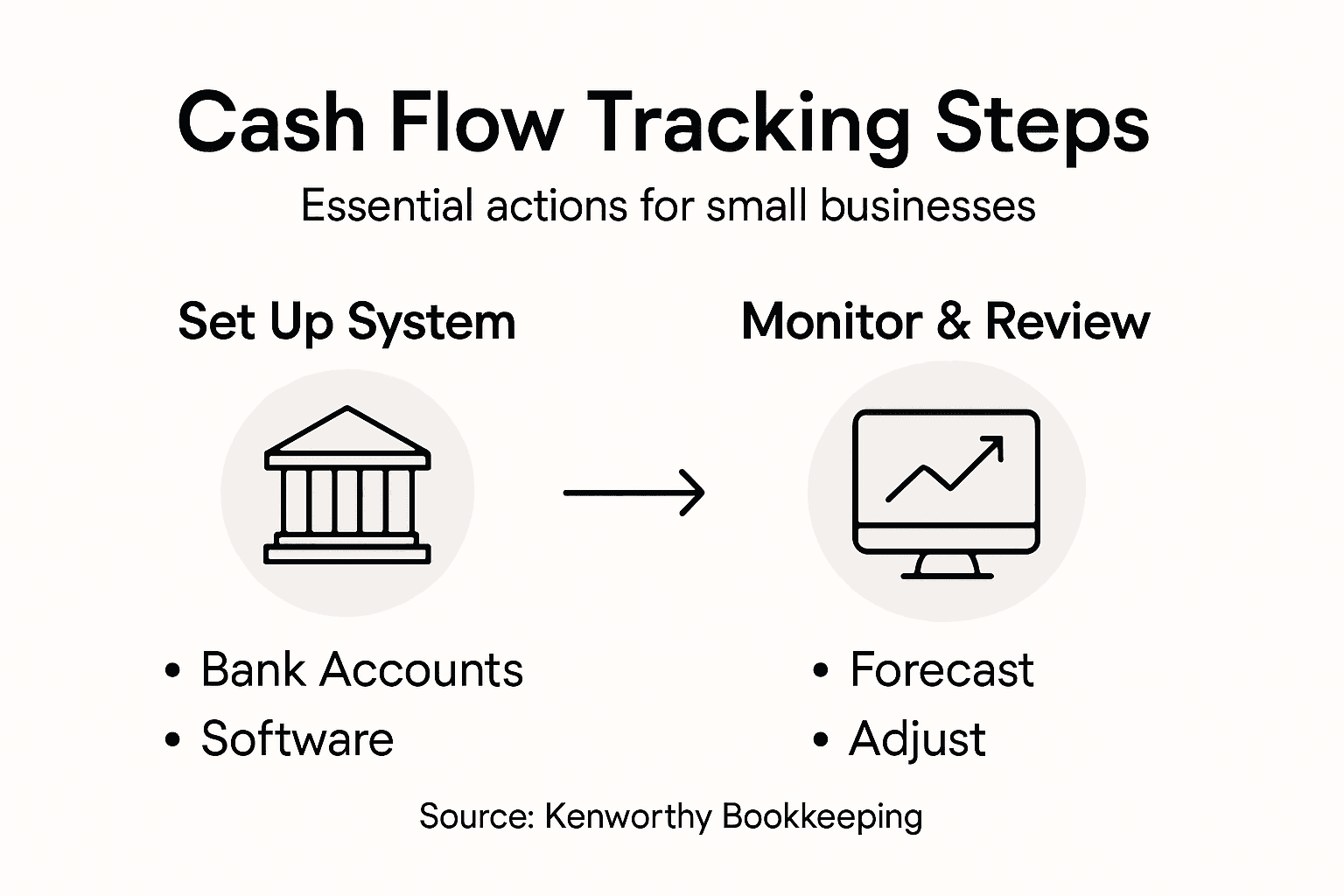
A summary of key cash flow activities and their business impacts:
| Cash Flow Activity | Examples | Business Impact |
|---|---|---|
| Operating Activities | Customer payments, payroll | Affects day-to-day cash position |
| Investing Activities | Equipment, asset purchases | Influences long-term growth plans |
| Financing Activities | Loans, investor funding | Impacts capital structure |
Pro Tip: Create a dedicated cash flow dashboard that provides real time visual snapshots of your income and expenses, allowing you to make quick financial decisions at a glance.
Step 5: Review and Adjust Cash Flow Practices
Reviewing and refining your cash flow practices is an essential ongoing process that helps small businesses maintain financial resilience and strategic adaptability. By consistently evaluating your financial strategies, you can identify opportunities for improvement and prevent potential cash flow challenges.
Cash flow reporting methods require regular assessment to ensure they provide meaningful insights into your business finances. Compare your actual cash flows against initial projections, identifying variances and understanding their root causes. Cash flow forecasting tools can help you track these differences systematically. Look for patterns in your income and expenses that might indicate seasonal trends or emerging financial challenges.
Develop a quarterly review process where you thoroughly examine your cash flow statements, analyzing income sources, expense categories, and overall financial health. During these reviews, be prepared to adjust your budget, explore cost reduction strategies, or seek additional revenue streams. Document your observations and adjustments to create a continuous improvement cycle for your financial management approach.
Pro Tip: Create a standardized review checklist with specific financial metrics to ensure consistent and comprehensive evaluation of your cash flow practices.
Take Control of Your Cash Flow with Expert Bookkeeping Support
Tracking cash flow can quickly become overwhelming with daily transactions, categorization challenges, and the pressure to maintain accuracy for forecasting and tax season. The article highlights key concerns like consistent recording of cash transactions, bank reconciliations, and monitoring inflows and outflows to avoid surprises. Feeling unsure about your current system or worried about costly mistakes is common among small business owners aiming to regain clarity and confidence in their finances.
Kenworthy Bookkeeping specializes in removing this stress by providing effortless bookkeeping solutions tailored for small businesses. Using QuickBooks Online, we handle everything from accurate categorization and reliable bank reconciliations to creating timely Profit & Loss reports that help you understand your cash flow patterns clearly. Our clients in the Kansas City area experience peace of mind knowing their financial records are expertly maintained, empowering them to make smart business decisions without the usual bookkeeping headaches.
Are you ready to streamline your cash flow management and focus on growing your business?

Discover how easy tracking cash flow can be with professional help from Kenworthy Bookkeeping. Visit our consultation page today to schedule a personalized session. Don’t wait until cash flow surprises catch you off guard. Take the first step now and regain control with trusted expertise at your side.
Frequently Asked Questions
How do I set up a cash flow tracking system for my small business?
To set up a cash flow tracking system, start by separating your personal and business bank accounts. Next, establish bookkeeping practices that systematically record every financial transaction regularly to maintain accuracy and clarity.
What are the main categories I should use to track income and expenses?
You should create distinct categories for both income and expenses, such as product sales, service revenue, operational costs, and employee wages. By organizing transactions clearly, you can better analyze financial health and identify areas for potential cost reductions.
How often should I reconcile my bank statements for cash flow tracking?
You should reconcile your bank statements at least monthly. This will help identify discrepancies between your records and the bank’s, allowing you to address any issues early on, which can save you money in the long run.
What is the importance of cash flow forecasting for small businesses?
Cash flow forecasting is vital as it allows you to predict your cash levels and identify potential shortfalls before they become critical. Regularly review forecasts to ensure your business maintains sufficient working capital for operations and unexpected expenses.
How can I review and adjust my cash flow practices effectively?
To review your cash flow practices, establish a quarterly evaluation process where you compare actual cash flows against projections. Adjust your budget and explore cost-reduction strategies based on identified patterns to improve financial management continuously.
Recommended
- Cash Flow Statements Explained: Key Impacts for Small Businesses – Kenworthy Bookkeeping Blog
- 7 Key Steps for a Small Business Financial Health Checklist
- Why Track Expenses – Boost Profitability in Kansas City – Kenworthy Bookkeeping Blog
- Why Generate Financial Reports for Small Businesses
- Best 8 Invoicing Software UK – Expert Comparison 2026 – Kefihub






5 Comments
Comments are closed.