

Why Review Monthly Finances: Boost Profitability Locally
Running a home service business in Kansas City means juggling everything from job schedules to employee paychecks, but keeping tabs on your finances often falls low on the list. Maintaining consistent monthly finance reviews gives small business owners a clear edge by turning routine numbers into smart decisions about cash flow and future profitability. This guide explains how regular financial check-ins build stability, uncover hidden risks, and help you thrive no matter how the market shifts.
Table of Contents
- Defining Monthly Finance Reviews For Small Businesses
- Essential Financial Statements And Their Value
- Spotting Trends And Issues Before They Escalate
- Improving Cash Flow And Profitability Decisions
- Avoiding Tax Season Surprises And Costly Errors
Key Takeaways
| Point | Details |
|---|---|
| Monthly Finance Reviews are Essential | Regular reviews help small business owners track performance and make informed decisions to enhance profitability and sustain operations. |
| Understanding Financial Statements is Crucial | Familiarity with the Balance Sheet, Income Statement, Cash Flow Statement, and Changes in Equity Statement aids in strategic decision-making. |
| Proactive Trend Monitoring Prevents Issues | Consistently tracking key financial metrics allows entrepreneurs to identify potential challenges early and take appropriate action. |
| Strategic Cash Flow Management Improves Resilience | Enhancing profitability involves a comprehensive approach, including optimizing revenue, managing expenses, and ensuring customer retention. |
Defining Monthly Finance Reviews for Small Businesses
A monthly finance review is a systematic process where small business owners thoroughly examine their financial performance and health on a consistent 30-day cycle. By tracking key financial indicators and metrics, entrepreneurs can make data-driven decisions that directly impact business profitability and sustainability.
These reviews typically involve analyzing critical financial components such as:
- Revenue streams tracking total income
- Expense categorization identifying spending patterns
- Profit margins calculating net earnings
- Cash flow dynamics understanding money movement
- Credit utilization monitoring financial leverage
Small businesses can gain significant insights by systematically monitoring financial performance on a monthly basis. The structured review allows entrepreneurs to identify potential challenges early, optimize cash flows, and maintain financial transparency essential for operational continuity.

Reviewing monthly finances isn’t just about number-crunching – it’s about creating a proactive financial strategy. By establishing a consistent review process, business owners transform raw financial data into actionable intelligence that drives growth and minimizes unexpected risks.
Pro tip: Set a specific date each month for your financial review and treat it as a non-negotiable business appointment to ensure consistent financial management.
Essential Financial Statements and Their Value
Financial statements are critical diagnostic tools that provide small business owners a comprehensive snapshot of their company’s financial health. Financial statements report summarized financial information about an entity’s performance, revealing crucial insights into business operations, profitability, and potential growth opportunities.
The four primary financial statements every small business should understand include:
- Balance Sheet: Captures assets, liabilities, and equity at a specific moment
- Income Statement: Shows revenues, expenses, and net profit over a defined period
- Cash Flow Statement: Tracks actual cash movements and liquidity
- Statement of Changes in Equity: Details modifications in ownership interests
Each financial statement serves a unique purpose in helping entrepreneurs make informed decisions. The balance sheet provides a point-in-time view of what the business owns and owes, while the income statement reveals how effectively the business generates revenue and manages expenses. The cash flow statement is particularly critical, showing the actual cash available for operations, investments, and financial obligations.
Here’s how each core financial statement supports decision-making for small businesses:
| Statement Type | Key Focus Area | Helps Answer | Typical Frequency |
|---|---|---|---|
| Balance Sheet | Resources and obligations | What do we own and owe? | End of month |
| Income Statement | Revenues vs. expenses | Are we profitable? | Monthly |
| Cash Flow Statement | Cash movements | Is cash flow stable? | Monthly |
| Changes in Equity Statement | Ownership changes | Has ownership stake shifted? | At major events |
Small business owners who regularly analyze these statements can identify trends, predict potential challenges, and make strategic financial decisions. By understanding the story behind the numbers, entrepreneurs can proactively address financial weaknesses, capitalize on strengths, and develop more robust business strategies.
Pro tip: Review your financial statements quarterly with a professional bookkeeper to gain deeper insights and catch potential issues early.
Spotting Trends and Issues Before They Escalate
Monitoring financial health trends is crucial for small business owners to prevent potential financial challenges before they become critical problems. Early detection allows entrepreneurs to make strategic adjustments, preserve cash flow, and maintain business stability in an increasingly complex economic landscape.
Key financial indicators small business owners should consistently track include:
- Cash Conversion Cycle: Speed of converting investments into cash flow
- Revenue Fluctuations: Patterns of income increases or decreases
- Debt Service Coverage: Ability to meet debt obligations
- Expense-to-Income Ratio: Balance between spending and earning
- Accounts Receivable Aging: Outstanding customer payments
Understanding these metrics requires more than just looking at numbers. Successful entrepreneurs develop a holistic view of their financial performance, recognizing that each metric tells a story about the business’s operational health. Sudden changes in these indicators can signal potential issues like reduced customer demand, increasing operational costs, or emerging market challenges.
Small businesses must be proactive in their financial monitoring. This means not just reviewing financial statements monthly, but also comparing current performance against historical data, industry benchmarks, and projected expectations. By establishing a systematic approach to financial trend analysis, business owners can create early warning systems that help them navigate economic uncertainties and maintain financial resilience.
The table below summarizes how monitoring financial trends can benefit your small business:
| Metric Monitored | Potential Issue Flagged | Business Action Triggered |
|---|---|---|
| Cash Conversion Cycle | Delayed payments | Tighten customer terms |
| Revenue Patterns | Declining sales | Adjust marketing, promotions |
| Expense-to-Income Ratio | Rising costs | Review supplier contracts |
| Receivable Aging | Slow collections | Follow-up with late payers |
Pro tip: Create a monthly financial dashboard that visually tracks your key performance indicators to quickly identify potential trends and issues.
Improving Cash Flow and Profitability Decisions
Improving cash flow and profitability decisions requires a strategic approach that goes beyond simple number tracking. Small business owners must develop a comprehensive understanding of their financial ecosystem, transforming raw financial data into actionable insights that drive sustainable growth and operational efficiency.
Key strategies for enhancing cash flow and profitability include:
- Revenue Optimization: Identifying and expanding most profitable service lines
- Expense Management: Reducing unnecessary spending without compromising quality
- Pricing Strategy: Adjusting rates to reflect true value and market conditions
- Customer Retention: Focusing on high-value, consistent clients
- Investment Prioritization: Selecting projects with maximum return potential
Successful financial decision-making involves more than analyzing past performance. Entrepreneurs must develop predictive models that anticipate market shifts, customer behavior, and potential economic challenges. This forward-looking approach allows businesses to proactively adjust strategies, allocate resources more effectively, and maintain financial resilience in an unpredictable economic landscape.
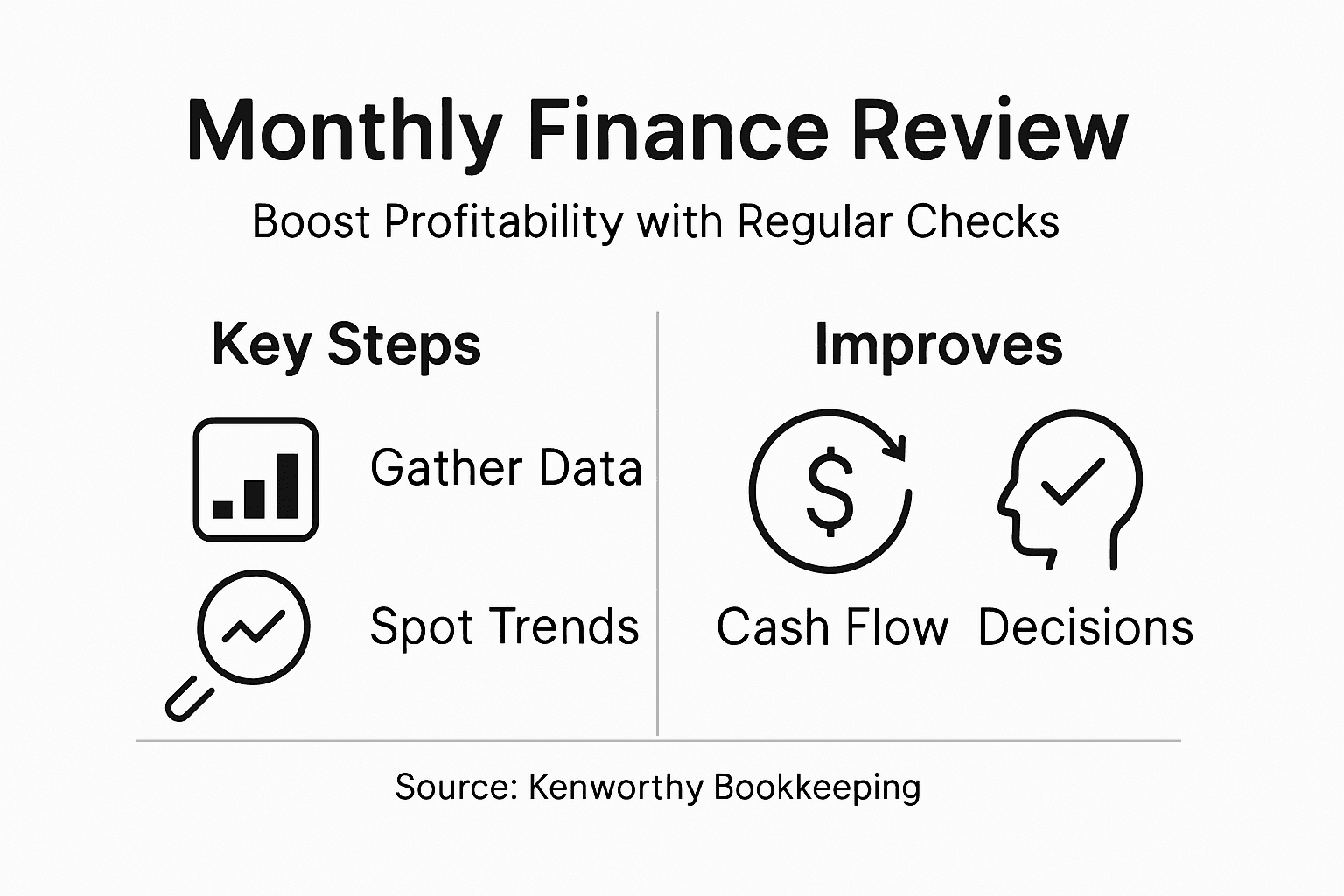
By implementing systematic financial review processes, small businesses can transform their approach from reactive problem-solving to strategic financial management. This means regularly analyzing key performance indicators, understanding intricate relationships between revenue streams, and making data-driven decisions that align with long-term business objectives.
Pro tip: Create a quarterly financial forecast that maps potential scenarios and develops responsive strategies for each potential outcome.
Avoiding Tax Season Surprises and Costly Errors
Common tax scams and filing errors can devastate small business finances if not proactively managed. Tax season represents a critical period where meticulous financial record-keeping and strategic planning can mean the difference between smooth compliance and potentially costly mistakes.
Key strategies to prevent tax season complications include:
- Organized Record Maintenance: Keeping detailed, categorized financial documents
- Separate Business Accounts: Maintaining clear financial boundaries
- Quarterly Tax Estimations: Avoiding unexpected large tax bills
- Technology Integration: Using accounting software for accurate tracking
- Professional Consultation: Working with tax specialists periodically
Understanding tax obligations requires more than basic documentation. Small business owners must develop a comprehensive approach that anticipates potential audit triggers, maximizes legitimate deductions, and maintains impeccable financial transparency. This means consistently documenting expenses, understanding industry-specific tax rules, and creating a systematic process for financial review and reporting.
By implementing proactive financial management techniques, entrepreneurs can transform tax season from a stressful period of uncertainty into a predictable, manageable business process. Regular monthly financial reviews, coupled with professional guidance, provide the insights needed to navigate complex tax landscapes and minimize potential financial risks.
Pro tip: Schedule a mid-year tax planning session with a certified accountant to identify potential deductions and align your financial strategy.
Take Control of Your Monthly Financial Reviews with Expert Support
Managing monthly finance reviews can feel overwhelming when you try to spot trends, optimize cash flow, and prepare for tax season all on your own. This article highlights how crucial it is to analyze key financial statements like the balance sheet and cash flow statement regularly to boost profitability and avoid surprises. If you struggle with organizing your financial data or need help turning complex numbers into clear decisions, you are not alone.
Kenworthy Bookkeeping specializes in helping small businesses in the Kansas City area gain financial clarity and confidence. With our expert QuickBooks Online bookkeeping services, including precise categorization, bank reconciliations, and tailored profit and loss reports, you get streamlined financial management designed to uncover trends and improve cash flow effortlessly.
Take the stress out of your monthly finance reviews and tax season preparation.

Discover how our trusted bookkeeping solutions can transform your financial strategy today. Visit Kenworthy Bookkeeping Consultations to schedule your personalized session and start building a more profitable future. Don’t wait until the next tax season surprises you. Act now to regain control of your business finances and focus on what you do best.
Frequently Asked Questions
Why is it important to review monthly finances for small businesses?
Regular monthly finance reviews help small business owners assess their financial health, identify trends, and make informed decisions to enhance profitability and guard against potential financial issues.
What key financial statements should I analyze during my monthly review?
You should focus on four primary financial statements: the Balance Sheet, Income Statement, Cash Flow Statement, and Statement of Changes in Equity, as each provides crucial insights into your business’s financial performance.
How can tracking financial trends improve my business’s cash flow?
Tracking financial trends allows you to identify patterns such as revenue fluctuations and expense ratios, enabling you to make proactive adjustments to improve cash flow and manage resources more effectively.
What strategies can enhance profitability during financial reviews?
Key strategies include optimizing revenue streams, managing expenses, adjusting pricing strategies, focusing on customer retention, and prioritizing investments that yield a high return, all of which can be assessed during monthly financial reviews.






2 Comments
Comments are closed.