

Importance of Bookkeeping Reviews for Small Businesses
Staying on top of your business finances can feel tedious when you are focused on meeting customer needs in Kansas City. Small errors or overlooked transactions often cause bigger issues at tax time or when you are making key decisions. Bookkeeping reviews give home service business owners a straightforward way to track cash flow, spot mistakes early, and maintain clear records that make tax preparation less stressful. You will discover how consistent reviews help you protect your profits and simplify day-to-day management.
Table of Contents
- What Bookkeeping Reviews Really Mean
- Types of Bookkeeping Reviews Explained
- Key Benefits For Small Business Owners
- Supporting Tax Preparation And Compliance
- Risks Of Skipping Regular Reviews
Key Takeaways
| Point | Details |
|---|---|
| Importance of Bookkeeping Reviews | Bookkeeping reviews ensure accuracy, completeness, and compliance in financial records, providing critical insights into financial health. |
| Types of Bookkeeping Reviews | Single-entry and double-entry reviews cater to different business needs, with double-entry offering more comprehensive financial accuracy. |
| Benefits for Small Business Owners | Regular reviews support cash flow management, regulatory compliance, and informed financial decision-making to foster growth. |
| Risks of Skipping Reviews | Inconsistent bookkeeping reviews can lead to financial blind spots, increased legal risks, and compromised business stability. |
What Bookkeeping Reviews Really Mean
Bookkeeping reviews represent a systematic process of evaluating and verifying a business’s financial records to ensure accuracy, completeness, and compliance. This strategic assessment goes far beyond simple number-checking. By examining financial transactions, businesses gain critical insights into their financial health and operational performance.
At its core, a bookkeeping review involves meticulously analyzing financial documentation to confirm every transaction is correctly recorded, categorized, and aligned with accounting standards. This process includes validating income statements, reconciling bank accounts, checking expense reports, and ensuring all financial entries are legitimate and properly documented. Small businesses particularly benefit from these reviews, as they help identify potential errors, detect irregular spending patterns, and provide a clear snapshot of the company’s financial standing.
Moreover, bookkeeping reviews serve multiple strategic purposes beyond basic record maintenance. They support accurate tax preparation, help businesses make informed financial decisions, and can uncover potential areas for cost reduction or revenue optimization. Tracking financial transactions systematically allows business owners to understand cash flow trends, predict future financial needs, and maintain transparency in their financial operations.
Pro Tip: Schedule quarterly bookkeeping reviews to catch potential financial discrepancies early and maintain consistent financial oversight.
Types of Bookkeeping Reviews Explained
Bookkeeping reviews are not a one-size-fits-all process, but rather a nuanced approach tailored to a business’s specific needs and complexity. Understanding the different types of bookkeeping systems helps small business owners select the most appropriate review method for their financial management.
The two primary types of bookkeeping reviews are single-entry and double-entry reviews. Single-entry bookkeeping reviews are typically used by very small businesses or sole proprietorships, focusing on tracking cash inflows and outflows through a straightforward ledger. These reviews provide a basic overview of financial transactions but offer limited insights into complex financial relationships. In contrast, double-entry bookkeeping reviews are more comprehensive, systematically checking accounting transactions by verifying that every transaction is recorded with corresponding debit and credit entries. This method provides a more robust and accurate representation of a business’s financial health.
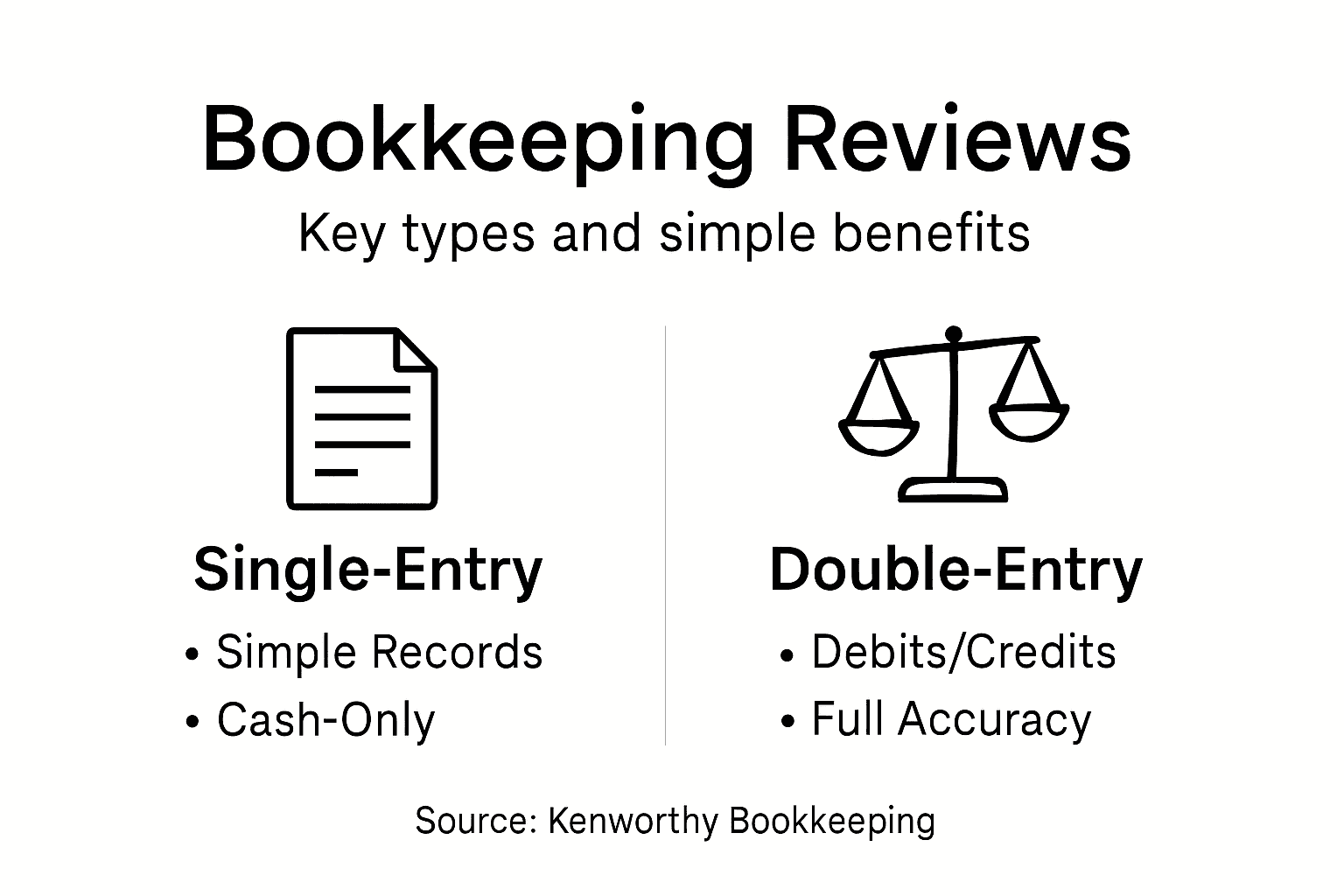
Beyond these foundational review types, businesses can also conduct specialized reviews targeting specific financial components. These include payroll reviews, accounts receivable and payable audits, inventory accounting reviews, and tax preparation assessments. Each of these targeted reviews serves a unique purpose, helping businesses identify potential errors, ensure regulatory compliance, and gain deeper insights into their financial performance. For Kansas City small businesses, choosing the right type of bookkeeping review can mean the difference between financial clarity and potential costly misunderstandings.
Here’s a comparison of common bookkeeping review types and their business impact:
| Review Type | Documentation Required | Best For | Key Business Benefit |
|---|---|---|---|
| Single-entry Review | Basic transaction ledger | Sole proprietors, microbiz | Simplifies record-keeping |
| Double-entry Review | Debits and credits records | Growing or complex firms | Detects errors and fraud |
| Payroll Review | Payroll reports and filings | Staffed businesses | Ensures accurate payroll |
| Accounts Audit | Receipts, invoices | Any small business | Improves cash management |
Pro Tip: Consult with a professional bookkeeper to determine the most appropriate review type for your specific business structure and financial complexity.
Key Benefits for Small Business Owners
Bookkeeping reviews offer Kansas City small business owners a powerful strategic tool for financial management and growth. Accurate financial record-keeping enables entrepreneurs to make informed decisions, track business performance, and identify potential opportunities for improvement. These reviews go far beyond simple number-crunching, providing a comprehensive overview of a business’s financial health.
One of the most significant benefits is cash flow management. By systematically reviewing financial records, business owners can understand spending patterns, anticipate potential cash shortfalls, and make proactive financial adjustments. This approach helps prevent unexpected financial challenges and supports more strategic resource allocation. Additionally, bookkeeping reviews assist in identifying the most profitable areas of the business, allowing owners to focus resources on high-performing segments and potentially reduce expenses in less productive areas.
Moreover, bookkeeping reviews play a critical role in regulatory compliance and financial planning. Establishing a strong financial foundation helps businesses maintain accurate records for tax purposes, reduce the risk of penalties, and streamline the preparation of financial statements. These reviews also provide essential documentation that can be crucial when seeking business loans, attracting investors, or demonstrating financial stability to potential partners.
Pro Tip: Implement a monthly bookkeeping review process to catch financial trends early and maintain consistent business insights.
Supporting Tax Preparation and Compliance
Bookkeeping reviews are a critical defense mechanism for small businesses navigating the complex landscape of tax preparation and regulatory compliance. Maintaining accurate financial records is not just about organization, but about creating a comprehensive shield against potential tax complications and potential IRS scrutiny.
These reviews serve multiple strategic purposes in tax preparation. Expense documentation becomes significantly more streamlined when businesses maintain meticulous records throughout the year. By systematically categorizing and tracking income and expenses, small business owners can easily identify potential tax deductions, reduce the time spent preparing tax returns, and minimize the risk of errors that could trigger audits. This proactive approach allows businesses to capture every legitimate business expense, potentially reducing their overall tax liability.

Moreover, consistent bookkeeping reviews provide essential documentation that demonstrates financial transparency and compliance. Tax compliance for small businesses requires more than just collecting receipts. It involves creating a comprehensive financial narrative that accurately represents the business’s economic activities. These reviews help reconcile accounts, ensure all income is properly reported, and maintain a clear trail of financial transactions that can withstand potential IRS examination. For Kansas City small businesses, this means reducing the stress and potential financial risk associated with tax season.
Pro Tip: Develop a systematic filing system for financial documents and schedule quarterly tax preparation reviews to stay ahead of compliance requirements.
Risks of Skipping Regular Reviews
Skipping regular bookkeeping reviews can transform a thriving small business into a financial minefield. Inadequate bookkeeping practices pose substantial risks that can compromise a business’s entire operational foundation. What might seem like a minor oversight can quickly escalate into significant financial challenges that threaten business survival.
The most immediate consequences involve financial visibility and decision-making capacity. Without consistent reviews, business owners lose real-time insight into their financial performance, making it impossible to identify emerging problems or capitalize on potential opportunities. Cash flow issues can develop silently, potentially leading to unexpected shortfalls, missed payroll, or inability to cover critical operational expenses. These financial blind spots can create a cascade of challenges that gradually erode business stability and growth potential.
Moreover, financial record neglect dramatically increases legal and regulatory risks. Untracked expenses, unreconciled accounts, and incomplete financial documentation can trigger costly audits, generate substantial penalties, and create significant legal complications. For Kansas City small businesses, this means potential tax penalties, compliance issues, and a higher likelihood of IRS scrutiny. The financial and reputational damage from these risks can far outweigh the time and effort required for consistent bookkeeping reviews.
The following table summarizes the main risks of inconsistent bookkeeping reviews versus regular reviews:
| Review Approach | Risk of Errors | Audit Readiness | Long-Term Stability |
|---|---|---|---|
| Regular Reviews | Minimized | High | Financially sustainable |
| Irregular Reviews | High | Low | Prone to instability |
Pro Tip: Set up automated monthly financial review reminders and allocate dedicated time to examine your business’s financial records thoroughly.
Gain Confidence in Your Business Finances with Expert Bookkeeping Reviews
Many small business owners struggle with maintaining clear and accurate financial records which the article highlights as essential to avoid costly mistakes and cash flow issues. Key challenges include ensuring transaction accuracy, staying compliant with tax laws, and gaining real-time insights into profitability. At Kenworthy Bookkeeping, we specialize in removing these burdens by providing expert bookkeeping services using QuickBooks Online that cover everything from bank reconciliations to tax season preparation. This helps Kansas City small businesses regain control and focus on growth.
Take the uncertainty out of your books and protect your business from risks associated with skipping regular reviews. With thorough categorization, reliable financial reports, and ongoing support, we help you stay audit-ready and financially stable all year long.
Ready to transform your bookkeeping process with trusted expertise and personalized care?

Discover how simple managing your finances can be with Kenworthy Bookkeeping’s professional services. Don’t wait for financial surprises. Visit us today at https://kenworthybookkeeping.com/consult and schedule your consultation to start gaining clarity and confidence now.
Frequently Asked Questions
What is a bookkeeping review?
A bookkeeping review is a systematic process of evaluating and verifying a business’s financial records to ensure accuracy, completeness, and compliance with accounting standards.
Why are bookkeeping reviews important for small businesses?
Bookkeeping reviews help small businesses maintain accurate financial records, improve cash flow management, ensure regulatory compliance, and enhance decision-making by providing insights into financial performance.
What types of bookkeeping reviews are there?
The two primary types are single-entry and double-entry reviews. Single-entry is simpler, focusing on cash inflows and outflows, while double-entry is more comprehensive, verifying transactions with corresponding debit and credit entries.
How can bookkeeping reviews assist in tax preparation?
Bookkeeping reviews streamline expense documentation and ensure that all income and expenses are accurately recorded. This reduces the risk of errors, identifies potential tax deductions, and provides essential documentation for compliance during tax season.