

Why Audit Bookkeeping Records: Impact on KC Small Business
Most American small businesses risk costly errors when daily bookkeeping is left unchecked. For busy Kansas City home service owners, even minor mistakes can lead to lost profits, IRS penalties, or broken trust with clients. An effective bookkeeping audit offers a clear path to improved financial accuracy and greater peace of mind, showing exactly where records stand and what steps will prevent unwanted surprises down the road.
Table of Contents
- What Auditing Bookkeeping Records Involves
- Common Types of Bookkeeping Audits Explained
- How Effective Audits Boost Financial Accuracy
- Legal Requirements and Compliance for Audits
- Risks of Inaccurate or Neglected Records
Key Takeaways
| Point | Details |
|---|---|
| Importance of Audits | Auditing bookkeeping records is essential for ensuring financial accuracy and compliance for small businesses. It helps identify discrepancies and improve decision-making. |
| Types of Audits | Various audit types, including financial, compliance, and operational audits, provide businesses with insights into different aspects of their financial health and efficiency. |
| Legal Requirements | Understanding government auditing standards is crucial for maintaining compliance and avoiding severe penalties or reputational damage. |
| Risks of Inaccuracy | Inaccurate bookkeeping records can lead to misguided decisions and significant financial risks, highlighting the importance of regular record maintenance. |
What Auditing Bookkeeping Records Involves
Auditing bookkeeping records represents a systematic review process that ensures financial accuracy and transparency for small businesses. By examining accounting documentation, business owners can validate their financial statements and identify potential discrepancies before they become significant problems. These records include critical documents such as ledgers, bank statements, invoices, contracts, and transaction receipts.
The audit process typically involves a comprehensive review where an independent professional thoroughly inspects financial records to verify their accuracy and compliance. Professional accountants conduct detailed examinations of monetary transactions, asset ownership documentation, and liability creation evidence. Their primary objective is to confirm that financial statements genuinely represent the business’s economic activities and conform to established accounting principles.
Specifically for Kansas City small businesses, an audit helps reveal potential financial vulnerabilities, inefficiencies, or areas of potential tax risk. Auditors scrutinize transaction records, looking for unusual patterns, potential errors, or indicators of financial mismanagement. This process provides business owners with an objective assessment of their financial health, helping them make more informed strategic decisions and maintain regulatory compliance.
Pro tip: Schedule periodic internal audits every six months to catch potential financial discrepancies early and maintain robust financial controls.
Common Types of Bookkeeping Audits Explained
For small businesses in Kansas City, understanding the various types of bookkeeping audits is crucial for maintaining financial health and compliance. Multiple audit approaches exist to help businesses systematically evaluate their financial processes and documentation. These audit types serve different purposes, ranging from examining specific operational aspects to conducting comprehensive financial reviews.
The primary audit categories include financial audits, which validate transaction accuracy and internal financial controls, and compliance audits, which ensure the business adheres to relevant regulations and internal policies. Internal audit functions typically conduct diverse audit types such as operational audits to analyze procedural efficiency, information technology audits to assess data security, and investigative audits designed to detect potential fraudulent activities.

Small businesses should be particularly attentive to process audits and system audits. Process audits evaluate operational methods and verify compliance with established instructions, while system audits comprehensively check management systems’ effectiveness. These audit types provide business owners with critical insights into potential inefficiencies, risk management gaps, and opportunities for improving financial practices.
Pro tip: Rotate between different audit types annually to ensure a comprehensive and dynamic approach to financial oversight and risk management.
Here’s a summary of key audit types and their primary business benefits:
| Audit Type | Primary Focus | Key Benefit |
|---|---|---|
| Financial Audit | Validates transactions | Reduces financial errors |
| Compliance Audit | Regulatory adherence | Prevents legal violations |
| Operational Audit | Reviews procedures | Improves efficiency |
| IT Audit | Data and system security | Reduces cyber risks |
| Process Audit | Checks workflow accuracy | Identifies inefficiencies |
| System Audit | Evaluates management systems | Strengthens controls |
| Investigative Audit | Detects fraud or misconduct | Uncovers major risks |
How Effective Audits Boost Financial Accuracy
Effective audits provide critical insights that help small businesses in Kansas City maintain financial integrity and make informed decisions. These comprehensive reviews go beyond simple number-checking, offering a deep dive into a company’s financial health, internal controls, and potential risk areas. By systematically examining financial records, audits reveal hidden patterns, potential errors, and opportunities for improving financial management.
The audit process is designed to deliver reasonable assurance to stakeholders that financial statements accurately represent the business’s economic reality. Auditors evaluate financial statements to detect inconsistencies, potential fraud, and areas of financial vulnerability. This independent assessment builds trust with investors, lenders, and regulatory bodies by providing an objective view of the company’s financial standing and operational efficiency.
For Kansas City small businesses, the benefits of effective audits extend far beyond compliance. These reviews help identify operational inefficiencies, potential tax risks, and strategic financial opportunities. By uncovering subtle discrepancies and analyzing financial trends, audits enable business owners to make data-driven decisions, optimize resource allocation, and develop more robust financial strategies that support long-term growth and stability.
Pro tip: Treat your annual audit as a strategic planning session, using the insights gained to proactively improve your business’s financial performance.
See how effective audits impact core business areas for small organizations:
| Area Assessed | Audit Impact | Strategic Advantage |
|---|---|---|
| Financial Records | Detects inconsistencies | Better decision-making |
| Internal Controls | Finds weak spots | Strengthened safeguards |
| Tax Position | Reveals risk exposure | Avoids costly penalties |
| Creditworthiness | Confirms accuracy | Improves loan approval odds |
| Growth Planning | Highlights opportunities | Enables smarter investments |
Legal Requirements and Compliance for Audits
Government auditing standards establish critical legal frameworks that small businesses in Kansas City must understand to maintain financial compliance. These comprehensive guidelines outline specific requirements for conducting thorough and ethical financial reviews, ensuring businesses adhere to established regulatory protocols. Understanding these standards is crucial for avoiding potential legal complications and maintaining transparent financial practices.
The federal government has implemented detailed audit compliance regulations that directly impact small businesses. Federal audit requirements specify precise documentation standards, reporting procedures, and accountability measures for organizations receiving federal financial assistance. These regulations mandate specific audit frequencies, detailed reporting protocols, and strict guidelines for selecting and working with independent auditors.
For Kansas City small businesses, navigating these legal requirements involves several key considerations. Compliance means maintaining meticulous financial records, ensuring auditor independence, and following prescribed reporting standards. Businesses must be prepared to demonstrate financial transparency, document all transactions accurately, and cooperate fully during audit processes. Failure to meet these legal standards can result in significant penalties, including potential loss of federal funding, legal sanctions, and damage to the company’s professional reputation.
Pro tip: Consult with a local accounting professional who specializes in federal compliance to ensure your audit processes meet all legal requirements specific to your business type.
Risks of Inaccurate or Neglected Records
Inaccurate bookkeeping records pose significant financial risks for small businesses in Kansas City. Data entry errors can substantially impact business decision-making, potentially leading to misguided strategies, incorrect tax filings, and substantial financial losses. When records are incomplete or poorly maintained, businesses lose their ability to track financial performance, understand spending patterns, and make informed operational choices.
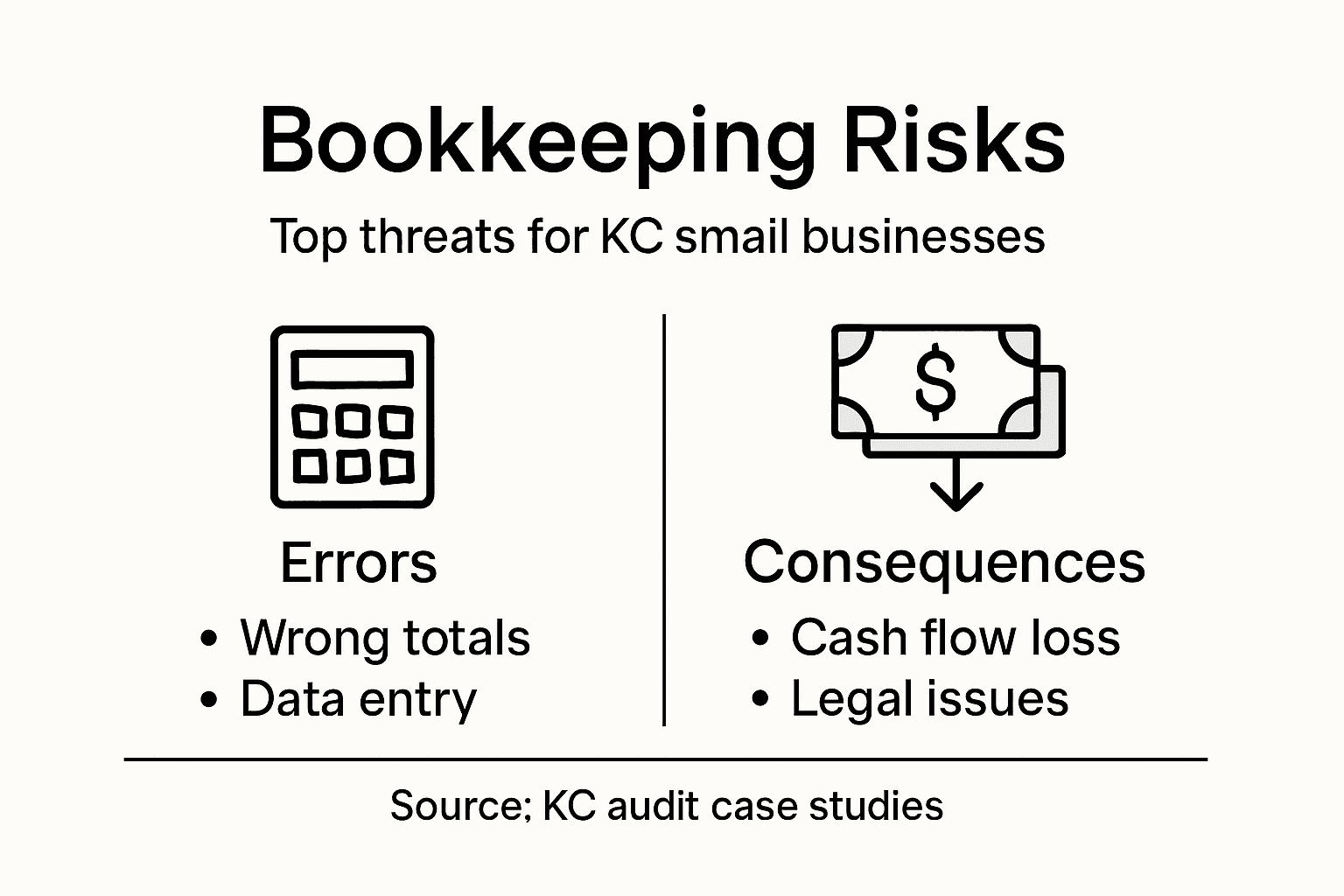
The consequences of neglected records extend far beyond simple accounting inconveniences. Record inaccuracies can create serious operational risks that compromise a business’s financial integrity. These risks include potential tax audits, legal complications, reduced creditworthiness, and diminished investor confidence. Inaccurate financial documentation can trigger expensive investigations, result in penalties, and damage a company’s professional reputation in the competitive Kansas City business landscape.
Small businesses must recognize that record accuracy is not just an administrative task but a critical strategic function. Poorly maintained records can mask underlying financial problems, obscure profit margins, and prevent timely identification of cash flow issues. The absence of precise financial documentation makes it impossible to track business performance, identify growth opportunities, or make data-driven strategic decisions that could significantly impact the company’s future.
Pro tip: Implement a monthly reconciliation process to catch and correct record discrepancies before they become unmanageable financial challenges.
Strengthen Your Kansas City Small Business Financials with Expert Bookkeeping Support
The article highlights key challenges like maintaining accurate bookkeeping records, preventing financial discrepancies, and navigating complex audit requirements. If you are concerned aboutfinancial inaccuracies, regulatory compliance, or preparing for audits, Kenworthy Bookkeeping offers tailored solutions that align perfectly with your needs. Their expert use of QuickBooks Online ensures accurate categorization, bank reconciliations, and timely financial reporting so you can avoid costly mistakes and strengthen your business’s financial health.

Take control of your bookkeeping before audits uncover costly errors. Visit Kenworthy Bookkeeping Consultations today to schedule a personal consultation. Get the peace of mind that comes from having experienced professionals manage your records with care and precision because your Kansas City business deserves nothing less.
Frequently Asked Questions
What are the benefits of auditing bookkeeping records for small businesses?
Auditing bookkeeping records helps small businesses ensure financial accuracy, identify vulnerabilities, and comply with regulations. It provides insights that allow owners to make informed decisions and improve their financial practices.
How often should small businesses conduct audits of their bookkeeping records?
It is recommended that small businesses schedule periodic internal audits every six months to catch potential discrepancies early and maintain robust financial controls.
What types of audits can small businesses perform on their bookkeeping records?
Small businesses can perform various types of audits, including financial audits, compliance audits, operational audits, IT audits, process audits, system audits, and investigative audits, each serving different purposes and offering unique insights.
What are the risks of neglecting accurate bookkeeping records?
Neglecting accurate bookkeeping records can result in misguided business strategies, incorrect tax filings, tax audits, legal complications, reduced creditworthiness, and damaged investor confidence. These risks can have severe financial implications for small businesses.






2 Comments
Comments are closed.