

Role of Bookkeeping in Taxes: Small Business Success
Running a small home service business in Kansas City means juggling appointments, managing staff, and handling customer needs—all while trying to keep your finances in order. Bookkeeping often gets pushed aside, but it is the backbone of true financial control. When your business keeps organized, accurate records, you do more than cut the chaos at tax time—you create a clear path to smarter decisions, stronger profits, and IRS compliance. Proper bookkeeping transforms stress into confidence during tax season and reveals the real story of your business health.
Table of Contents
- Bookkeeping Basics For Small Businesses
- How Accurate Records Simplify Tax Filing
- Essential Tax Documents Generated By Bookkeeping
- Irs Requirements And Legal Compliance Factors
- Common Tax Mistakes Poor Bookkeeping Causes
Key Takeaways
| Point | Details |
|---|---|
| Organized Bookkeeping is Crucial | Regularly maintaining financial records enhances clarity in cash flow, making tax compliance smoother and more efficient. |
| Documentation is Required | Keeping accurate records of income and expenses protects against IRS scrutiny and ensures all deductions can be substantiated. |
| Use Consistent Accounting Methods | Adopting a single accounting method, such as cash basis or accrual basis, is necessary for clarity and legal compliance. |
| Avoid Common Mistakes | Separating personal and business expenses, and accurately categorizing transactions are essential to prevent costly errors. |
Bookkeeping Basics for Small Businesses
Bookkeeping is the foundation of your business’s financial health. It’s the everyday work of recording every transaction—every dollar spent and earned—in an organized way. For home service businesses in Kansas City, whether you’re running an HVAC company, plumbing service, or electrical contracting operation, bookkeeping gives you a clear picture of where your money actually goes and comes from. Without it, you’re essentially running blind at tax time, scrambling to find receipts and reconstruct what happened months earlier.
At its core, bookkeeping involves three critical tasks. First, you record financial transactions systematically. This means documenting sales invoices, expense receipts, bank deposits, and bills paid. Second, you choose an accounting method. Most small service businesses use double-entry bookkeeping, which tracks both sides of every transaction (where money comes from and where it goes). Third, you maintain supporting documents like sales receipts, canceled checks, invoices, and bank statements. The IRS requires you to keep these records for at least three years, and keeping organized financial records isn’t optional—it’s a compliance requirement that directly impacts your tax liability and audit protection.
Here’s what your basic bookkeeping system needs to handle:
- Recording income from customer payments and invoices
- Tracking business expenses (materials, labor, vehicle costs, insurance, equipment)
- Categorizing transactions correctly for tax purposes
- Reconciling bank statements monthly
- Generating reports that show profitability and cash flow
Many home service owners underestimate how much time they lose trying to manage this manually. You’re already managing crews, scheduling jobs, and handling customer relationships. Adding scattered spreadsheets or loose receipts to that pile creates chaos. The real value of organizing your bookkeeping from the start is that you’ll know exactly how much profit each service brings in, which jobs are actually worth doing, and where you’re bleeding money unnecessarily. When you understand your numbers clearly, you make better business decisions—not guesses.
For tax season specifically, organized bookkeeping means your accountant doesn’t have to spend hours digging through boxes of receipts reconstructing your year. You’ll provide clean, categorized records, which reduces accounting fees and gets you answers faster. You’ll also be ready if the IRS ever questions your return. A small contractor I worked with discovered he was undercharging on one service by nearly 40 percent simply because he finally saw the actual costs. That one insight—only visible through organized bookkeeping—saved his business thousands annually.
The 7 essential bookkeeping tips for small businesses can help you avoid common pitfalls like mixing personal and business expenses, missing tax deductions, and falling behind on monthly reconciliations. Start with the basics now, and you’ll avoid the stress and scramble later.
Pro tip: Set up a simple system where you photograph receipts immediately on the job site or snap them before throwing them away, then assign them to the right expense category weekly. This fifteen minute habit prevents the “shoebox of receipts” problem and makes tax prep effortless.
How Accurate Records Simplify Tax Filing
Tax time arrives the same day every year, yet many small business owners treat it like a surprise visit. The difference between stressed and confident comes down to one thing: whether your records are ready. When you maintain accurate financial records throughout the year, tax filing transforms from a chaotic scramble into a straightforward process. You know exactly what you owe, you can document every deduction, and you hand your accountant organized information instead of a box of receipts and bank statements. For home service businesses in Kansas City, this means the difference between spending two weeks reconstructing your finances and spending two hours providing clean records.
Accurate records do something powerful that many owners don’t realize until they experience it. They eliminate guesswork. When you need to file your taxes, you’re not trying to remember whether that truck maintenance happened in March or April, or whether a customer payment cleared before year end. Your records tell the story. Accurate recordkeeping helps small business owners monitor progress and identify exactly where your income came from and where it went. This clarity serves double duty: it makes tax filing accurate, and it protects you if questions ever arise. The IRS doesn’t want estimates or rough guesses. They want to see that you tracked your numbers carefully, month by month.
Here’s what accurate records specifically provide at tax time:
- Income documentation proving exactly how much revenue you earned from jobs, invoices, and payments
- Expense tracking showing material costs, labor, vehicle expenses, insurance, and equipment purchases
- Bank reconciliations that match your records to actual deposits and withdrawals
- Organized receipts and supporting documents that prove every deduction you claim
- Clear categorization of transactions so your accountant knows where everything belongs
Without this foundation, your accountant faces a choice: spend additional billable hours reconstructing your year (which costs you money), or file based on incomplete information (which costs you accuracy). Many service business owners are shocked when they get the bill for tax preparation that could have been cut in half with organized records. One electrical contractor I know reduced his annual tax prep fees by over 60 percent simply by organizing his bookkeeping before handing it over. Same accountant. Same complexity. Different records.
The real protection comes when accurate records prevent costly errors. Filing taxes correctly requires documented income and deductible expenses, and that documentation needs to exist before you file. If you claim a deduction you can’t support with records, the IRS can disallow it and you’ll owe back taxes plus penalties. If you underreport income because you lost track of cash payments, you’re committing filing error. If you miss deductions because your records are disorganized, you overpay. Accurate records prevent all three problems. They give you confidence that your return reflects reality, not guesses.

For businesses in Kansas City facing tight cash flow, the financial statements generated from accurate records show you exactly how much profit you actually made. Sometimes a business owner thinks they’re doing great based on cash in the bank, but accurate records reveal they’re barely breaking even once all expenses are accounted for. That insight matters before tax time, not after. It helps you make decisions about pricing, staffing, and which services to focus on. By April 15th, it’s too late to change last year. But accurate records throughout the year let you adjust this year.
Pro tip: Reconcile your bank account monthly and categorize every transaction the same week it happens, rather than waiting until tax season to sort through months of data. This weekly habit takes 30 minutes and turns tax filing from overwhelming to simple.
Essential Tax Documents Generated by Bookkeeping
Your bookkeeping system doesn’t just track money. It produces critical documents that form the backbone of your tax filing, business decisions, and financial credibility. For a home service business in Kansas City, these documents tell the complete story of your year. When you sit down with your accountant in March or April, the quality of these documents determines whether you’re filing with confidence or anxiety. Without them, you’re essentially asking your accountant to build your tax return on assumptions and estimates rather than facts.
The first document your bookkeeping generates is your income statement, also called a profit and loss statement. This shows exactly how much revenue you brought in from all your service work, then subtracts every expense you incurred, leaving you with your net profit or loss. This single document answers the question every business owner wants to know: did I make money this year? For tax purposes, business income statements provide the foundation for calculating your taxable income. The IRS doesn’t just want your gross revenue. They want to see your expenses documented and categorized so they can verify your actual taxable profit. A plumbing company in Kansas City that invoiced 450,000 dollars but had 280,000 dollars in legitimate expenses looks completely different than a company with no documented expenses. The income statement proves this distinction.
Your balance sheet comes next, showing what your business owns (assets like equipment and vehicles), what it owes (liabilities like business loans and credit lines), and your equity (the actual value you own). Business expense documents and balance sheets support your tax filing and help you understand your financial position. This matters because the IRS occasionally asks business owners about asset purchases, depreciation, and loan activity. Your balance sheet proves you tracked these items.
Here are the essential tax documents your bookkeeping system should generate:
Below is a reference summary of bookkeeping documents and how they protect your business during tax time:
| Document Type | Main Purpose | Key Tax Benefit |
|---|---|---|
| Income Statement | Tracks profit and loss | Supports declared income to IRS |
| Balance Sheet | Shows assets and debts | Validates asset and debt records |
| Cash Flow Statement | Details money movement | Explains cash discrepancies |
| Expense Report | Breaks down spending | Proves deductible expenses |
| Tax Deduction Summary | Lists deductions claimed | Eases audit substantiation |
| Accounts Receivable/Payable | Tracks money owed | Supports income and expense timing |
- Income statement: Revenue minus expenses equals profit or loss for the year
- Balance sheet: Assets, liabilities, and owner equity at a specific point in time
- Cash flow statement: How money actually moved in and out of your accounts (different from profit)
- Expense reports: Categorized breakdown of all business expenses by type
- Tax deduction summary: Organized list of all claimed deductions with supporting records
- Accounts payable and receivable reports: Money you owe and money customers owe you
Many home service owners underestimate how valuable these documents are beyond tax time. Your cash flow statement, for instance, shows you when money typically comes in and when your biggest expenses hit. A contractor might discover that summer is his biggest revenue season but his equipment purchases typically happen in fall, creating a cash crunch. That insight lets him plan differently. Your expense reports show you exactly where your money actually goes. You might think your biggest cost is labor, but accurate bookkeeping reveals that vehicle expenses or equipment maintenance is eating a larger percentage of revenue than you expected. These realizations lead to pricing changes or operational improvements.
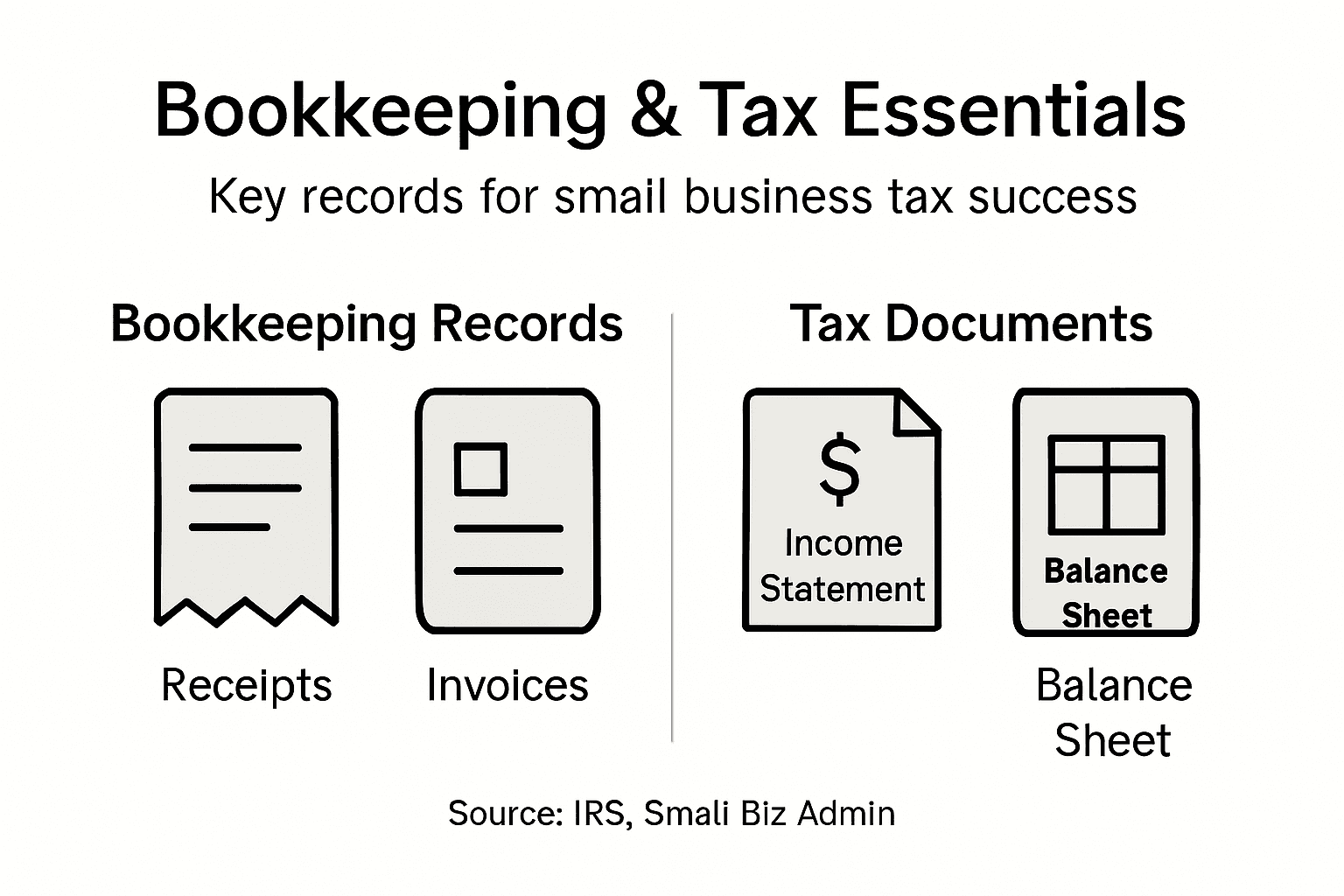
The reason these documents matter for taxes specifically is that they transform scattered receipts and transactions into a coherent story. The IRS wants to see that you didn’t just make random guesses about what you spent. They want organized records showing you tracked everything systematically. When your bookkeeping generates clear, categorized expense reports, it proves you operated with intention. If you get audited, these documents are your defense. Without them, you’re asking the IRS to accept your word that you spent money on certain things. With them, you’re showing verifiable proof.
For Kansas City service businesses, these documents also become your business management tools. You show them to your banker when applying for a business loan. You share them with your accountant for tax planning. You review them to make pricing and staffing decisions. One electrical contractor realized from his cash flow statement that he was sitting on invoices his customers hadn’t paid yet. By tightening his payment terms and following up faster, he improved his cash position by 35,000 dollars within two months. The document didn’t change his business. It just revealed what was actually happening.
Pro tip: Generate your income statement and balance sheet monthly rather than waiting until year end. This monthly habit takes 10 minutes and gives you real time insight into your profit, cash position, and financial health instead of discovering problems in January.
IRS Requirements and Legal Compliance Factors
The IRS has clear, non-negotiable requirements for how you handle your business records. These aren’t suggestions or best practices. They’re legal obligations that apply to every small business owner in Kansas City. Ignoring them puts you at financial and legal risk. The good news is that understanding these requirements is straightforward, and meeting them is far easier than most business owners think. Your bookkeeping system either complies with IRS standards from the start, or it creates problems later.
The foundational requirement is simple: you must keep records that clearly show your income and expenses. This means maintaining supporting documents like receipts and canceled checks that prove what you earned and what you spent. The IRS doesn’t accept vague estimates. They want documentation. For a home service business, this translates to keeping invoices showing customer payments, receipts for materials and supplies, canceled checks or credit card statements for business expenses, and bank statements that reconcile with your records. The IRS knows that businesses operate differently, so they don’t prescribe exactly how you organize these records. But they’re absolutely clear that you must have them and they must be retrievable if needed.
Time matters. The IRS requires you to keep employment tax records for at least four years and most other business records for at least three years. This doesn’t mean you need to print everything and store it in filing cabinets (though you can). Digital records kept securely work perfectly fine. Many Kansas City service contractors now photograph receipts, store them in organized digital folders, and backup everything to cloud storage. That satisfies the IRS requirement and actually makes records more accessible than paper. But here’s the critical point: you cannot throw away records after the job is done. Years later, if the IRS asks questions about a transaction or deduction, you need to produce the proof.
The Accounting Method Requirement
Your business must use a consistent accounting method. The two primary options are cash basis and accrual basis accounting. IRS Publication 583 details accounting method setup and explains how to establish the right method for your business structure. Most home service businesses use cash basis, which means you record income when you actually receive payment and expenses when you actually pay them. This is simpler because it matches your actual cash movement. Accrual accounting records income when you invoice (even if payment hasn’t arrived) and expenses when you incur them (even if you haven’t paid yet). The method you choose affects your tax calculation, so you need to pick one and stay consistent. Switching methods requires IRS permission and complicates your tax situation.
Here’s a comparison of cash-basis and accrual-basis accounting methods for small businesses:
| Feature | Cash-Basis Accounting | Accrual-Basis Accounting |
|---|---|---|
| When Income is Recorded | When payment is received | When invoice is issued |
| When Expenses are Recorded | When payment is made | When expense is incurred |
| Common for | Small, service-based businesses | Larger or inventory-focused businesses |
| Tax Implications | Simpler; matches cash flow | May defer taxes; more complex |
| IRS Switching Rules | Simple to maintain | Requires IRS approval to switch |
Documentation That Proves Your Deductions
Claiming a deduction requires proof. This is where many business owners stumble. You cannot simply tell the IRS that you spent money on something and expect them to accept it. You need documentation supporting every significant claim. For a plumbing contractor, this means receipts for materials, invoices from your supplier, credit card statements showing the purchase, and ideally a note about what the expense was for (which job, what specifically was purchased). When vehicle expenses get audited, the IRS wants to see maintenance records, fuel receipts, and ideally mileage logs showing business use versus personal use.
Here’s what the IRS specifically wants to see:
- Business income: Invoices, payment records, bank deposits proving what you earned
- Operating expenses: Receipts, invoices, and credit card statements for supplies, materials, and services
- Payroll records: Documentation of wages paid, tax withholdings, and employment tax deposits
- Equipment and asset purchases: Receipts showing cost and date, maintenance records, depreciation calculations
- Vehicle expenses: Mileage logs, fuel receipts, maintenance records, or lease agreements
- Home office expenses: If applicable, documentation of the square footage and allocation method
The reason this matters for tax success is that organized, documented deductions reduce your taxable income, which reduces your tax liability. A contractor who claims 80,000 dollars in legitimate business expenses pays significantly less tax than one who only documents 20,000 dollars, even though both actually spent similar amounts. The difference comes down to having proof.
Compliance Timing
The IRS also cares about timing. Your tax return must be filed by April 15th (or October 15th if you file an extension). Your estimated quarterly tax payments, if required, are due on specific dates throughout the year. Your employment tax deposits must happen on schedule. Your bookkeeping system needs to track these deadlines and ensure you’re compliant. Missing a filing deadline costs penalties even if you ultimately owe nothing. Missing a payment deadline costs penalties plus interest.
For Kansas City businesses, this also means understanding whether you need to file separate tax documents for the business itself (if you’re an S-Corporation, for instance) versus just claiming business income on your personal return (if you’re a sole proprietor or pass-through entity). Your business structure determines your tax obligations, and your bookkeeping must support whatever structure you’ve chosen.
Pro tip: Set up a dedicated folder system for receipts organized by category and month, and photograph or scan everything within one week of purchase rather than letting receipts pile up. This habit ensures you have everything documented if the IRS ever questions your deductions, and it makes quarterly estimated tax calculations straightforward.
Common Tax Mistakes Poor Bookkeeping Causes
Poor bookkeeping doesn’t just make tax time stressful. It creates expensive mistakes that follow you long after April 15th passes. For home service businesses in Kansas City operating on tight margins, a single tax filing error can wipe out weeks of profit. The problem isn’t usually intentional wrongdoing. It’s carelessness, disorganization, or simply not knowing what the IRS requires. The good news is that these mistakes are completely preventable when you maintain organized records from the start.
The most common mistake is mixing personal and business expenses. You use your business account to pay for a family dinner, then pull out cash for a materials purchase. You’re not sure if that truck payment covers business use only or includes personal driving. You pay some suppliers with personal checks instead of business checks. By year end, your records are so tangled that you can’t separate what was actually a business expense from what was personal spending. When you claim deductions, you’re either overstating them (which triggers audit risk) or understating them (which means you pay more tax than necessary). The solution is brutally simple: never mix the two. Maintain separate accounts, separate credit cards, and document everything with that distinction in mind.
Another widespread error is failing to track cash transactions properly. Many service businesses collect cash payments from customers. A homeowner pays you 500 dollars in cash for an emergency repair. You pocket the money, but where does it go in your records? If it’s not documented and categorized, it either disappears (meaning you don’t report the income, which is tax evasion), or it gets mixed with personal cash flow (meaning your records become untrustworthy). Failing to document cash transactions significantly increases audit risk, and audits are expensive whether you ultimately owe money or not. The IRS assumes that unreported cash is intentional tax avoidance. You need to document every cash payment received, deposit it into your business account, and record it in your books. Yes, this takes discipline. It also protects you.
Underreporting income happens more often than you’d think. Sometimes it’s intentional. More often it’s accidental. You forget about a job paid in cash three months ago. You have an invoice that never got entered into your system. A customer made a partial payment you didn’t record. You think you earned 150,000 dollars, but your books only show 135,000 dollars. The IRS matches your tax return to your bank deposits. When they see deposits that don’t match your reported income, they ask questions. They may also add back the missing income, which means additional tax owed plus penalties and interest. For a Kansas City contractor, this can mean a 5,000 to 20,000 dollar bill arriving months after you thought your taxes were settled.
The Expense Classification Problem
Misclassifying expenses creates multiple problems. You claim vehicle maintenance as a business meal. You categorize tools as office supplies. You mix equipment purchases with repairs. When expenses are misclassified, your profit appears wrong. Your accountant might miss legitimate deductions because they’re hidden in the wrong category. If you get audited, the IRS scrutinizes misclassified expenses more carefully. Additionally, common bookkeeping mistakes like poor expense tracking cause misreporting on tax returns, which invites further questions. Proper categorization isn’t just a nice organization habit. It’s the foundation of accurate tax reporting.
Here are the mistakes that create the biggest problems:
- Mixing personal and business finances without clear separation
- Failing to document cash income and payments
- Not keeping receipts for significant expenses
- Misclassifying business expenses into wrong categories
- Forgetting to track deductible expenses like vehicle mileage or home office costs
- Claiming excessive deductions without proper documentation to support them
- Missing employee misclassification issues if you have workers
- Not reconciling bank accounts monthly to catch errors
- Waiting until tax season to organize records instead of maintaining them throughout the year
The Deduction Documentation Gap
The biggest audit trigger is claiming deductions without substantiation. You claim 25,000 dollars in vehicle expenses but can’t produce maintenance receipts or mileage logs. You claim a home office deduction but didn’t calculate the square footage. You claim meals and entertainment but only have vague credit card statements. The IRS allows these deductions, but only if you have proof. Without documentation, they disallow the deduction and you owe tax on that amount plus penalties. A contractor who properly documents 80,000 dollars in expenses pays hundreds of dollars less in taxes than one who claims 100,000 dollars but can only prove 60,000 dollars.
The cascade of problems from poor bookkeeping extends beyond taxes. You can’t accurately price your services because you don’t know your true costs. You can’t make smart business decisions because you don’t trust your financial data. You waste time searching for receipts and reconstructing transactions. You stress about April 15th because you know your records are messy. You pay your accountant extra fees for cleanup work that wouldn’t be necessary with organized books. One plumbing contractor in Kansas City discovered that poor bookkeeping had cost him over 8,000 dollars in avoidable accounting fees over three years, not counting the additional taxes he owed from missed deductions.
Pro tip: Every Friday afternoon, spend 15 minutes categorizing the week’s transactions and filing receipts digitally by category. This single habit prevents the December scramble, eliminates audit risk from missing documentation, and makes tax prep straightforward instead of stressful.
Take Control of Your Small Business Taxes with Expert Bookkeeping
Struggling with disorganized receipts, confusing cash flow, or missing deductions can make tax season overwhelming and costly. This article highlights how accurate, systematic bookkeeping is essential to avoid costly mistakes like misclassifying expenses or underreporting income. If your goal is to gain clear visibility into your profits, easily substantiate deductions, and reduce audit risk, it starts with the right financial records and ongoing support.

Let Kenworthy Bookkeeping help you make tax season effortless and protect your hard-earned profits. Our expert team specializes in QuickBooks Online bookkeeping tailored to Kansas City small businesses. We handle everything from categorization and bank reconciliations to generating clear profit and loss statements that reveal your true financial health. Don’t let poor bookkeeping keep you guessing or cost you thousands in extra taxes and fees. Visit Kenworthy Bookkeeping Consult to schedule your consultation today and start turning your paperwork chaos into confident business decisions.
Frequently Asked Questions
What are the key bookkeeping tasks for small businesses?
Bookkeeping for small businesses primarily involves recording financial transactions, choosing an accounting method (most use double-entry bookkeeping), and maintaining supporting documents like receipts, invoices, and bank statements.
How does organized bookkeeping simplify tax filing?
Organized bookkeeping eliminates guesswork during tax season by providing accurate income documentation, tracked expenses, and categorized transactions, making it easier for accountants to prepare your taxes efficiently and accurately.
What essential tax documents are generated by bookkeeping?
Key tax documents generated by bookkeeping include income statements, balance sheets, cash flow statements, and detailed expense reports, all of which are crucial for verifying income and expenses during tax filing.
How can poor bookkeeping impact tax obligations?
Poor bookkeeping can lead to costly mistakes such as mixing personal and business expenses, failing to document cash transactions, and misclassifying deductible expenses, all of which can result in higher tax liabilities and potential audits.






3 Comments
Comments are closed.