

Role of Budgeting in Small Business Success
Most American small businesses lose up to 30 percent of their potential profits simply due to poor budgeting practices. For Kansas City service businesses with fewer than 20 employees, every dollar counts toward long-term survivability and growth. Understanding budgeting essentials can help owners control costs, anticipate financial challenges, and make smart decisions that improve profitability. This guide offers practical strategies tailored for busy entrepreneurs, making financial planning simpler and more effective.
Table of Contents
- Budgeting Essentials For Small Business Owners
- Types Of Budgets And Their Unique Benefits
- Step-By-Step Budgeting For Service Businesses
- Improving Profitability With Better Financial Planning
- Common Budgeting Mistakes And How To Avoid Them
Key Takeaways
| Point | Details |
|---|---|
| Importance of Budgeting | Budgeting is essential for strategic financial planning, helping small business owners in Kansas City allocate resources and manage risks effectively. |
| Types of Budgets | Choosing the right budgeting strategy is crucial; options like Zero-Based Budgeting or Incremental Budgeting cater to different financial management needs. |
| Common Mistakes | Avoid common budgeting pitfalls such as income overestimation and neglecting regular reviews to maintain financial health and adaptability. |
| Proactive Management | Implementing a regular review and adjustment process ensures that financial plans remain relevant amidst changing market conditions. |
Budgeting Essentials for Small Business Owners
Budgeting isn’t just about tracking numbers – it’s about strategically mapping your business’s financial journey. For small business owners in Kansas City, understanding budget fundamentals can transform financial uncertainty into confident decision making. Budget planning techniques provide a roadmap for sustainable growth, helping owners allocate resources wisely and anticipate potential challenges.
At its core, a solid budget serves multiple critical functions. Business financial planning involves creating realistic revenue projections, tracking expenses, identifying potential cost-saving opportunities, and establishing financial goals. Small businesses that implement structured budgeting processes are significantly more likely to survive economic fluctuations and unexpected market shifts. Effective forecasting and budgeting techniques enable business owners to proactively manage financial risks rather than reactively responding to problems.
Successful budgeting requires consistent attention and adaptability. Most small business owners should develop a comprehensive budget that includes key components like operating expenses, potential revenue streams, anticipated capital investments, and emergency fund allocations. Breaking down your budget into specific categories helps create transparency and enables more precise financial tracking. This approach allows for nimble adjustments as your business evolves, ensuring you remain financially resilient.
Pro tip: Create a monthly budget review ritual where you compare actual expenses against projected costs, identifying variances and opportunities for optimization.
Types of Budgets and Their Unique Benefits
Small business owners have multiple budgeting strategies available, each designed to address specific financial management needs. Budget types range from operational planning to strategic investment tracking, providing flexible tools for financial control. Understanding these different budget approaches allows Kansas City entrepreneurs to select the most appropriate method for their unique business circumstances.
Four primary budget types emerge as critical for small business financial planning. Operating budgets focus on day-to-day income and expense management, creating a comprehensive view of regular business transactions. Cash flow budgets track money movement, ensuring sufficient liquidity for ongoing operations. Capital budgets strategically plan long-term investments and equipment purchases, while master budgets consolidate all financial projections into a holistic financial framework. Different budgeting approaches like zero-based budgeting offer unique advantages by forcing businesses to justify every expense and eliminate unnecessary spending.
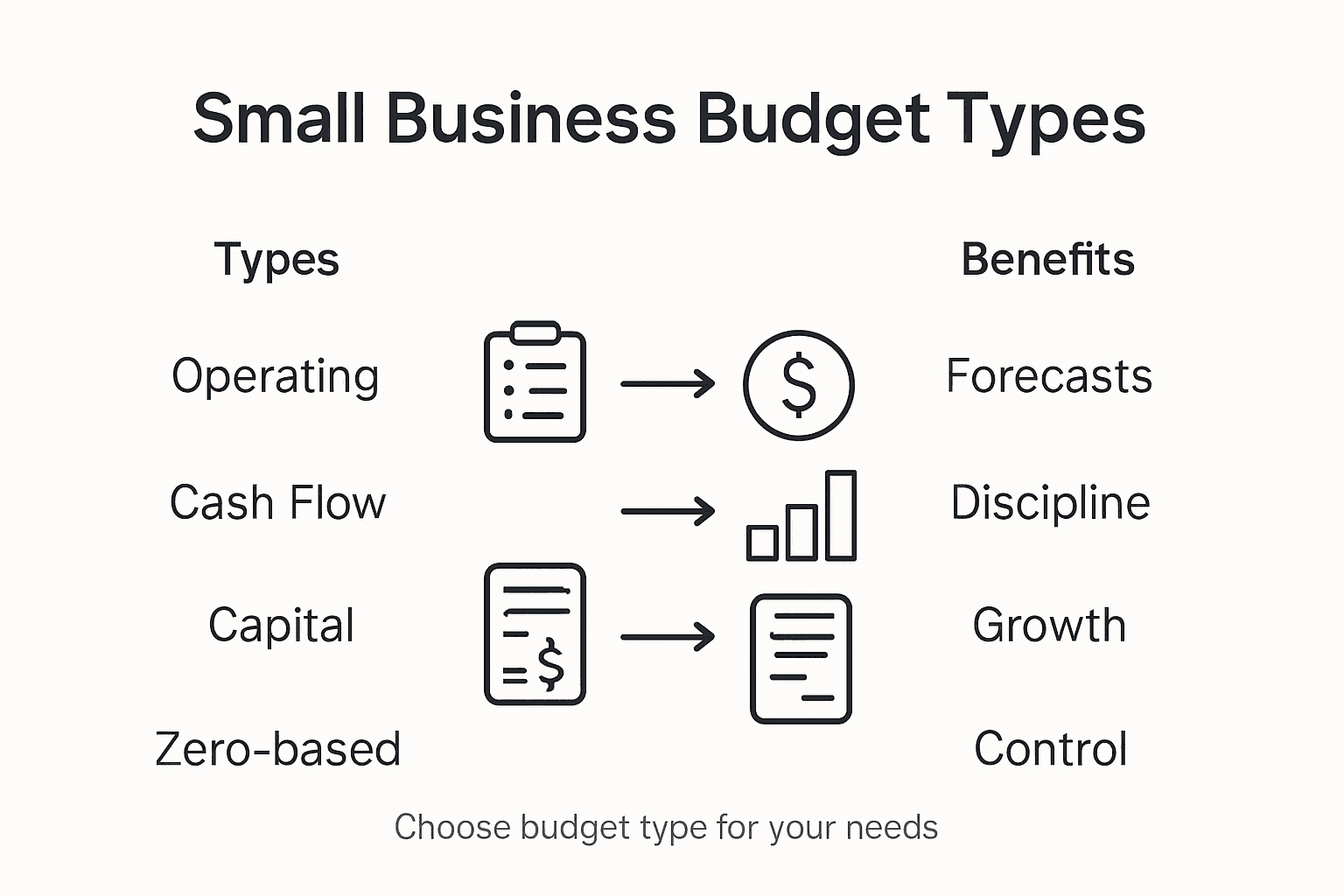
Selecting the right budgeting approach depends on your business’s specific needs, size, and financial complexity. Zero-based budgeting works exceptionally well for businesses seeking maximum expense control, requiring justification for each expenditure category. The envelope system can help control discretionary spending by allocating specific funds to different expense categories. Incremental budgeting allows gradual adjustments based on previous financial performance, providing a more conservative and predictable financial planning method.
Pro tip: Experiment with multiple budgeting approaches and create a hybrid method that best reflects your small business’s unique financial dynamics and growth objectives.
Here’s a comparison of common budgeting strategies available to small business owners:
| Budgeting Approach | Main Advantage | Ideal Use Case |
|---|---|---|
| Zero-Based Budgeting | Maximum expense control | Reducing unnecessary spending |
| Envelope System | Controls discretionary expenses | Managing specific spending categories |
| Incremental Budgeting | Simple, gradual adjustments | Stable businesses with predictable costs |
| Master Budgeting | Holistic financial framework | Integrating all financial plans |
Step-by-Step Budgeting for Service Businesses
Developing a comprehensive budget for service-based businesses requires a strategic and methodical approach that goes beyond simple number tracking. Systematic budgeting processes help service businesses forecast revenue and manage financial resources effectively, creating a roadmap for sustainable growth and operational efficiency. For Kansas City service entrepreneurs, understanding this step-by-step approach can transform financial uncertainty into strategic planning.
The budgeting journey begins with accurate revenue forecasting. Revenue projection involves analyzing historical performance data, examining current market trends, and considering seasonal fluctuations specific to your service industry. Next, categorize your expenses into fixed costs (like rent, insurance, and recurring subscriptions) and variable costs (such as hourly labor, project-specific supplies, and commission payments). Comprehensive organizational budgeting requires detailed expense listing and strategic resource allocation, ensuring every dollar is purposefully tracked and justified.
Implementing your budget requires ongoing management and periodic review. Create detailed spreadsheets that track actual performance against projected figures, allowing for real-time adjustments. Develop contingency plans for unexpected expenses or revenue shortfalls, maintaining a financial buffer that provides stability during unpredictable business cycles. Incorporate quarterly budget reviews to reassess your financial strategies, identifying areas of potential cost reduction or investment opportunities that align with your business growth objectives.

Pro tip: Develop a rolling 12-month budget that allows flexible monthly adjustments, helping you stay responsive to changing business dynamics and market conditions.
Improving Profitability With Better Financial Planning
Strategic financial planning transforms small businesses from surviving to thriving, creating a powerful roadmap for sustainable growth. For Kansas City entrepreneurs, profitability isn’t just about increasing revenue – it’s about intentionally aligning business purpose with smart financial strategies. Understanding how to optimize financial resources can unlock significant competitive advantages and drive long-term business success.
Improving profitability requires a multifaceted approach that goes beyond simple cost-cutting. Financial analytics provide critical insights into business performance, helping owners make data-driven decisions. Financial planning and analysis techniques enable small businesses to evaluate investment risks, monitor performance metrics, and adjust strategies proactively, creating a dynamic framework for growth. This involves developing comprehensive financial models that track key performance indicators, identify potential inefficiencies, and highlight opportunities for strategic investment.
Successful financial planning integrates both quantitative analysis and strategic vision. Small business owners should focus on creating flexible financial frameworks that can adapt to changing market conditions. This means developing robust budgeting processes, maintaining accurate financial records, and consistently reviewing financial performance. Techniques like scenario planning, regular financial audits, and strategic resource allocation can help businesses maintain financial resilience while pursuing growth opportunities. The goal is to create a financial strategy that supports both immediate operational needs and long-term business objectives.
Pro tip: Implement a quarterly financial review process that compares actual performance against projected goals, using insights to continuously refine your business strategy.
Common Budgeting Mistakes and How to Avoid Them
Budgeting errors can undermine even the most promising small business strategies, creating financial vulnerabilities that prevent sustainable growth. For Kansas City entrepreneurs, understanding these common pitfalls is the first step toward building a robust financial management approach that protects and propels business success.
Three critical budgeting mistakes frequently derail small business financial planning. First, income overestimation creates unrealistic expectations and can lead to overspending. Businesses often project revenues based on optimistic scenarios rather than grounded, data-driven analysis. Effective budget planning requires setting realistic expectations and building flexible financial frameworks, accounting for potential market fluctuations and unexpected expenses. Second, failing to distinguish between fixed and variable costs can create significant blind spots in financial management. Third, neglecting regular budget reviews prevents businesses from adapting to changing economic conditions and internal operational shifts.
Navigating these challenges requires a proactive and systematic approach to financial management. Implement detailed expense tracking mechanisms that categorize spending transparently. Develop quarterly review processes that allow for budget adjustments based on actual performance. Create contingency funds that provide financial cushioning during unpredictable business cycles. Most importantly, approach budgeting as a dynamic tool for strategic decision-making rather than a static document. This means maintaining flexibility, continuously learning from financial data, and being willing to modify strategies as your business evolves.
Pro tip: Create a monthly financial dashboard that visually tracks key performance indicators, making it easier to identify potential budgeting issues before they become critical problems.
This table highlights key budgeting mistakes and how to avoid them for stronger financial management:
| Mistake | Negative Impact | Best Practice to Avoid |
|---|---|---|
| Overestimating Income | Leads to overspending | Base forecasts on data, not optimism |
| Not Separating Costs | Missed expense patterns | Distinguish fixed vs. variable costs |
| Skipping Regular Reviews | Missed adaptation opportunities | Schedule quarterly budget check-ins |
Transform Your Small Business Budget Into a Growth Engine
If managing your budget feels overwhelming or if you struggle with accurate financial tracking, you are not alone. This article highlights how budgeting mistakes like overestimating income and neglecting regular reviews can hinder your business success. Kenworthy Bookkeeping understands these challenges and offers expert bookkeeping services tailored for small businesses in Kansas City. From meticulous categorization and bank reconciliations to clear P&L reports and smooth tax season preparation, we help you gain financial clarity so you can make confident, data-driven decisions.

Ready to stop guessing and start controlling your financial future? Take the next step toward better budgeting and profitability with Kenworthy Bookkeeping’s expert bookkeeping solutions. Visit us today to schedule your personalized consultation and discover how effortless bookkeeping can transform your business success.
Frequently Asked Questions
What is the purpose of budgeting for small businesses?
Budgeting helps small businesses track income and expenses, create realistic financial projections, allocate resources wisely, and anticipate potential challenges, ultimately leading to sustainable growth.
How can a small business improve its budgeting process?
Small businesses can improve their budgeting by breaking down their budget into specific categories, implementing regular budget reviews, and using various budgeting approaches to adapt to changing financial conditions.
What common mistakes should small businesses avoid when budgeting?
Common budgeting mistakes include overestimating income, failing to distinguish between fixed and variable costs, and skipping regular budget reviews. Avoiding these pitfalls is essential for effective financial management.
What are different types of budgets small businesses can use?
Small businesses can use various types of budgets, including operating budgets for day-to-day management, cash flow budgets to track liquidity, capital budgets for long-term investments, and master budgets that consolidate all financial plans.






3 Comments
Comments are closed.