

Why Review Financial Statements: Boost Profitability Today
Most American small business owners in Kansas City do not realize that regular financial statement reviews can uncover costly errors before they impact profits. Running a home service company with a lean team brings unique bookkeeping challenges. Accurate financial statements are not just paperwork—they hold the keys to confident decision-making, clear tax reporting, and steady growth. This guide shows how understanding these reports empowers you to steer your business toward greater profitability with fewer financial headaches.
Table of Contents
- Defining Financial Statements and Their Role
- Types of Financial Statements Small Businesses Need
- Analyzing Essential Metrics for Performance Insights
- How Reviews Support Compliance and Tax Readiness
- Common Pitfalls in Financial Statement Review
Key Takeaways
| Point | Details |
|---|---|
| Importance of Financial Statements | Financial statements are essential for understanding a business’s financial health, facilitating informed decision-making and strategic planning. |
| Four Essential Financial Statements | Small businesses need the Income Statement, Balance Sheet, Cash Flow Statement, and Statement of Shareholders’ Equity to monitor performance and maintain financial oversight. |
| Performance Metrics | Tracking key performance indicators such as Gross Profit Margin and Net Profit Margin enables entrepreneurs to make data-driven decisions that enhance profitability and growth. |
| Compliance and Tax Readiness | Regular reviews of financial statements support compliance with regulations and prepare businesses for tax obligations, minimizing potential risks and enhancing financial integrity. |
Defining Financial Statements and Their Role
Financial statements are crucial documents that provide a comprehensive overview of a business’s financial performance and health. These reports summarize key financial details for business owners, investors, and other stakeholders, offering insights into how money moves through an organization. Small businesses in the Kansas City home service industry rely on these statements to track their financial trajectory and make strategic decisions.
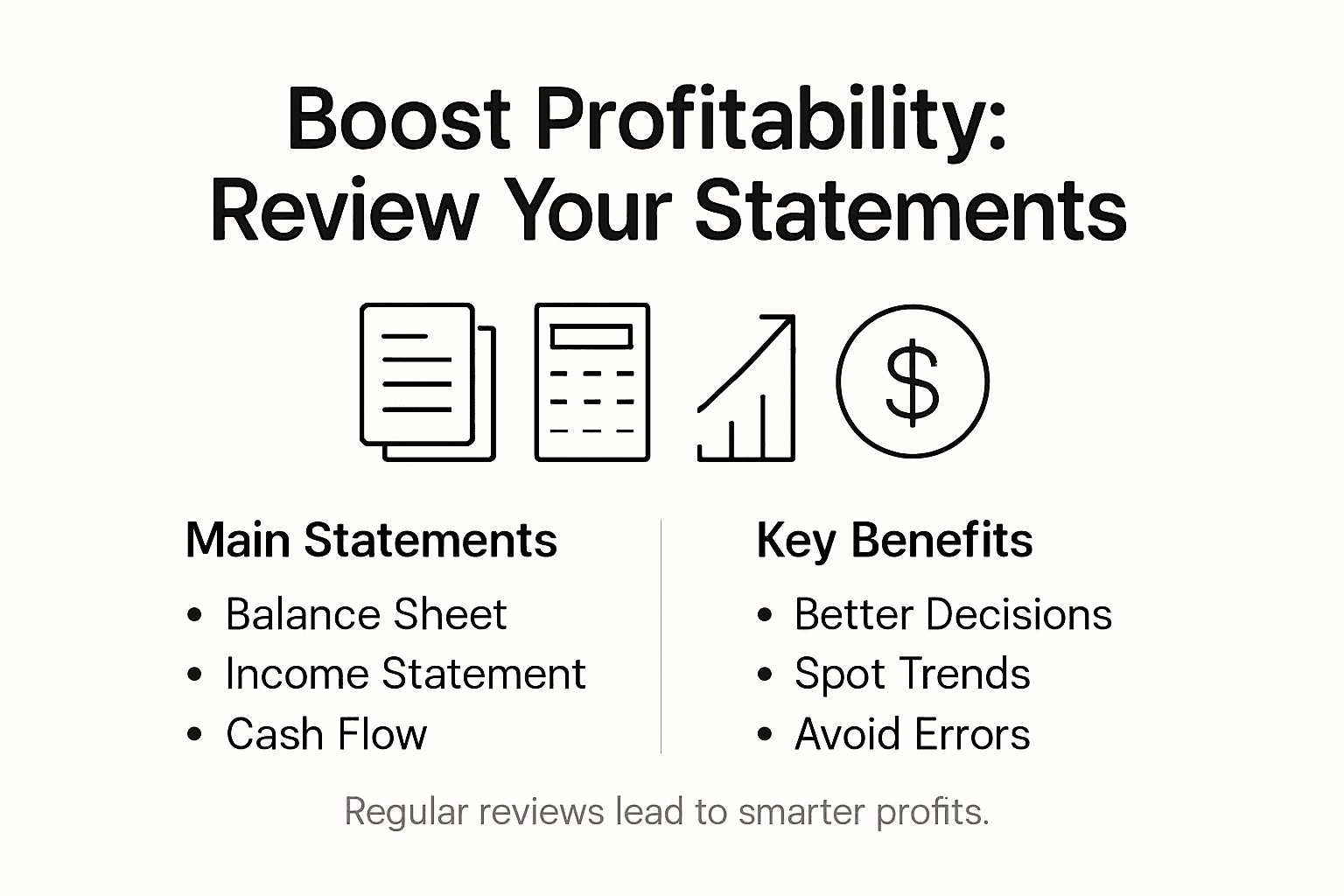
The primary financial statements include four essential documents: the balance sheet, income statement, cash flow statement, and statement of shareholders’ equity. Each serves a unique purpose in painting a complete picture of financial performance. The balance sheet reveals assets and liabilities at a specific moment, while the income statement shows profits and losses over a specific period. The cash flow statement tracks actual money movement, and the statement of shareholders’ equity demonstrates changes in ownership interests.
Understanding these statements goes beyond mere number crunching. They provide actionable intelligence for small business owners to assess financial health, identify potential issues, and develop strategic growth plans. By analyzing trends in revenue, expenses, and cash reserves, home service entrepreneurs can make informed decisions about investments, hiring, and operational improvements. Accurate financial statements also become critical during tax preparation and when seeking business loans or investor funding.
Pro tip: Request quarterly financial statement reviews with your bookkeeper to catch potential financial trends or issues before they become significant problems.
Types of Financial Statements Small Businesses Need
Small businesses require four critical financial statements to effectively track and manage their financial performance. Financial statements provide comprehensive insights into operational health, helping entrepreneurs make strategic decisions and understand their company’s financial landscape. For Kansas City home service businesses, these documents are not just paperwork but vital tools for sustainable growth and profitability.
The four essential financial statements include:
- Income Statement: Reveals the company’s profitability by detailing revenues, expenses, and net income or loss during a specific period
- Balance Sheet: Provides a snapshot of assets, liabilities, and owner’s equity at a particular point in time
- Cash Flow Statement: Tracks the actual cash entering and leaving the business, highlighting liquidity and financial flexibility
- Statement of Shareholders’ Equity: Demonstrates changes in the company’s ownership interests and retained earnings
Each statement serves a unique purpose in financial analysis. The income statement shows how efficiently a business generates profits, while the balance sheet offers a comprehensive view of financial position. The cash flow statement is particularly crucial for small businesses, as it reveals the actual cash available for operations, investments, and unexpected expenses. By understanding these financial reports, home service business owners can make informed decisions about resource allocation, potential investments, and strategic planning.

Here’s a quick reference comparing the four main financial statements:
| Statement | Focus Area | Key Questions Answered | Common Users |
|---|---|---|---|
| Balance Sheet | Assets & Liabilities | What does the company own and owe? | Owners, Lenders |
| Income Statement | Profitability | Is the business making a profit? | Owners, Investors |
| Cash Flow Statement | Cash Movement | How is cash moving in and out? | Managers, Creditors |
| Statement of Shareholders’ Equity | Ownership & Retained Earnings | How does ownership interest change? | Investors, Owners |
Pro tip: Work with a professional bookkeeper to help you interpret these financial statements and translate the numbers into actionable business strategies.
Analyzing Essential Metrics for Performance Insights
Performance metrics are vital diagnostic tools that transform raw financial data into actionable business intelligence. For Kansas City home service businesses, understanding these key performance indicators (KPIs) means the difference between guessing and knowing exactly how your company is performing. Tracking the right metrics allows entrepreneurs to make precise, data-driven decisions that directly impact profitability and growth.
Critical financial metrics small businesses should monitor include:
- Gross Profit Margin: Percentage of revenue remaining after direct costs
- Net Profit Margin: Percentage of total revenue converted to actual profit
- Operating Expense Ratio: Percentage of revenue spent on operational expenses
- Customer Acquisition Cost: Total expense of acquiring a new customer
- Cash Conversion Cycle: Time required to convert investments in inventory and other resources into cash flows from sales
Understanding these metrics requires more than simple number crunching. Performance measurement provides crucial insights into business health, helping owners identify strengths, weaknesses, and potential improvement areas. By regularly analyzing these indicators, home service entrepreneurs can spot trends, anticipate challenges, and make strategic adjustments before minor issues become significant problems.
This summary helps highlight the impact of key financial performance metrics:
| Metric | Business Impact | When Action May Be Needed |
|---|---|---|
| Gross Profit Margin | Reflects pricing efficiency | Sharp decline signals cost review |
| Net Profit Margin | Indicates overall profit | Low margin prompts cost controls |
| Operating Expense Ratio | Shows spending discipline | Rising ratio requires expense audit |
| Customer Acquisition Cost | Measures marketing effectiveness | Upward trend cuts profitability |
| Cash Conversion Cycle | Reveals liquidity speed | Longer cycle risks cash shortages |
Pro tip: Create a monthly dashboard tracking your most critical KPIs to maintain consistent visibility into your business’s financial performance.
How Reviews Support Compliance and Tax Readiness
Compliance risk reviews are essential strategies that help small businesses navigate complex regulatory landscapes and maintain financial integrity. For Kansas City home service businesses, these reviews serve as proactive safeguards against potential tax complications and regulatory challenges. By systematically examining financial records, entrepreneurs can identify potential issues before they become costly problems, ensuring smooth operations and minimizing unexpected financial risks.
Key elements of effective compliance and tax readiness reviews include:
- Document Verification: Ensuring all financial documents are accurate and complete
- Tax Regulation Alignment: Checking compliance with current federal and state tax guidelines
- Risk Assessment: Identifying potential areas of financial vulnerability
- Record Consistency: Maintaining uniform and transparent financial reporting
- Audit Preparation: Organizing financial records to streamline potential tax audits
Corporate compliance programs play a critical role in protecting businesses from regulatory challenges. Regular financial statement reviews help small business owners demonstrate thorough financial management, reduce potential enforcement risks, and create a robust framework for long-term financial health. By treating compliance as an ongoing process rather than an annual checkbox, home service entrepreneurs can build trust with financial institutions, tax authorities, and potential investors.
Pro tip: Schedule quarterly financial review sessions with your bookkeeper to stay ahead of potential compliance issues and maintain tax readiness.
Common Pitfalls in Financial Statement Review
Reviewing financial statements requires careful analysis to avoid potential misinterpretations and costly mistakes. For Kansas City home service businesses, understanding these common pitfalls can mean the difference between making informed decisions and falling victim to misleading financial narratives. Entrepreneurs must develop a critical eye for details that could significantly impact their business’s financial health.
Key pitfalls small business owners should watch for include:
- Earnings Manipulation: Recognizing aggressive accounting techniques that artificially inflate profits
- Inconsistent Reporting: Identifying unexplained changes in financial reporting methods
- Lack of Context: Failing to compare financial statements against industry benchmarks
- Overlooking Footnotes: Skipping critical details hidden in financial statement annotations
- Confirmation Bias: Interpreting data to confirm preexisting beliefs rather than objectively
Journal entry analysis is crucial for detecting potential financial misstatements, as these can be common areas for fraudulent reporting. Small business owners must pay close attention to unusual adjustments, unexplained transactions, and recurring accounting choices that might indicate underlying financial irregularities. By developing a skeptical approach and understanding the nuanced details of financial statements, entrepreneurs can protect themselves from potential financial misrepresentations and make more informed business decisions.
Pro tip: Always request a detailed explanation for any unusual or significant changes in your financial statements, and don’t hesitate to ask your bookkeeper for clarification.
Take Control of Your Financial Health with Expert Bookkeeping Support
The article highlights the critical challenge small business owners face when reviewing financial statements—avoiding costly errors and uncovering true financial performance. Understanding complex reports like the balance sheet, income statement, and cash flow statement is key to boosting profitability, yet many business owners struggle to translate these numbers into actionable strategies. Pain points such as inconsistent reporting, overlooked details, and compliance risks often create stress and uncertainty.
Kenworthy Bookkeeping offers tailored solutions designed to eliminate these challenges effortlessly. With expert bookkeeping using QuickBooks Online, you get accurate categorization, bank reconciliations, and clear Profit & Loss reports that simplify financial reviews. This empowers Kansas City home service businesses to confidently analyze critical metrics, maintain tax readiness, and avoid common pitfalls identified in the article.
Ready to gain peace of mind and unlock your business’s full potential with precise financial statements?

Discover how our dedicated team can help you stay ahead of financial risks and improve profitability today. Visit Kenworthy Bookkeeping Consultation to schedule your personalized consultation. Take the first step now to turn those complex financial statements into your strongest business asset.
Frequently Asked Questions
What are the main financial statements I should review for my business?
The four essential financial statements to review are the income statement, balance sheet, cash flow statement, and statement of shareholders’ equity. Each provides critical insights into different aspects of your business’s financial health.
How can analyzing financial statements improve my business’s profitability?
Reviewing financial statements allows you to assess your revenue, expenses, and cash flow, helping you identify trends and areas for improvement. This understanding can lead to more informed decisions regarding resource allocation, investments, and cost management, ultimately boosting profitability.
What metrics should I focus on when analyzing my financial statements?
Key metrics include gross profit margin, net profit margin, operating expense ratio, customer acquisition cost, and the cash conversion cycle. These performance indicators help you gauge your business’s financial health and operational efficiency.
How often should I review my financial statements?
It is recommended to review your financial statements quarterly. Regular reviews allow you to catch potential issues early, prepare for taxes, and ensure compliance with regulations, positively impacting your business’s long-term success.





One Comment
Comments are closed.