

Why Monitor Cash Flow: Key to Small Business Success
Most American small businesses that fail cite poor cash flow as a main cause. For Kansas City home service owners, understanding how money actually moves through your company matters much more than just looking at profit on paper. Reliable cash flow management equips you with real financial control, helping you avoid unexpected shortfalls and plan for future growth. This guide breaks down the practical principles behind cash flow so you can make smarter decisions and set your business up for lasting profitability.
Table of Contents
- Defining Cash Flow And Core Principles
- Types Of Cash Flow And Key Distinctions
- How Cash Flow Impacts Profitability
- Risks Of Poor Cash Flow Management
- Best Practices For Cash Flow Monitoring
Key Takeaways
| Point | Details |
|---|---|
| Importance of Cash Flow | Cash flow is crucial for understanding the real-time financial health of a business, beyond mere profit calculations. |
| Cash Flow Categories | Regularly track operating, investing, and financing activities to gain insights into financial performance and make informed decisions. |
| Risks of Poor Management | Ineffective cash flow management can lead to financial strain and operational disruptions, risking business stability and growth. |
| Best Practices | Implement systematic cash flow monitoring and forecasting to anticipate financial gaps and maintain operational sustainability. |
Defining Cash Flow and Core Principles
Cash flow represents the financial lifeblood of any small business, tracking the actual movement of money into and out of your company. Understanding this concept goes beyond simple profit calculations – it reveals the real-time financial health and operational capacity of your business. A comprehensive cash flow statement breaks down financial movements across three critical categories: operating activities, investing activities, and financing activities.
At its core, cash flow measures the net amount of cash being transferred in and out of a business during a specific accounting period. Unlike profit, which represents theoretical earnings, cash flow shows the actual liquid funds available for business operations, investments, and strategic decisions. This distinction is crucial for Kansas City home service businesses, where managing day-to-day expenses while planning for future growth requires precise financial tracking.
The three primary sections of a cash flow statement provide unique insights into different aspects of financial performance. Operating activities reflect the cash generated from core business functions like service revenue and direct expenses. Investing activities track cash used for purchasing or selling long-term assets like equipment or vehicles. Financing activities capture transactions related to debt, equity, and capital investments. By understanding these cash flow components, business owners can make more informed financial decisions and anticipate potential cash flow challenges.
Pro tip: Create a monthly cash flow tracking routine that reviews all three activity categories, helping you spot financial trends and potential cash shortfalls before they become critical problems.
The three categories of cash flow each reveal different aspects of business finances:
| Cash Flow Type | Main Focus | Typical Transactions | Strategic Impact |
|---|---|---|---|
| Operating Activities | Day-to-day business operations | Service revenue, payroll, supplies | Sustains daily business activities |
| Investing Activities | Long-term asset investments | Equipment purchases, vehicle sales | Supports business growth |
| Financing Activities | External funding and capital | Loans, debt repayment, equity | Manages business expansion |
Types of Cash Flow and Key Distinctions
Small businesses must understand the three distinct types of cash flow to effectively manage their financial health. Cash flow classifications reveal critical financial insights into how money moves through different aspects of business operations. These three primary categories – operating, investing, and financing activities – provide a comprehensive view of a company’s financial dynamics and strategic financial management.
Operating cash flow represents the most critical category for Kansas City home service businesses. This type tracks cash generated from core business activities like service revenue, payment for supplies, payroll expenses, and daily operational costs. It essentially shows how effectively the business converts its services into actual cash, providing a real-time snapshot of financial performance beyond traditional profit calculations. Understanding operating cash flow helps business owners identify whether their primary business activities are generating sufficient liquid funds to sustain and grow their operations.

Investing and financing cash flows offer complementary perspectives on business financial strategy. Investing cash flow details transactions related to long-term assets – such as purchasing new service vehicles, equipment upgrades, or selling major business assets. Financing cash flow captures external financial transactions like securing business loans, repaying debt, or managing equity investments. These cash flow components help evaluate business investment and capital management strategies, providing insights into how the business funds growth and manages financial resources beyond day-to-day operations.
Pro tip: Create a quarterly comparison of your cash flow types to identify trends, potential inefficiencies, and opportunities for strategic financial adjustments.
How Cash Flow Impacts Profitability
Understanding the relationship between cash flow and profitability is crucial for small businesses, particularly in service-based industries. Cash flow and profit represent distinct financial metrics, each providing unique insights into a company’s financial health. While profitability shows the theoretical earnings of a business, cash flow reveals the actual liquid funds available for operational needs, investments, and strategic growth.
For Kansas City home service businesses, positive profitability does not guarantee financial stability. A company can show strong profits on paper yet struggle with cash flow challenges that threaten its survival. This disconnect occurs when revenue is recorded before actual cash is received, creating a potential liquidity gap. Businesses might have outstanding invoices, service contracts, or delayed payments that create an accounting profit but insufficient cash to cover immediate expenses like payroll, equipment maintenance, or supply purchases.
Effective cash flow management directly supports long-term profitability by ensuring the business maintains sufficient liquidity to fund operations, invest in growth, and weather unexpected financial challenges. Tracking cash flow helps prevent financial distress by providing early warning signs of potential cash shortages. This proactive approach allows business owners to make strategic decisions about spending, investment, and financial planning, ultimately protecting the company’s bottom line and ensuring sustained operational capacity.
Pro tip: Implement a monthly cash flow forecast that compares projected income and expenses, helping you anticipate and address potential financial gaps before they become critical.
Risks of Poor Cash Flow Management
Poor cash flow management can create devastating consequences for small businesses, particularly in service-driven markets like home services in Kansas City. Ineffective cash management leads to serious financial strain, transforming what might seem like minor financial challenges into potentially catastrophic business threats. Small businesses operate on tight margins, making every dollar critical for sustaining operations and supporting growth.
The ripple effects of poor cash flow management extend far beyond simple financial inconvenience. When businesses cannot predict or manage their cash movements, they risk critical operational disruptions. This might mean being unable to purchase necessary supplies, pay technicians, maintain equipment, or cover essential overhead expenses. Such limitations can force businesses into reactive modes, taking emergency loans with punishing interest rates or making desperate cost-cutting decisions that compromise service quality and long-term sustainability.
Financial instability caused by cash flow mismanagement can trigger a destructive cycle of compounding problems. Poor financial practices increase business vulnerability, potentially damaging credit ratings, reducing investor confidence, and creating legal and regulatory risks. For Kansas City service businesses, this could mean lost contracts, reduced customer trust, and difficulty securing future financing or business opportunities. The consequences can include increased employee stress, potential talent loss, and ultimately, a higher risk of business failure.
Pro tip: Develop a dedicated cash reserve fund equal to 3-6 months of operating expenses to create a financial buffer against unexpected revenue fluctuations.
Best Practices for Cash Flow Monitoring
Effective cash flow monitoring requires systematic and proactive approaches that transform financial tracking from a reactive task to a strategic business function. Cash flow management demands continuous, intentional oversight, treating financial tracking with the same precision Kansas City home service businesses apply to their technical service delivery. This means developing robust systems that provide real-time visibility into monetary movements, enabling business owners to make informed decisions before financial challenges escalate.
Small businesses should implement comprehensive cash flow tracking mechanisms that go beyond basic bookkeeping. Key practices include maintaining detailed records of all cash inflows and outflows, categorizing transactions by type, and creating regular financial reports that highlight potential cash flow gaps. Utilizing digital tools and accounting software can streamline this process, allowing businesses to generate accurate cash flow projections, identify seasonal revenue fluctuations, and anticipate potential financial constraints before they become critical problems.
Understanding and predicting cash flow variability is crucial for sustained business health. Cash flow forecasting helps businesses prepare for financial uncertainty by incorporating both recurring and non-recurring financial events. This approach involves developing multiple financial scenarios, measuring forecast accuracy over time, and maintaining flexible strategies that can adapt to changing economic conditions. For home service businesses, this might mean creating contingency plans for slow seasons, unexpected equipment repairs, or sudden changes in market demand.
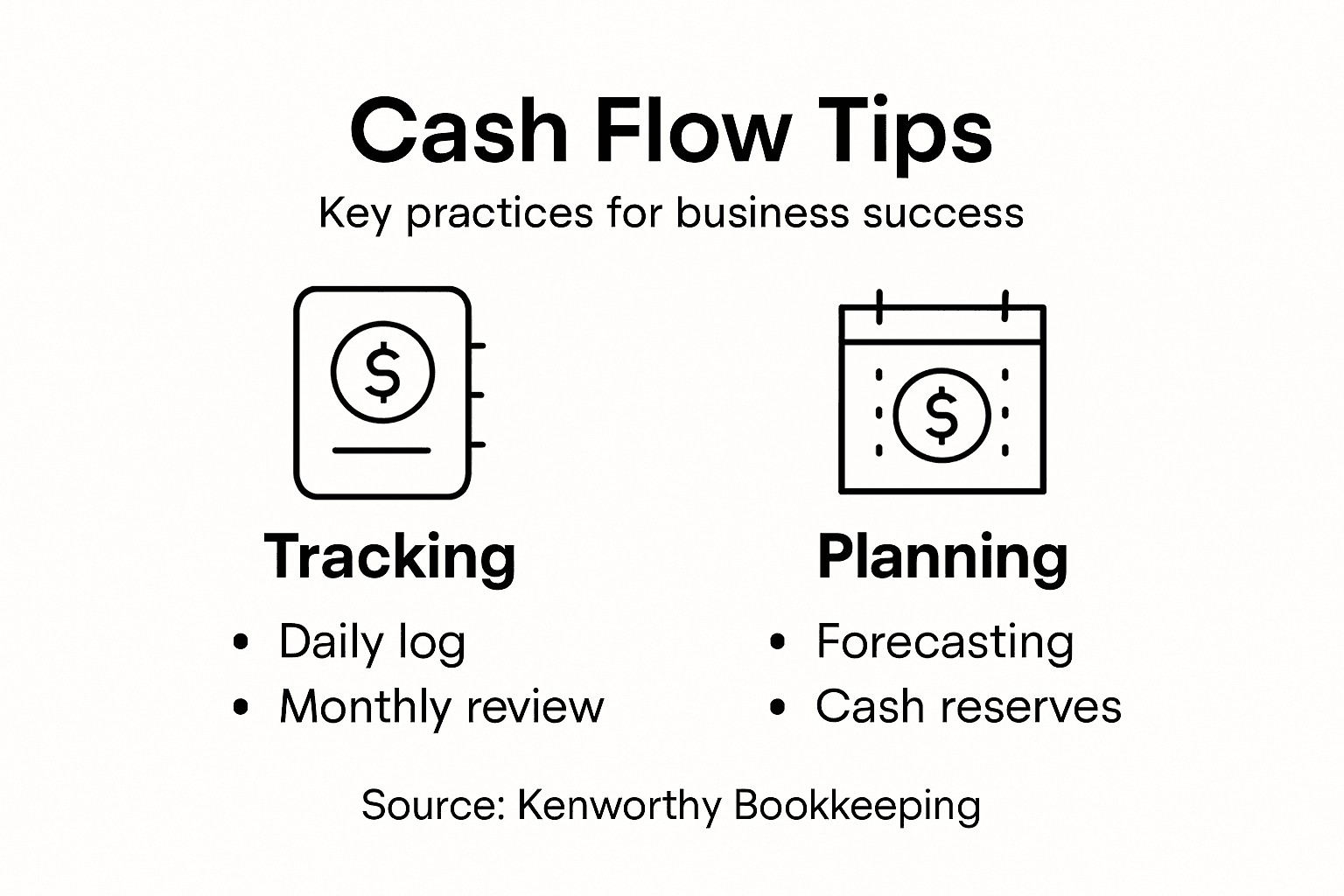
Pro tip: Create a dedicated spreadsheet or dashboard that tracks daily cash inflows and outflows, updating it consistently to maintain an accurate real-time view of your business’s financial pulse.
Here is a comparison of cash flow management best practices and their business benefits:
| Best Practice | Implementation Tip | Business Benefit |
|---|---|---|
| Monthly cash flow tracking | Use a dedicated spreadsheet | Early detection of cash shortfalls |
| Cash reserve fund | Aim for 3-6 months expenses | Financial buffer for emergencies |
| Cash flow forecasting | Compare projected inflow/outflow | Anticipate future financial gaps |
| Categorized transaction review | Use accounting software | Improved financial visibility |
Take Control of Your Cash Flow with Expert Bookkeeping Support
Managing cash flow is an ongoing challenge for Kansas City small business owners. As the article highlights, understanding operating, investing, and financing cash flows is essential to avoid surprises that can disrupt daily operations or threaten long-term profitability. When cash flow monitoring becomes overwhelming or time-consuming, it puts your business at risk of missed payments, poor financial decisions, and unnecessary stress. You need a partner who can simplify this critical financial task with precision and care.
Kenworthy Bookkeeping specializes in expert bookkeeping for small businesses, using QuickBooks Online to provide effortless solutions. From detailed categorization and bank reconciliations to clear profit and loss reports and tax season preparation, Kenworthy offers the key financial visibility you need to stay ahead. Don’t let cash flow complexities hold your business back. Embrace the confidence that comes with professional bookkeeping designed to increase profitability and free you from financial guesswork.

Discover how efficient cash flow monitoring can protect your business today. Visit Kenworthy Bookkeeping Consult and take the first step toward streamlined financial control and lasting success.
Frequently Asked Questions
What is cash flow and why is it important for small businesses?
Cash flow is the movement of money into and out of a business, representing its financial health. It’s crucial for small businesses to monitor cash flow to ensure they can meet day-to-day expenses, invest in growth, and avoid liquidity issues.
How can poor cash flow management affect a small business?
Poor cash flow management can lead to financial instability, operational disruptions, and increased vulnerability to external economic factors. It may result in an inability to pay suppliers, employees, or invest in necessary resources, ultimately threatening the business’s survival.
What are the different types of cash flow, and how should a small business track them?
The three types of cash flow are operating, investing, and financing activities. Businesses should track these through detailed records of cash inflows and outflows, using accounting software to generate regular reports for better visibility and decision-making.
What are some best practices for effective cash flow monitoring?
Best practices for cash flow monitoring include maintaining monthly cash flow tracking, creating a cash reserve fund, and implementing cash flow forecasting. Regularly reviewing categorized transactions can also help identify potential cash flow issues before they escalate.
Recommended
- How to Track Cash Flow for Small Businesses Easily
- Cash Flow Statements Explained: Key Impacts for Small Businesses – Kenworthy Bookkeeping Blog
- 7 Key Steps for a Small Business Financial Health Checklist
- Financial Health: Why It Matters for Small Businesses
- Proactive IT Monitoring Guide: Boost Security for Brisbane SMEs – IT Start