

Cash Flow Statements Explained: Key Impacts for Small Businesses
Nearly 80 percent of American small business failures stem from poor cash flow management, a staggering fact that underscores the importance of understanding financial fundamentals. Whether you run a shop in Dallas or an online service in Chicago, knowing where every dollar goes can spell the difference between growth and struggle. A cash flow statement is more than just paperwork—it provides a clear snapshot of real-time cash movement, giving American entrepreneurs the insight needed to make smarter, more confident business decisions.
Table of Contents
- Defining Cash Flow Statements For Small Businesses
- Types Of Cash Flow Activities Explained
- Breaking Down Operating, Investing, Financing Sections
- Common Cash Flow Mistakes To Avoid
- Using Cash Flow Statements For Better Decisions
Key Takeaways
| Point | Details |
|---|---|
| Understanding Cash Flow Statements | Cash flow statements are essential for tracking the movement of money in and out of a business, providing insights into financial health and cash availability. |
| Core Sections of Cash Flow | The statement is divided into operating, investing, and financing activities, offering a comprehensive view of a business’s cash flow dynamics. |
| Common Cash Flow Mistakes | Small business owners should avoid confusing profits with cash flow and neglecting the importance of cash reserves to ensure financial stability. |
| Strategic Decision-Making | Analyzing cash flow statements enables better financial forecasting, investment planning, and risk management for business sustainability. |
Defining Cash Flow Statements for Small Businesses
Every small business needs a clear financial roadmap, and cash flow statements serve as a critical navigation tool. A cash flow statement tracks the actual movement of money in and out of your business, revealing how well you generate and manage cash resources. Cash flow statements map out where cash is flowing into the firm and where it flows out, providing business owners with crucial insights into their financial health.
Think of a cash flow statement like a financial pulse check. It summarizes the movement of cash and cash equivalents, measuring your company’s ability to pay operating expenses, invest in growth, and meet debt obligations. Unlike profit and loss statements that show theoretical earnings, cash flow statements reveal the real cash available at any given moment. Small business owners can use these statements to understand precise cash positions, predict potential shortfalls, and make strategic financial decisions.
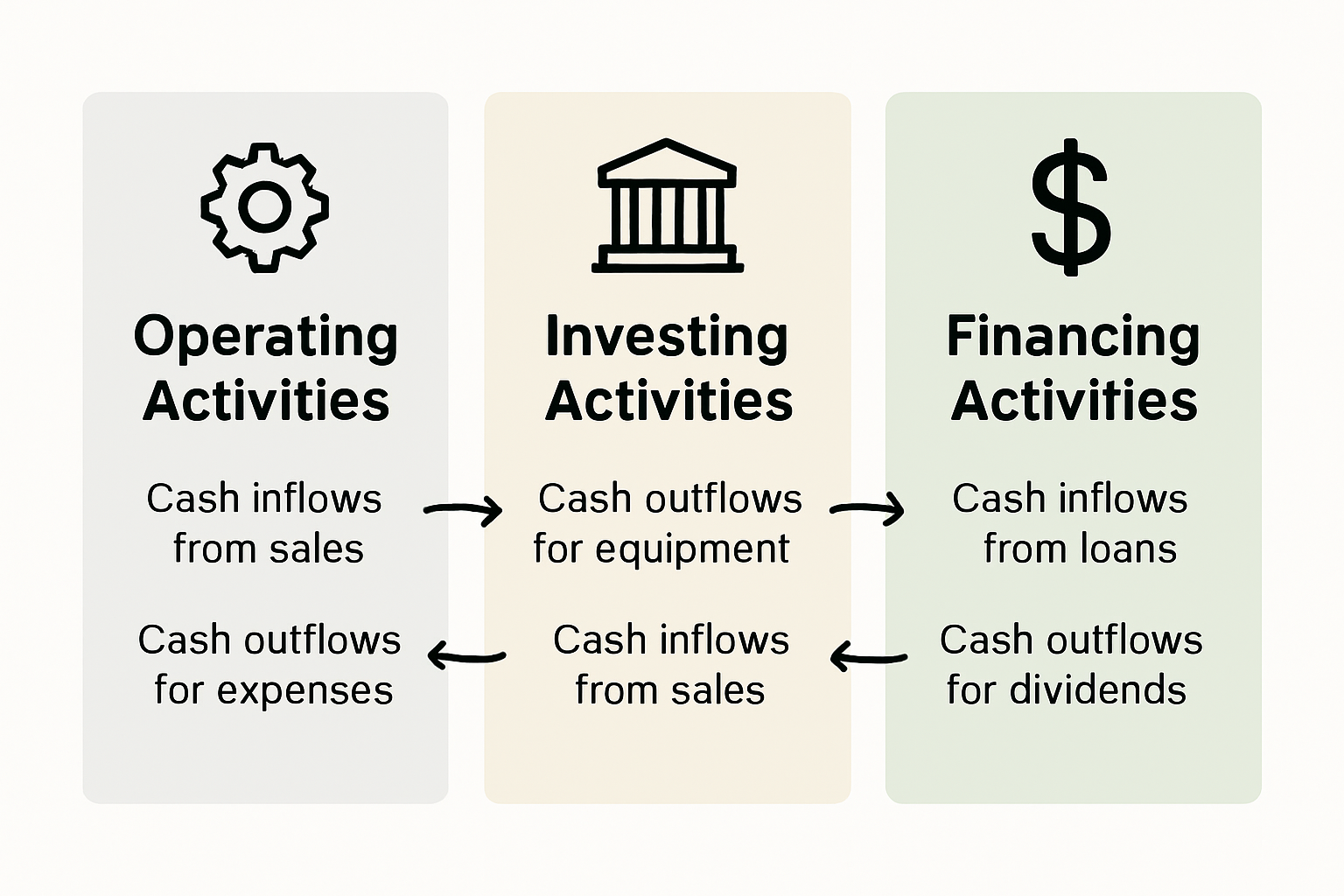
The typical cash flow statement breaks down into three core sections: operating activities, investing activities, and financing activities. Operating activities track cash generated from core business operations like sales and expenses. Investing activities capture cash spent on long-term assets like equipment or property. Financing activities record transactions involving debt, loans, or owner investments. By tracking cash movement across these categories, businesses can generate enough cash to continue operations and pay obligations.
Key components that small business owners should understand in their cash flow statements include:
- Net Cash Flow: The total amount of cash moving in and out of the business
- Cash Inflows: Money coming into the business from sales, investments, or loans
- Cash Outflows: Money leaving the business for expenses, purchases, and debt payments
- Operating Cash Flow: Cash generated from primary business activities
Accurate cash flow statements transform financial data into actionable business intelligence, helping entrepreneurs make informed decisions about spending, investing, and growth strategies.
Types of Cash Flow Activities Explained
Cash flow statements are essential financial tools that break down a business’s monetary movements into three distinct categories. A statement of cash flows displays incoming and outgoing money from three primary types of activities: operating, investing, and financing. Understanding these categories helps small business owners gain deeper insights into their financial dynamics and make more informed strategic decisions.

Operating activities represent the core cash transactions directly related to a company’s primary business functions. These include cash received from customer sales, payments to suppliers, employee wages, and other day-to-day operational expenses. This section reveals how effectively a business generates cash from its core services or products, providing a clear picture of the company’s fundamental financial health. The firm’s statement of cash flow separates cash flow into specific categories like cash flow from operations, allowing for precise financial analysis.
The investing activities section captures cash flows related to long-term asset investments and disposals. This includes purchasing or selling equipment, property, vehicles, or other significant business assets. For small businesses, these transactions might involve buying new machinery, selling outdated equipment, or making strategic investments in business infrastructure. These activities demonstrate how a company allocates resources for future growth and potential expansion.
Financing activities track cash movements involving external funding sources and interactions with business owners or investors. This category includes transactions such as:
- Obtaining business loans
- Repaying debt
- Issuing or buying back company stock
- Paying dividends to shareholders
- Owner contributions or withdrawals
By examining these three distinct cash flow activities, small business owners can develop a comprehensive understanding of their financial ecosystem, identifying strengths, potential challenges, and opportunities for strategic financial management.
Breaking Down Operating, Investing, Financing Sections
Cash flows are classified into three types of economic activity: Operating, Investing, and Financing Activities. Each section provides unique insights into a small business’s financial movements, helping entrepreneurs understand their financial health from different perspectives. These categories work together to paint a comprehensive picture of how money enters, moves through, and exits the business.
Operating Activities: The Financial Heartbeat
Operating activities represent the core cash transactions directly tied to a company’s primary business functions. This section captures the day-to-day financial pulse of the business, including cash received from customer sales, payments to suppliers, employee wages, rent, utilities, and other routine operational expenses. For a home service business in Kansas City, this might include payments received from clients, money spent on supplies, technician salaries, and vehicle maintenance costs. Positive operating cash flow indicates that the business can generate sufficient cash from its core operations to sustain and potentially grow the company.
Investing Activities: Strategic Resource Allocation
Investing activities track long-term asset transactions that impact the business’s future potential. These cash flows reveal how a company allocates resources for future growth and infrastructure development. For small businesses, investing activities might involve purchasing essential equipment, upgrading technology, buying vehicles for service delivery, or selling outdated assets. A home service business might show cash outflows for buying new service trucks, purchasing specialized tools, or investing in software systems to improve operational efficiency. These transactions demonstrate the company’s strategic approach to long-term investment and resource management.
Financing Activities: Capital and Ownership Dynamics
Financing activities capture cash movements related to external funding and ownership changes. This section provides insights into how the business secures and manages its capital structure. Key transactions include:
- Obtaining business loans or lines of credit
- Repaying existing debt
- Owner capital contributions
- Distributing profits to owners
- Issuing or purchasing company stock
Understanding financing activities helps small business owners track their external financial relationships, manage debt effectively, and make informed decisions about capital acquisition and distribution. By analyzing these cash flow sections together, entrepreneurs can develop a nuanced understanding of their business’s financial strategy and potential for sustainable growth.
Common Cash Flow Mistakes to Avoid
Almost two-thirds of small-business owners struggle to maintain good cash flow, making it critical to understand and proactively manage financial challenges. Cash flow management is not just about tracking numbers, but about making strategic decisions that ensure your business remains financially healthy and resilient. Recognizing and avoiding common pitfalls can mean the difference between business survival and unnecessary financial stress.
Misinterpreting Profitability as Cash Flow
One of the most dangerous mistakes small business owners make is confusing paper profits with actual cash available. A business can show impressive revenue on paper but still face critical cash shortages. This happens when businesses don’t track the timing of income and expenses, leading to situations where money is owed but not yet received. Home service businesses in Kansas City, for instance, might complete jobs that won’t be paid for 30 or 60 days, creating potential cash flow gaps that can strain day-to-day operations.
Neglecting Financial Reporting
Many small business owners don’t use their financial reports to their full advantage, missing crucial opportunities to improve profitability and make strategic management decisions. Consistent financial reporting allows businesses to:
- Identify spending patterns
- Predict potential cash shortages
- Recognize seasonal revenue fluctuations
- Make data-driven investment decisions
- Understand true business performance
Overlooking Cash Reserve Strategies
Small businesses frequently underestimate the importance of maintaining cash reserves. Unexpected expenses, economic downturns, or sudden market changes can quickly derail businesses without a financial cushion. Successful entrepreneurs typically aim to maintain 3-6 months of operating expenses in readily accessible accounts. This buffer provides flexibility during lean periods and protects against potential business disruptions.
Additional critical cash flow mistakes include poor invoicing practices, failing to negotiate favorable payment terms with vendors, and not separating personal and business finances. By developing a proactive approach to financial management, small business owners can transform cash flow from a potential source of stress into a strategic business advantage.
Using Cash Flow Statements for Better Decisions
The cash flow statement is one of the most critical information tools for understanding how much money you need to start and keep your business running. Small business owners can transform these financial documents from static reports into powerful strategic planning tools that guide critical business decisions. By carefully analyzing cash flow statements, entrepreneurs gain insights that go far beyond simple number-crunching, enabling more informed and proactive financial management.
Forecasting and Predicting Financial Needs
Cash flow statements provide a dynamic roadmap for anticipating future financial requirements. By examining historical patterns of income and expenses, business owners can predict potential cash shortages, identify seasonal revenue fluctuations, and plan strategic investments. For home service businesses in Kansas City, this might mean understanding how winter slow seasons impact cash reserves or planning equipment purchases during peak revenue periods. The business financial statements guide can offer additional insights into interpreting these critical financial indicators.
Strategic Investment and Growth Planning
Decisive business growth requires more than ambition – it demands precise financial understanding. Cash flow statements reveal the true capacity for expansion by showing:
- Available funds for new equipment
- Potential for hiring additional staff
- Capacity to take on larger projects
- Buffer for unexpected expenses
- Opportunities for strategic investments
Risk Management and Financial Stability
Beyond growth, cash flow statements serve as an early warning system for potential financial challenges. By tracking cash movements across operating, investing, and financing activities, business owners can identify trends that might indicate emerging risks. This might include declining revenue, increasing expenses, or unsustainable debt levels. Proactive entrepreneurs use these insights to adjust strategies, cut unnecessary expenses, or seek additional funding before financial challenges become critical problems.
Ultimately, cash flow statements are more than historical records – they are dynamic tools for strategic decision-making. By treating these documents as living, breathing financial guides, small business owners can transform financial reporting from a mundane administrative task into a powerful mechanism for sustainable business growth.
Take Control of Your Cash Flow with Expert Bookkeeping Support
Understanding cash flow statements and their impact on your small business is crucial to avoid common pitfalls like confusing profitability with actual cash availability or neglecting financial reporting. If you find managing operating, investing, and financing activities overwhelming, you are not alone. Many business owners struggle with maintaining accurate, actionable cash flow insights that fuel smart decisions and sustainable growth.

Let Kenworthy Bookkeeping help you transform your cash flow challenges into clear opportunities. Our expert team specializes in QuickBooks Online bookkeeping designed for small businesses in Kansas City. We handle everything from bank reconciliations to precise categorization and tax season preparation so you can focus on growing your business with confidence. Don’t let cash flow surprises hold you back this year. Get personalized support that turns your financial data into a strategic advantage. Start by scheduling your consultation at Kenworthy Bookkeeping Consultation today and build the financial clarity your business deserves.
Frequently Asked Questions
What is a cash flow statement?
A cash flow statement is a financial document that tracks the actual movement of money in and out of a business, providing insights into cash generation and management.
Why are cash flow statements important for small businesses?
Cash flow statements are critical for small businesses as they reveal real cash positions, help predict shortfalls, and support strategic financial decisions.
What are the main components of a cash flow statement?
The main components include net cash flow, cash inflows (money received), cash outflows (money spent), and operating cash flow (cash from primary business activities).
How can cash flow statements help in financial planning?
Cash flow statements assist in financial planning by allowing business owners to forecast future financial needs, identify trends, and strategize for investments and growth.
Recommended
- Business Financial Statements Guide for Small Businesses – Kenworthy Bookkeeping Blog
- Master Budget Planning Workflow for Small Businesses – Kenworthy Bookkeeping Blog
- Small Business Accounting: Streamlining Your Kansas City Finances – Kenworthy Bookkeeping Blog
- Role of Bookkeeping for Small Business Success – Kenworthy Bookkeeping Blog
- Essential Tips for Small Businesses to Save on Credit Card Fees – Omnichannel payments at the Point Of Sale | Sensepass
- Free IRS Advice On Preparing Form 433b






7 Comments
Comments are closed.