

Bookkeeping Checklist for Small Business Success Guide
Managing your finances can feel like a constant juggling act for home service business owners in Kansas City. With daily tasks piling up, keeping financial records accurate often gets pushed aside, but having a systematic approach for recording every transaction is key to staying on track. This guide walks you through simple, proven steps to set up a bookkeeping system that brings clarity, saves time, and supports smarter decisions for your growing business.
Table of Contents
- Step 1: Set Up Your Bookkeeping System
- Step 2: Gather and Categorize All Transactions
- Step 3: Reconcile Bank and Credit Card Accounts
- Step 4: Generate and Review Financial Reports
- Step 5: Prepare for Tax Filing and Compliance
Quick Summary
| Key Point | Explanation |
|---|---|
| 1. Set Up a Robust Bookkeeping System | Choose a suitable bookkeeping method, either manual or software, to ensure accurate financial tracking. |
| 2. Categorize All Transactions Systematically | Organize financial documents by type and use consistent naming for easy retrieval and classification. |
| 3. Regularly Reconcile Bank Accounts | Perform monthly reconciliations to match internal records with bank statements and catch discrepancies. |
| 4. Generate Key Financial Reports | Create balance sheets, income statements, and cash flow statements to understand business health and trends. |
| 5. Prepare Diligently for Tax Compliance | Gather and organize all financial records to facilitate accurate tax filing and minimize penalties. |
Step 1: Set Up Your Bookkeeping System
Establishing a robust bookkeeping system is your first critical step toward financial clarity and business success. Your goal is to create a systematic approach for tracking every financial transaction accurately and consistently. Accurate bookkeeping practices will help you monitor cash flow, prepare for tax season, and make informed business decisions.
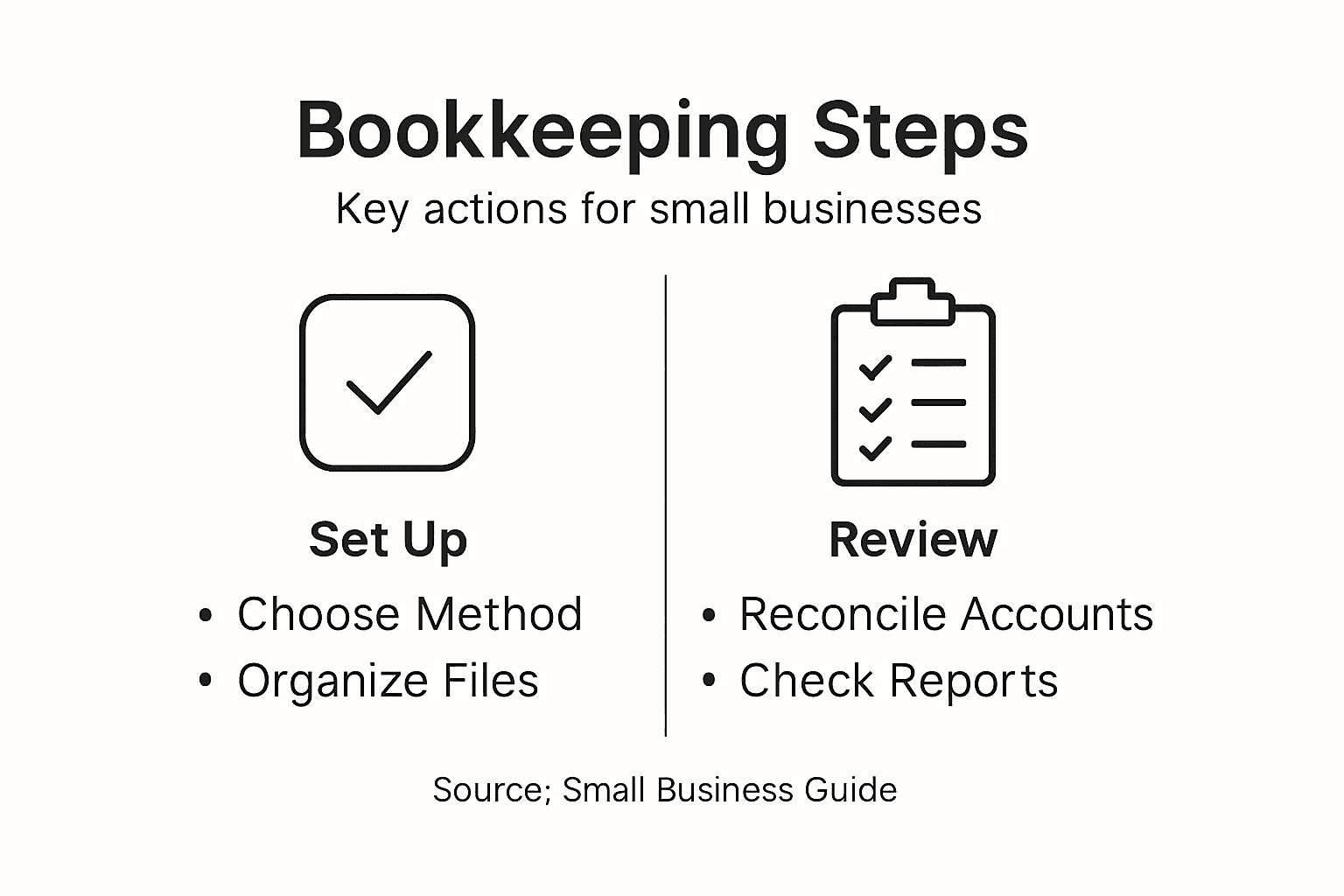
To set up your bookkeeping system effectively, start by selecting the right method for your business size and complexity. Small businesses have multiple options: manual record keeping or digital accounting software. Most modern entrepreneurs prefer software solutions because they automate complex tasks and reduce human error. Focus on choosing a system that allows you to categorize transactions easily, track income and expenses, and generate financial reports with minimal effort. Your chosen system should accommodate systematic recording of financial transactions including sales, purchases, receipts, and payments.
Organize your financial documents systematically from the start. Create digital folders or physical filing systems for receipts, invoices, bank statements, and tax documents. Develop a consistent naming convention for your files and set a regular schedule for updating your records. Commit to entering transactions weekly to prevent backlogs and maintain real-time financial visibility.
Pro tip: Consider scheduling a monthly 90-minute review of your financial records to catch potential errors early and maintain your bookkeeping system’s accuracy.
Here’s a comparison of bookkeeping system methods for small businesses:
| Method | Setup Complexity | Automation Level | Best For |
|---|---|---|---|
| Manual Record Keeping | Low | None | Micro businesses |
| Spreadsheet-Based | Medium | Moderate | Startups, freelancers |
| Accounting Software | High | Advanced | Growing small businesses |
| Cloud-Based Bookkeeping | Medium | High | Remote teams |
Step 2: Gather and Categorize All Transactions
Gathering and systematically categorizing your business transactions is crucial for maintaining accurate financial records. Your goal in this step is to collect every single financial document and sort them into clear, standardized account categories that provide a comprehensive view of your business finances.
Proper transaction classification involves collecting all receipts, invoices, bank statements, and financial records. Start by creating separate digital or physical folders for different transaction types such as sales income, operational expenses, equipment purchases, and tax-related documents. Focus on capturing details like transaction date, amount, vendor or customer name, and payment method. Use consistent naming conventions for your files to make future retrieval and review easier.
Break down your transactions into standard accounting categories such as assets, liabilities, equity, revenue, and expenses. This systematic approach helps you track spending patterns, identify potential tax deductions, and generate accurate financial statements. For each transaction, ask yourself key questions: Was this an income-generating activity? An operational expense? A capital investment? By understanding the nature of each transaction, you can ensure precise categorization and maintain a clear financial picture of your business.
Pro tip: Consider using color-coded labels or digital tags to quickly distinguish between different transaction types and streamline your categorization process.
Step 3: Reconcile Bank and Credit Card Accounts
Reconciling your bank and credit card accounts is a critical financial management task that helps you maintain accurate financial records and detect potential errors or fraudulent activities. By comparing your internal financial records with official bank statements, you will ensure your business finances are precise and transparent.

Bank reconciliation process involves systematically matching every transaction in your business records against your bank and credit card statements. Start by gathering your most recent bank statements and your internal financial records. Carefully review each transaction line by line, checking that amounts match exactly. Pay special attention to outstanding checks, unrecorded deposits, bank fees, and any discrepancies that might indicate errors or unauthorized transactions.
Develop a consistent monthly reconciliation routine to stay on top of your financial accuracy. Create a spreadsheet or use accounting software to track differences between your records and bank statements. Look for common discrepancies such as pending transactions, automatic payments, service charges, or interest earned. By reconciling accounts regularly, you will catch potential issues early, maintain clean financial records, and gain a clear understanding of your business cash flow.
Pro tip: Set a specific day each month for account reconciliation and create a dedicated workspace free from distractions to help you focus on detailed financial review.
Step 4: Generate and Review Financial Reports
Generating and reviewing financial reports is crucial for understanding your business’s financial health and making strategic decisions. These reports provide a comprehensive snapshot of your company’s performance, revealing critical insights about revenue, expenses, profitability, and potential areas for improvement.
Financial reports for small businesses typically include three key documents: the balance sheet, income statement, and cash flow statement. Start by collecting all your financial records and organizing them systematically. The balance sheet will show your business assets, liabilities, and equity at a specific point in time. Your income statement will outline revenues and expenses, helping you understand your overall profitability. The cash flow statement tracks how money moves in and out of your business, providing insight into your liquidity and financial flexibility.
Review these financial reports with a critical eye, looking for trends, anomalies, and potential opportunities for cost reduction or revenue enhancement. Compare your current reports with previous periods to identify consistent patterns or sudden changes. Pay special attention to key performance indicators such as gross profit margin, net profit margin, and operating expenses. By regularly analyzing these documents, you will gain actionable insights that can help you make informed strategic decisions and maintain your business’s financial health.
Pro tip: Schedule a quarterly deep dive into your financial reports with a trusted advisor or mentor who can provide an objective perspective on your business performance.
Here are key financial reports and their purpose:
| Report Type | Main Focus | Business Insight Provided |
|---|---|---|
| Balance Sheet | Assets, Liabilities, Equity | Overview of financial position |
| Income Statement | Revenue, Expenses | Profitability over a period |
| Cash Flow | Inflows, Outflows | Liquidity and cash management |
Step 5: Prepare for Tax Filing and Compliance
Preparing for tax filing requires careful planning and systematic organization of your business financial records. Your goal is to ensure accurate tax submissions, minimize potential penalties, and maintain compliance with federal and state tax regulations.
Small business tax preparation involves gathering comprehensive documentation of your annual financial activities. Collect all necessary records including income statements, expense receipts, payroll documents, and bank statements. Understand which tax forms are specific to your business structure whether you are a sole proprietorship, partnership, or corporation. Organize these documents chronologically and ensure each transaction is properly categorized to simplify the filing process and support potential audit requirements.
Create a tax preparation checklist that includes critical deadlines, required forms, and potential deductions specific to your industry. Review your financial records carefully to identify all eligible business expenses that can reduce your tax liability. Consider working with a tax professional who understands the nuanced tax requirements for small businesses in your specific sector. Remember that proactive tax planning throughout the year can help you avoid last-minute stress and potential financial complications.
Pro tip: Set up a dedicated digital folder system where you save tax-related documents immediately after receiving them to prevent last-minute scrambling during tax season.
Take Control of Your Small Business Finances with Expert Bookkeeping Support
Setting up and maintaining an accurate bookkeeping system is vital for your business success but it can feel overwhelming to keep up with transaction categorization, bank reconciliations, and preparing clear financial reports. You want peace of mind knowing your records are accurate and up-to-date so tax filing and strategic decisions become easier. This guide highlighted the importance of consistent bookkeeping practices, but you do not have to manage everything alone.
At Kenworthy Bookkeeping, we specialize in making bookkeeping effortless for small businesses in the Kansas City area. Using QuickBooks Online, we handle precise transaction categorization, timely bank reconciliations, and comprehensive Profit and Loss reports tailored to your needs. Our mission is to help you regain control of your business finances, reduce stress, and increase profitability. Let us be your trusted financial partner to keep your books accurate and your tax preparation streamlined.
Are you ready to experience the relief of expert bookkeeping support that aligns perfectly with the steps in this checklist?

Get started today by scheduling a personalized consultation at Kenworthy Bookkeeping. Discover how we can help you build a strong financial foundation with confidence and ease. Don’t wait until tax season or financial confusion takes over. Take the next step towards financial clarity now.
Frequently Asked Questions
How do I set up a bookkeeping system for my small business?
To set up a bookkeeping system, choose a method that fits your business size and needs. Decide between manual record keeping or digital accounting software, and aim to enter transactions weekly to maintain financial clarity.
What types of financial transactions should I categorize?
You should categorize all financial transactions, including sales income, operational expenses, and capital investments. Break them down into standard accounting categories such as assets, liabilities, equity, revenue, and expenses for better tracking and analysis.
How often should I reconcile my bank and credit card accounts?
You should reconcile your bank and credit card accounts monthly to ensure that your financial records match your bank statements. Set a specific day each month for this task to maintain consistency and catch any discrepancies early.
What financial reports should I generate regularly?
Regularly generate a balance sheet, income statement, and cash flow statement. These reports provide crucial insights into your financial health, so review them at least quarterly to make informed business decisions.
How can I prepare my business for tax filing?
To prepare for tax filing, gather all necessary documentation, including income statements, expense receipts, and payroll records. Organize these documents chronologically and create a tax preparation checklist to track deadlines and required forms.
What should I do if I find errors during my bookkeeping review?
If you find errors during your bookkeeping review, investigate them immediately to determine their cause. Correct any discrepancies promptly and consider scheduling regular reviews to minimize mistakes in the future.