
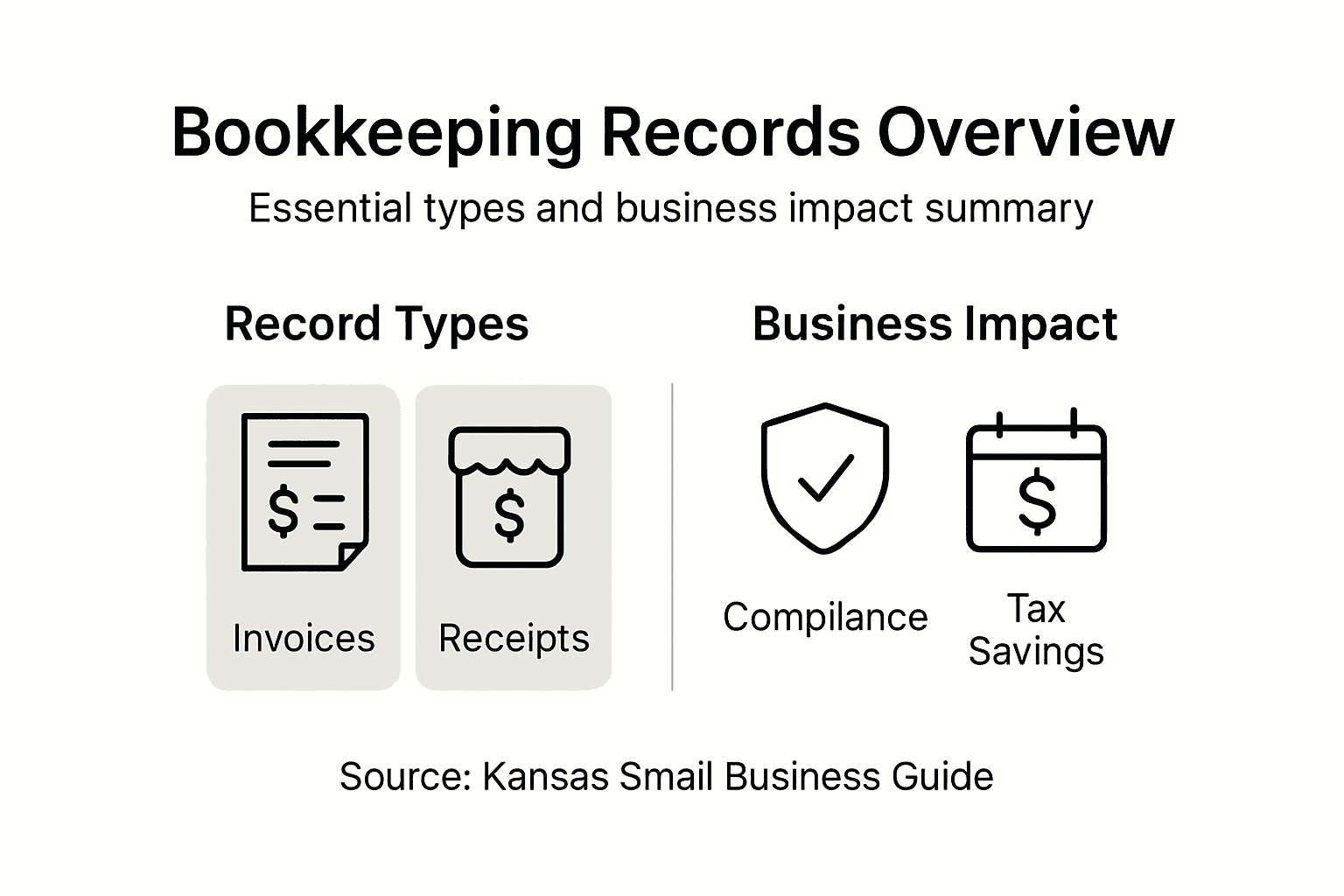
Why Retain Bookkeeping Records – The Business Impact
Lost receipts and jumbled paperwork can leave Kansas City home service business owners feeling overwhelmed every tax season. Without organized bookkeeping records, it becomes nearly impossible to track income, monitor expenses, or defend deductions if the Internal Revenue Service comes calling. Accurate financial documentation not only safeguards your business during audits but also brings real clarity to your bottom line. Discover practical guidance to help you regain control, meet legal requirements, and pave the way for financial peace of mind.
Table of Contents
- Defining Bookkeeping Records And Their Importance
- Legal Requirements For Record Retention In Kansas
- Irs Rules And Audit Risks For Small Businesses
- Financial Reporting And Tax Preparation Benefits
- Common Recordkeeping Mistakes To Avoid
Key Takeaways
| Point | Details |
|---|---|
| Importance of Bookkeeping Records | Keeping accurate bookkeeping records is essential for monitoring financial health and supporting strategic decisions. They also prepare businesses for tax compliance and potential audits. |
| Legal Retention Requirements | Small businesses in Kansas must understand and adhere to specific record retention periods to protect legal and financial interests. Different types of documents typically require retention from three to seven years. |
| IRS Audit Risks | Increased IRS scrutiny on small businesses necessitates meticulous record-keeping to defend against audits and ensure compliance. Inadequate documentation can lead to penalties and prolonged legal issues. |
| Benefits of Financial Reporting | Comprehensive financial statements enhance decision-making and streamline tax preparation, allowing businesses to understand their financial position and make informed strategies for growth. |
Defining Bookkeeping Records and Their Importance
Bookkeeping records represent the foundational financial documentation that captures every monetary transaction within a business. These systematic records are more than simple paperwork – they are the financial narrative of your company’s economic journey. According to the Internal Revenue Service, bookkeeping records include critical documents such as sales slips, invoices, receipts, deposit slips, and canceled checks that track business transactions.
At their core, bookkeeping records serve multiple essential functions for small businesses. They provide a comprehensive snapshot of financial health, enabling business owners to monitor income streams, track expenses, prepare accurate tax returns, and make informed strategic decisions. Small service businesses in Kansas City rely on these records to understand cash flow, identify potential tax deductions, and maintain compliance with federal and state regulations.
The primary components of effective bookkeeping records typically include financial statements like profit and loss reports, balance sheets, cash flow statements, and detailed transaction logs. These documents help business owners establish internal financial controls that protect the company’s financial integrity and support long-term growth strategies. Maintaining organized, accurate records is not just a regulatory requirement – it’s a strategic tool for understanding and improving business performance.
Here’s a quick reference comparing major types of bookkeeping records and their business impact:
| Record Type | Primary Purpose | Business Impact |
|---|---|---|
| Sales slips | Document customer purchases | Track revenue and sales trends |
| Invoices | Request payment for services | Manage receivables efficiently |
| Receipts | Confirm payment received | Validate expense claims |
| Deposit slips | Record bank deposits | Monitor cash flow accuracy |
| Canceled checks | Show payments made | Substantiate business expenses |
| Financial statements | Summarize overall finances | Guide strategic decisions |
Pro tip: Implement a consistent digital filing system for your financial documents, storing digital copies of receipts, invoices, and bank statements in clearly labeled folders to simplify record-keeping and tax preparation.
Legal Requirements for Record Retention in Kansas
Business record retention in Kansas involves complex legal requirements that small business owners must carefully navigate. The state mandates specific protocols for managing and preserving financial documentation to ensure transparency and accountability. State records management programs require businesses to establish systematic approaches to document preservation, with clear guidelines for how long different types of records must be maintained.
For small businesses in Kansas City, record retention isn’t just about compliance – it’s about protecting the company’s legal and financial interests. Different types of documents have varying retention periods, typically ranging from three to seven years depending on the specific record type. Tax records, financial statements, employee payroll information, and contracts each have unique retention requirements that businesses must carefully track and manage.

The complexity of Kansas record retention becomes particularly evident in specialized industries. For instance, the Kansas Department for Children and Families provides a model for meticulous record management, with some sensitive documents being retained indefinitely based on specific criteria. Small businesses must develop robust filing systems that not only meet legal requirements but also provide easy access to historical financial information when needed for audits, tax preparation, or potential legal proceedings.
The following table summarizes typical Kansas record retention periods and their legal significance:
| Document Type | Typical Retention Period | Legal Purpose |
|---|---|---|
| Tax returns | 7 years | IRS audit defense |
| Payroll records | 3-7 years | Employment regulation proof |
| Contracts | 7 years after expiry | Legal compliance |
| Bank statements | 3-7 years | Financial verification |
| Sensitive case files | Indefinite (criteria-based) | Protect sensitive data |
Pro tip: Create a comprehensive record retention calendar that clearly outlines specific retention periods for different document types, and set up automated reminders to ensure timely document management and disposal.
IRS Rules and Audit Risks for Small Businesses
Small businesses in Kansas City face increasing scrutiny from the Internal Revenue Service, making comprehensive financial documentation more critical than ever. IRS targeting of small businesses has intensified, with a focused approach on identifying potential tax reporting discrepancies and ensuring complete financial transparency. This heightened audit risk means that maintaining meticulous and organized financial records is no longer optional – it’s a fundamental business survival strategy.
The primary areas of IRS examination typically include income reporting accuracy, expense deductions, payroll tax compliance, and consistency between reported income and actual business operations. Home service businesses, such as plumbing, electrical, and landscaping companies, are particularly vulnerable to closer scrutiny due to the cash-intensive nature of their work. Common red flags that might trigger an audit include significant fluctuations in reported income, disproportionate deductions compared to industry standards, and incomplete or inconsistent financial documentation.
Understanding the potential consequences of an IRS audit is crucial for small business owners. Inadequate record-keeping can result in substantial financial penalties, interest charges, and potentially lengthy legal proceedings that can drain both financial resources and emotional energy. Successful audit defense relies on having comprehensive, well-organized financial documentation that provides a clear and transparent view of the business’s financial activities. This includes maintaining detailed records of all income streams, tracking every business expense with corresponding receipts, and ensuring that financial statements accurately reflect the company’s economic reality.
Pro tip: Develop a digital record-keeping system that automatically categorizes and archives financial documents, and conduct quarterly internal audits to ensure your financial records remain consistently accurate and complete.
Financial Reporting and Tax Preparation Benefits
Financial reporting is the backbone of strategic business management for small service businesses in Kansas City. Comprehensive bookkeeping records enable business owners to transform raw financial data into actionable insights, providing a clear snapshot of the company’s financial health. These reports go beyond simple number tracking – they serve as a diagnostic tool that reveals operational strengths, identifies potential weaknesses, and supports informed decision-making.
The primary benefits of robust financial reporting extend far beyond basic tax compliance. Detailed financial statements like income statements, balance sheets, and cash flow reports help business owners understand critical metrics such as revenue streams, expense patterns, profitability per service line, and overall financial trajectory. Home service businesses can leverage these insights to optimize pricing strategies, identify most profitable service offerings, and make strategic investments in equipment, training, or marketing that directly contribute to bottom-line growth.
Tax preparation becomes significantly more streamlined and less stressful when comprehensive financial records are maintained consistently. Small businesses can dramatically reduce the time and complexity of annual tax filing by implementing systematic record-keeping practices that capture every financial transaction with precision. Proper documentation not only simplifies tax reporting but also provides a robust defense against potential IRS audits by demonstrating transparent and accurate financial management. The ability to quickly generate comprehensive financial reports can mean the difference between a smooth tax season and a potentially costly, time-consuming investigation.
Pro tip: Implement a digital bookkeeping system that automatically categorizes transactions and generates monthly financial reports, allowing you to track business performance in real-time and simplify tax preparation.
Common Recordkeeping Mistakes to Avoid
Small businesses frequently encounter recordkeeping challenges that can compromise their financial integrity and expose them to unnecessary risks. Common recordkeeping errors can create significant complications during tax season and potentially trigger costly IRS audits. These mistakes often stem from a lack of systematic documentation processes and inadequate understanding of financial record management.
One of the most critical errors home service businesses make is blending personal and business expenses. When bank accounts and credit cards are used interchangeably between personal and professional transactions, it becomes nearly impossible to accurately track business performance and prepare precise financial statements. This commingling of funds not only creates accounting nightmares but also raises red flags during tax reviews. Additionally, failing to retain supporting documentation like receipts, invoices, and bank statements can severely undermine a business’s ability to substantiate claimed expenses and income.
Technological limitations and inconsistent record maintenance further compound recordkeeping challenges. Many small business owners in Kansas City rely on outdated spreadsheets or manual tracking methods that are prone to human error and lack the robust features of modern digital accounting systems. Incomplete transaction logging, inconsistent categorization of expenses, and sporadic record updates can create significant gaps in financial documentation. These gaps can lead to inaccurate financial reporting, potential tax compliance issues, and diminished ability to make data-driven business decisions.
Pro tip: Invest in cloud-based accounting software that automatically categorizes transactions, generates digital receipts, and provides real-time financial insights to streamline your recordkeeping process.
Take Control of Your Business Finances with Expert Bookkeeping Support
Retaining accurate bookkeeping records is essential to protect your small business from IRS audit risks and to optimize your financial decision-making. If you struggle with organizing sales slips, invoices, receipts, and bank statements or worry about meeting Kansas record retention laws, you are not alone. These challenges often cause stress and lost time that could be spent growing your business.
Kenworthy Bookkeeping offers hands-on, effortless bookkeeping services designed specifically for small businesses in the Kansas City area. Using QuickBooks Online, we provide seamless categorization, thorough bank reconciliations, detailed profit and loss reports, and expert tax season preparation. Our approach helps you avoid common pitfalls like mixed personal and business expenses so you can confidently maintain legal compliance and financial clarity.

Don’t let recordkeeping overwhelm you or put your business at risk. Visit Kenworthy Bookkeeping Consult to schedule your consultation today. Take the first step to regain control over your finances, reduce audit anxiety, and make smarter business decisions now.
Frequently Asked Questions
Why is it important to retain bookkeeping records?
Retaining bookkeeping records is essential for businesses as they provide a comprehensive overview of financial health, enable accuracy in tax reporting, assist in making informed strategic decisions, and ensure compliance with legal requirements.
What types of documents should businesses keep as part of their bookkeeping records?
Businesses should maintain critical documents such as sales slips, invoices, receipts, deposit slips, canceled checks, and financial statements like profit and loss reports and balance sheets to ensure complete financial documentation.
How long should businesses retain their bookkeeping records?
Typically, businesses should retain tax records for at least seven years, while payroll records often need to be kept for three to seven years depending on specific regulations and business needs.
What are the potential risks of not keeping organized bookkeeping records?
Failing to maintain organized bookkeeping records can result in inaccurate financial reporting, increased scrutiny from tax authorities, potential penalties and fines, and hindered decision-making capabilities for the business.