

Role of Bookkeeping for Nonprofits: Ensuring Accountability
Managing budgets in a nonprofit organization often feels like solving a complicated puzzle, especially when every donation and grant must be tracked with absolute precision. In Kansas City, financial managers and treasurers are expected to maintain exceptional transparency and align every dollar with their mission. Nonprofit bookkeeping is fundamentally different from standard business accounting, requiring specialized fund tracking and adherence to unique reporting standards. This guide unpacks what sets nonprofit bookkeeping apart, exposing common myths and offering practical solutions for clearer, more accountable financial management.
Table of Contents
- Nonprofit Bookkeeping Defined and Debunked
- Core Functions in Nonprofit Financial Management
- Distinct Requirements for Nonprofit Bookkeeping
- Legal Compliance and Reporting Standards
- Common Pitfalls and How to Avoid Them
Key Takeaways
| Point | Details |
|---|---|
| Specialized Financial Management | Nonprofit bookkeeping differs significantly from for-profit accounting, requiring meticulous tracking of funds to ensure transparency and accountability. |
| Emphasis on Fund Tracking | Nonprofits must categorize income based on donor restrictions and maintain strict documentation for all financial transactions. |
| Compliance with Legal Standards | Adherence to both federal and state regulations is essential for maintaining tax-exempt status and ensuring organizational integrity. |
| Common Financial Pitfalls | Nonprofits should proactively address issues like inadequate recordkeeping and insufficient oversight to protect their mission and credibility. |
Nonprofit Bookkeeping Defined and Debunked
Nonprofit bookkeeping represents a specialized financial management approach distinctly different from traditional business accounting practices. Unlike for-profit entities, nonprofits require meticulous tracking and reporting of funds to maintain transparency and fulfill their mission-driven objectives.
At its core, nonprofit bookkeeping involves recording and organizing financial transactions with unique accountability requirements. Accounting standards for nonprofit entities are specifically designed to address the sector’s distinctive financial reporting needs, emphasizing donor intent and fund allocation transparency.
Key characteristics of nonprofit bookkeeping include:
- Tracking restricted and unrestricted funds
- Documenting revenue sources like grants, donations, and program income
- Ensuring compliance with tax-exempt status regulations
- Creating specialized financial statements reflecting organizational mission
- Demonstrating responsible stewardship of contributed resources
The fundamental difference between nonprofit and for-profit bookkeeping lies in financial purpose. While businesses track profitability, nonprofits focus on mission accomplishment and fund management. This means categorizing income based on donor restrictions and maintaining strict accountability for how every dollar is spent.
Here’s a comparison of nonprofit versus for-profit bookkeeping priorities:
| Aspect | Nonprofit Bookkeeping | For-Profit Bookkeeping |
|---|---|---|
| Financial Focus | Mission accomplishment | Profit maximization |
| Income Categorization | By donor restrictions | By product/service revenue |
| Reporting Standards | Emphasize transparency | Emphasize profitability |
| Accountability | Stewardship of donations | Return to shareholders |
Fund Tracking Essentials
Proper fund tracking requires nonprofits to:
- Separate revenue streams by funding source
- Document specific use restrictions
- Maintain detailed expense records
- Provide transparent financial reporting
Pro tip: Implement a robust fund accounting system that allows granular tracking of donor-designated funds to maintain organizational credibility and compliance.
Core Functions in Nonprofit Financial Management
Nonprofit financial management represents a complex ecosystem of strategic planning, precise documentation, and rigorous accountability. Unlike traditional business financial operations, nonprofit financial management requires a mission-driven approach that balances fiscal responsibility with programmatic objectives.

Financial reporting standards for nonprofits have evolved to enhance transparency and provide comprehensive insights into organizational financial health. These standards mandate detailed disclosures about net assets, expenses, and grant allocations, ensuring donors and stakeholders can track how resources are utilized.
Key core functions in nonprofit financial management include:
- Budget development and monitoring
- Revenue tracking and fund allocation
- Financial reporting and compliance
- Grant management and restricted fund administration
- Internal financial control systems
- Risk management and financial sustainability planning
Compliance and Reporting Responsibilities
Nonprofit financial managers must navigate complex regulatory environments while maintaining organizational integrity. This involves:
- Preparing accurate annual financial statements
- Maintaining detailed documentation of all financial transactions
- Ensuring alignment with tax-exempt status requirements
- Conducting regular internal financial audits
- Providing transparent reporting to board members and stakeholders
Effective financial management isn’t just about numbers—it’s about telling the organization’s financial story with clarity and precision.
The ultimate goal of these core functions is to demonstrate responsible stewardship of donated resources, build donor confidence, and support the nonprofit’s mission-driven objectives.
Pro tip: Implement a comprehensive financial management system that integrates real-time tracking, automated reporting, and granular fund designation capabilities to streamline nonprofit financial operations.
Distinct Requirements for Nonprofit Bookkeeping
Nonprofit bookkeeping represents a specialized financial management approach that goes far beyond traditional accounting practices. Unlike for-profit entities, nonprofits must meticulously track and document financial resources with extraordinary precision and transparency, ensuring every dollar aligns with the organization’s mission and donor intentions.
Nonprofit accounting practices require unique approaches that distinguish them from standard business financial management. These specialized practices demand rigorous fund segregation, precise income categorization, and strict adherence to regulatory guidelines specific to tax-exempt organizations.
Key distinctive requirements for nonprofit bookkeeping include:
- Segregating funds with donor-imposed restrictions
- Maintaining separate bank accounts for different fund types
- Tracking program-specific expenses and revenues
- Documenting compliance with tax-exempt status regulations
- Creating specialized financial statements
- Implementing robust internal control mechanisms
Fund Accounting Fundamentals
Nonprofit organizations must navigate complex financial reporting requirements through specialized accounting techniques:
- Classify donations as restricted or unrestricted
- Develop comprehensive tracking systems for grant funds
- Maintain detailed documentation of fund usage
- Ensure transparent financial reporting
- Align financial records with organizational mission
Nonprofit bookkeeping is not just about recording numbers—it’s about telling the financial story of an organization’s impact and integrity.
The ultimate goal of these distinct requirements is to demonstrate financial accountability, maintain donor trust, and support the organization’s mission-driven objectives.
Pro tip: Implement a specialized fund accounting system that provides real-time tracking, automated reporting, and granular fund designation capabilities to ensure complete financial transparency.
Legal Compliance and Reporting Standards
Nonprofit organizations operate within a complex legal landscape that demands rigorous financial transparency and accountability. Maintaining tax-exempt status requires meticulous adherence to federal and state regulations that govern financial reporting, record-keeping, and organizational conduct.
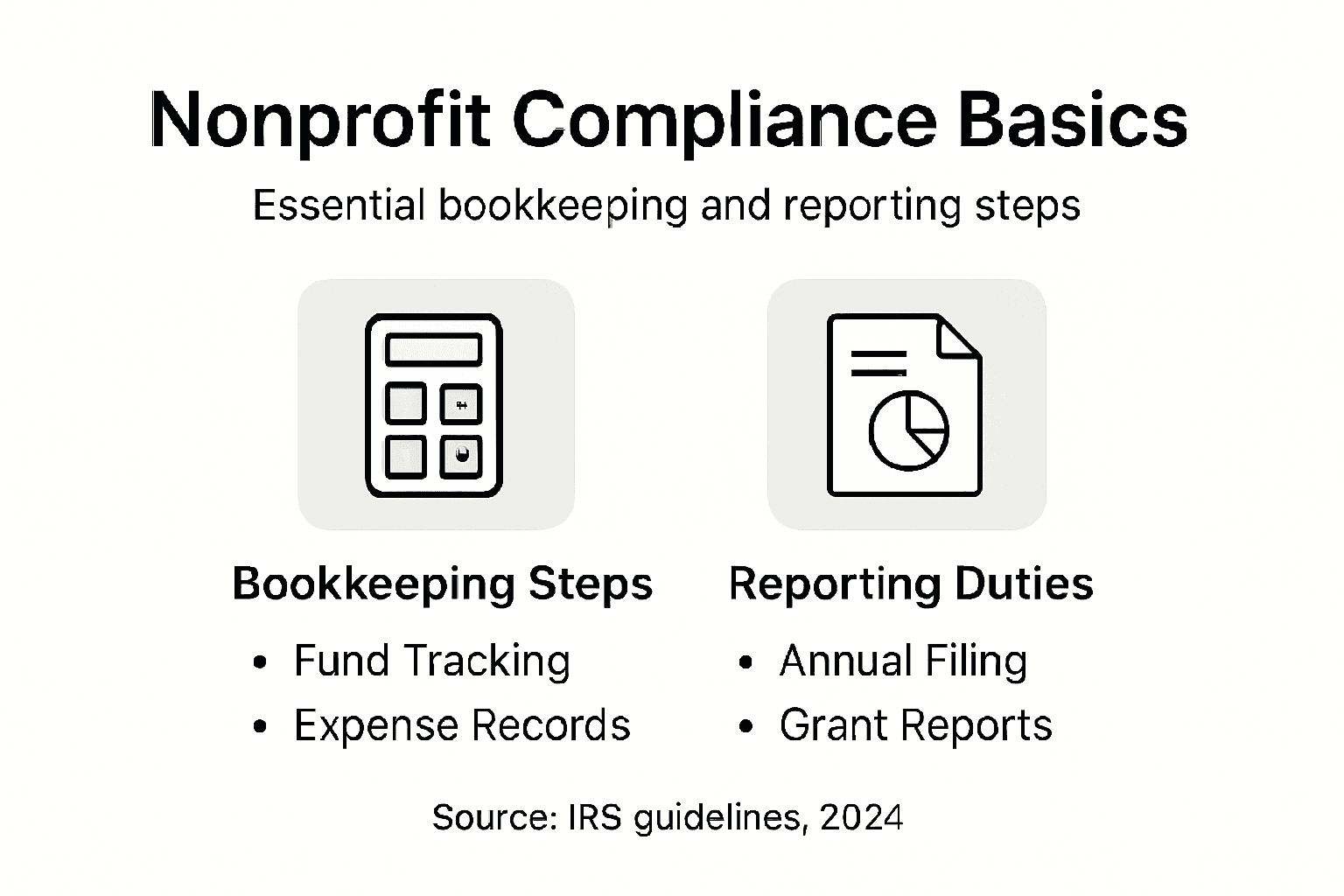
IRS reporting requirements for nonprofits create a comprehensive framework that mandates detailed documentation and annual financial disclosures. These regulations are designed to ensure that nonprofit organizations maintain their mission-driven focus and use donated resources responsibly and ethically.
Key legal compliance and reporting standards include:
- Annual Form 990 filing requirements
- Detailed record-keeping documentation
- Transparent financial reporting
- Compliance with federal and state regulations
- Maintaining accurate donor contribution records
- Tracking and reporting restricted fund usage
Reporting Compliance Fundamentals
Nonprofit organizations must navigate multiple layers of legal requirements:
- Complete comprehensive annual financial reports
- Maintain detailed transaction documentation
- Implement robust internal control systems
- Ensure transparency in financial communications
- Prepare for potential government audits
Compliance is not just a legal obligation—it’s a commitment to organizational integrity and donor trust.
Federal audit requirements add another layer of complexity for nonprofits receiving significant government funding. Federal audit standards ensure that organizations maintain the highest levels of financial accountability and transparency.
The ultimate goal of these legal standards is to protect donor interests, maintain organizational credibility, and ensure that nonprofit resources are used effectively to support their mission.
Below is a summary of essential legal compliance actions for nonprofits:
| Compliance Area | Primary Task | Typical Frequency |
|---|---|---|
| Tax Filings | Submit annual Form 990 | Annually |
| Audit Preparation | Conduct internal financial reviews | Quarterly or Annually |
| Donor Records | Maintain contribution documentation | Ongoing |
| State Regulations | File state-specific reports | Varies by jurisdiction |
Pro tip: Develop a comprehensive compliance calendar that tracks all reporting deadlines, audit requirements, and documentation needs to stay ahead of legal obligations.
Common Pitfalls and How to Avoid Them
Nonprofit financial management presents unique challenges that can quickly derail an organization’s mission and credibility. Understanding and proactively addressing these potential pitfalls is crucial for maintaining financial integrity and sustaining donor trust.
Nonprofit compliance challenges reveal consistent patterns of financial mismanagement that can compromise an organization’s tax-exempt status and operational effectiveness. These risks demand strategic prevention and meticulous financial oversight.
Common nonprofit bookkeeping pitfalls include:
- Inadequate fund segregation
- Poor recordkeeping practices
- Insufficient board financial oversight
- Missed regulatory filing deadlines
- Lack of internal financial controls
- Inconsistent expense tracking
- Incomplete documentation of donor restrictions
Risk Mitigation Strategies
Nonprofit organizations can protect themselves by implementing robust prevention mechanisms:
- Develop comprehensive financial policies
- Conduct regular internal financial reviews
- Provide ongoing staff training
- Establish clear segregation of financial duties
- Maintain detailed documentation
Financial mistakes can cost more than money—they can cost organizational credibility.
Audit readiness strategies emphasize the importance of proactive financial management. Organizations must create systems that not only track finances but anticipate potential compliance challenges before they emerge.
Successful nonprofits view financial management as a dynamic, strategic process that supports their mission rather than a static administrative task.
Pro tip: Create a comprehensive compliance checklist with clear responsibilities, deadlines, and documentation requirements to systematically address potential financial management risks.
Strengthen Your Nonprofit’s Financial Accountability with Expert Bookkeeping
Nonprofit organizations face unique challenges in maintaining transparent fund tracking and strict compliance with legal reporting requirements. If you are managing restricted and unrestricted funds, tracking donor intentions, or striving to produce accurate financial statements that showcase responsible stewardship, expert bookkeeping is essential. At Kenworthy Bookkeeping, we understand these critical needs and specialize in providing tailored services that support your mission through diligent financial management.

Take control of your nonprofit’s finances today by partnering with professionals who focus on clarity, compliance, and efficiency. Our services include precise categorization, bank reconciliations, and customized financial reporting aligned with nonprofit standards. Don’t leave your organization’s accountability to chance. Connect now with Kenworthy Bookkeeping for a consultation and ensure your financial story reflects the integrity and impact your nonprofit stands for.
Frequently Asked Questions
What is the importance of bookkeeping for nonprofits?
Bookkeeping for nonprofits is essential for ensuring financial accountability, transparency, and adherence to legal regulations. It helps track income, manage expenses, and demonstrate responsible stewardship of donations.
How does nonprofit bookkeeping differ from for-profit bookkeeping?
Nonprofit bookkeeping focuses on mission accomplishment and fund management rather than profit maximization. It requires stricter tracking of restricted funds and transparent reporting to maintain donor trust.
What are common pitfalls in nonprofit bookkeeping?
Common pitfalls include inadequate fund segregation, poor recordkeeping, missed regulatory filing deadlines, and insufficient board oversight. Addressing these risks is crucial for maintaining financial integrity.
What are essential functions of nonprofit financial management?
Essential functions include budget development, revenue tracking, compliance reporting, grant management, and maintaining internal financial controls to ensure organizational sustainability.