

Role of P&L in business: guide for Kansas City 2026
You check your bank balance and see healthy numbers. Business must be thriving, right? Many small business owners in Kansas City make this costly mistake, confusing cash flow with actual profit. The truth is your profit and loss statement tells a completely different story, one that reveals whether your business is truly growing or silently losing money.
Table of Contents
- Understanding The Profit And Loss Statement: What It Is And Why It Matters
- How To Read And Interpret Your P&L Statement Effectively
- Common Misconceptions And Pitfalls In Using P&L Statements
- Using Your P&L Statement To Make Strategic Business Decisions
- Practical Steps For Small Business Owners: Integrating P&L Into Your Financial Routine
- Case Studies: Real Examples From Kansas City Home Service Businesses
- Optimize Your Home Service Business Finances With Kenworthy Bookkeeping
Key takeaways
| Point | Details |
|---|---|
| P&L reveals true profitability | Shows revenue minus all costs and expenses, distinct from cash flow |
| Accurate categorization is critical | Misclassification inflates costs by 25%, distorting profit assessments |
| Regular reviews prevent costly mistakes | Monthly or quarterly analysis catches issues early and guides strategic decisions |
| Strategic resource allocation | P&L data identifies high-margin services and cost-saving opportunities for growth |
Understanding the profit and loss statement: what it is and why it matters
A P&L statement, also called an income statement, summarizes your business revenues, costs, and expenses over a specific period. It shows whether you made or lost money after accounting for every dollar spent.
Think of it as your business scorecard. Revenue sits at the top, showing all income from services. Below that, cost of goods sold (COGS) includes direct costs like materials and labor for specific jobs. Subtracting COGS from revenue gives you gross profit.
Operating expenses come next: rent, utilities, marketing, insurance, and administrative costs. These keep your business running but don’t tie directly to individual jobs. Net profit appears at the bottom, revealing what’s left after all expenses.
The difference between gross and net profit matters enormously. Gross profit shows how efficiently you deliver services. Net profit reveals overall business health. A company might have strong gross margins but lose money due to high operating costs.
Why P&L matters for home service businesses:
- Shows which services generate actual profit versus just revenue
- Identifies cost overruns before they sink your business
- Guides pricing decisions based on true service delivery costs
- Enables accurate financial forecasting and budgeting
- Provides clarity for tax planning and preparation
For Kansas City home service businesses, understanding the role of bookkeeping in growth becomes essential when managing these financial statements. Misclassification of expenses inflates costs by up to 25%, distorting profitability assessments and leading to poor business decisions.

How to read and interpret your P&L statement effectively
Reading a P&L requires more than glancing at the bottom line. Start by examining revenue trends. Are sales growing, flat, or declining? Look at monthly comparisons to spot seasonal patterns or concerning drops.
Next, analyze your costs. Fixed costs like rent and insurance stay constant regardless of sales volume. Variable costs like materials and hourly labor fluctuate with business activity. Understanding this split helps you forecast expenses accurately and identify which costs you can control.
Accurate categorization of expenses is crucial for small home service businesses to understand cost drivers and manage budgets effectively. Every expense needs the right category. Office supplies belong separate from job materials. Vehicle expenses split between fuel, maintenance, and insurance.
Key interpretation techniques:
- Calculate gross profit margin (gross profit divided by revenue) to measure service delivery efficiency
- Track operating expense ratio (operating expenses divided by revenue) to monitor overhead creep
- Compare month-over-month changes to identify unusual spikes or trends
- Analyze profit per service type to find your most lucrative offerings
- Review labor costs as percentage of revenue to optimize staffing
Pro Tip: Review your P&L against the same month last year, not just the previous month. This removes seasonal variations and reveals true growth trends. A plumbing business naturally sees higher revenue in winter, so comparing January 2026 to December 2025 could mislead you.
Small shifts in expense categories signal bigger problems. A 5% increase in fuel costs might indicate inefficient routing. Rising materials costs without corresponding revenue growth suggests pricing needs adjustment. Understanding why track expenses helps you catch these issues early.
For practical application, explore these bookkeeping tips for service owners to maintain accurate P&L statements.
Common misconceptions and pitfalls in using P&L statements
The biggest misconception? Thinking profit equals cash. They’re completely different. Profit measures revenue minus expenses on paper. Cash flow tracks actual money moving in and out of your bank account.
You can show profit while having zero cash. How? You completed a $10,000 job, recorded the revenue, but the customer hasn’t paid yet. Your P&L shows profit. Your bank account shows nothing.
45% of small business owners confuse cash flow with profit, risking missed opportunities for growth and stability.
Conversely, you might have strong cash flow but show a loss. Perhaps you collected deposits on future work. Cash looks great, but those deposits become revenue only when you complete the jobs.
Common P&L pitfalls to avoid:
- Mixing personal and business expenses, clouding true business costs
- Recording revenue before completing the work or receiving payment commitment
- Failing to separate job costs from general operating expenses
- Ignoring small recurring charges that accumulate into significant annual costs
- Reviewing P&L only at tax time instead of monthly
Expense misclassification creates distorted pictures. Calling a major equipment purchase a regular expense instead of a capital asset skews your current period costs. Recording owner draws as business expenses inflates operating costs artificially.
Many owners assume quarterly reviews suffice. For businesses under $500,000 in revenue or experiencing cash flow challenges, monthly reviews catch problems while you can still fix them. Waiting three months means three months of compounding issues.
Developing strong business financial literacy helps you avoid these costly mistakes and interpret your statements accurately.
Using your P&L statement to make strategic business decisions
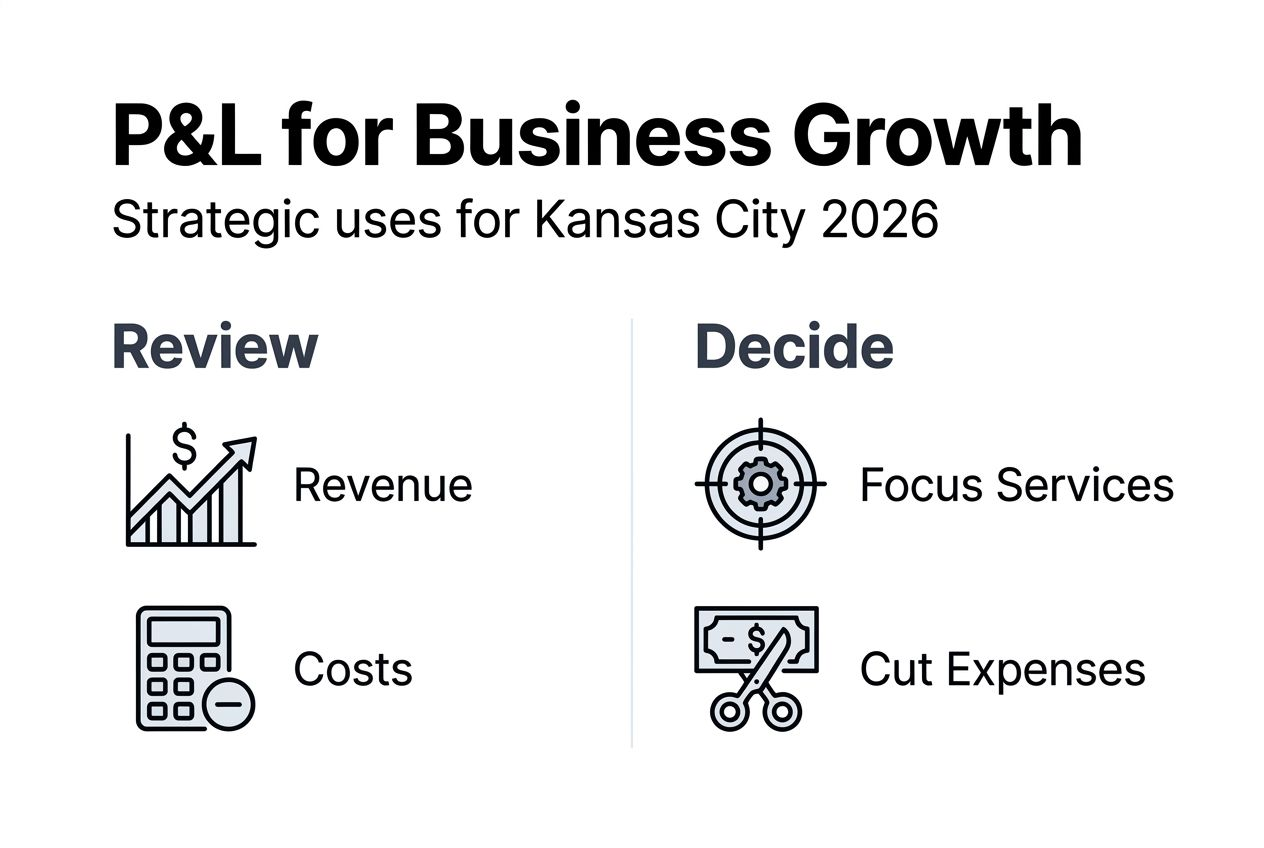
Your P&L guides every major business decision when you know how to use it. Start by identifying your most profitable services. Calculate profit margin for each service type. You might discover your quick repair calls generate 40% margins while full installations only yield 15%.
This insight transforms your marketing strategy. Instead of promoting all services equally, focus advertising dollars on high-margin offerings. Train your team to upsell profitable services. Consider dropping or repricing low-margin work.
Budget adjustments flow naturally from P&L analysis. Notice marketing costs running at 12% of revenue when industry standard sits at 8%? Time to evaluate campaign effectiveness and cut underperforming channels. Spot labor costs creeping above 35%? Examine scheduling efficiency and consider productivity training.
Strategic applications of P&L insights:
- Identify seasonal patterns to build cash reserves during peak months
- Compare your expense ratios to industry benchmarks to spot inefficiencies
- Project future profitability based on historical trends and planned changes
- Determine breakeven points for new service offerings before launch
- Evaluate whether to hire employees or continue with subcontractors
Pro Tip: Create a simple dashboard tracking five key P&L metrics: revenue growth, gross margin, operating expense ratio, net profit margin, and revenue per employee. Review these monthly to spot trends instantly without drowning in details.
Timing matters for financial reviews. New businesses or those with cash flow volatility benefit from monthly deep dives. Stable, established businesses can manage with quarterly reviews, though monthly monitoring of key metrics remains wise.
Resource reallocation based on P&L data accelerates growth. A Kansas City HVAC company noticed maintenance contracts showing 50% margins versus 20% on new installations. They shifted marketing spend toward maintenance packages and trained technicians to enroll customers during service calls. Within six months, recurring revenue jumped 35%.
Understanding business financial statements provides the foundation for these strategic decisions, while implementing bookkeeping tips for service owners ensures your data stays accurate.
Practical steps for small business owners: integrating P&L into your financial routine
Building a consistent P&L review habit separates growing businesses from struggling ones. Start with frequency. New businesses or those under $250,000 revenue should review monthly. Established businesses with stable cash flow can review quarterly, but always monitor monthly at a high level.
Your monthly P&L review routine:
- Block 60 minutes on your calendar the week after month end
- Gather your P&L, previous month P&L, and same month last year for comparison
- Calculate key ratios: gross margin, operating expense ratio, net profit margin
- Identify your three largest expense increases from last month
- Note any revenue variations exceeding 10% and determine causes
- List two specific actions to improve profitability this month
- Update your rolling 12 month forecast based on actual results
Preparation makes reviews efficient. Ensure all transactions are categorized before your review date. Reconcile bank accounts so your P&L reflects actual activity. Create a simple template tracking the same metrics each month for easy comparison.
Kansas City home service businesses have excellent tools available. QuickBooks Online offers P&L reports with customizable categories perfect for service businesses. Many owners find value in simple spreadsheet dashboards pulling key numbers from their accounting software.
Consistent data updating matters more than fancy software. Set a weekly time to categorize transactions and reconcile accounts. Waiting until month end creates a backlog that leads to errors and delays your review.
Pro Tip: Use your P&L trends to forecast the next 90 days. If you see material costs rising 3% monthly, factor that into job bids. Notice revenue dipping in certain months historically? Plan marketing pushes six weeks earlier to compensate.
Understanding why review monthly finances and following a solid monthly financial review process creates the discipline needed for sustainable growth.
Case studies: real examples from Kansas City home service businesses
Real results speak louder than theory. Three Kansas City home service businesses transformed their operations through disciplined P&L analysis.
A local plumbing company discovered overhead costs consuming 42% of revenue, well above the industry standard of 30%. Deep P&L analysis revealed excessive vehicle expenses and redundant software subscriptions. They consolidated tools, optimized routing, and renegotiated insurance. Within eight months, overhead dropped to 32%, translating to a 12% profit increase without changing revenue.
An electrical contractor struggled with flat profits despite growing sales. Monthly P&L reviews showed residential service calls generated 45% margins while commercial projects yielded only 18%. They shifted focus to residential work, trained staff on customer service, and built a maintenance program. Six months later, monthly revenue grew 18% with profit margins jumping from 12% to 24%.
A landscaping business faced seasonal cash crunches every winter. Implementing weekly P&L monitoring helped them identify high fixed costs that continued regardless of season. They negotiated seasonal payment terms with suppliers and built a cash reserve during peak months. The following winter, they maintained positive cash flow throughout the slow season.
| Metric | Before P&L Focus | After P&L Focus | Improvement |
|---|---|---|---|
| Overhead Ratio | 42% | 32% | 24% reduction |
| Average Profit Margin | 12% | 24% | 100% increase |
| Winter Cash Flow | Negative | Positive | Crisis eliminated |
| Monthly Revenue Growth | Flat | 18% | Sustainable growth |
These outcomes share a common thread: regular P&L analysis coupled with decisive action. Understanding financial forecasting and applying business budgeting tips transformed raw data into strategic advantage.
Optimize your home service business finances with Kenworthy Bookkeeping
Mastering your P&L statement unlocks growth, but maintaining accurate books month after month takes time you’d rather spend growing your business. Kenworthy Bookkeeping specializes in helping Kansas City home service businesses gain financial clarity without the hassle.

Our team handles the detailed categorization, reconciliation, and P&L preparation that makes strategic analysis possible. We understand the unique challenges facing local contractors, from seasonal fluctuations to job costing complexities. More than just recording transactions, we help you understand what your numbers mean and how to use them for better decisions.
Ready to transform your financial management? Schedule a consultation to discuss how professional bookkeeping can accelerate your business growth while giving you more time to focus on serving customers.
FAQ
How often should I review my P&L statement for my home service business?
Monthly reviews work best for businesses under $500,000 revenue or those experiencing cash flow challenges. Established businesses with predictable income can review quarterly while monitoring key metrics monthly. Regular reviews help catch financial issues early and optimize decisions before small problems become major crises.
What’s the difference between gross profit and net profit on my P&L?
Gross profit equals revenue minus direct costs like materials and job labor, showing how efficiently you deliver services. Net profit subtracts all operating expenses including rent, insurance, and administrative costs, revealing your actual business profitability. Both metrics matter for different strategic decisions.
How can accurate expense categorization improve my business profitability?
Proper classification reveals true cost drivers and enables targeted cost reduction. Misclassification can inflate costs by up to 25%, distorting profitability assessments and leading to poor pricing decisions. Understanding why track expenses accurately transforms your financial clarity and control.
Can I use my P&L statement to plan business growth?
Absolutely. P&L analysis identifies your most profitable services, reveals cost-saving opportunities, and shows seasonal patterns for strategic planning. Regular review supports accurate budgeting and smart resource allocation. Your financial statements guide every major growth decision when properly interpreted and applied.