

Business Financial Literacy: Why It Matters for Kansas City Owners
About sixty percent of American small businesses wrestle with financial decision-making that directly affects cash flow and profitability. For busy owners in Kansas City, keeping a tight grip on finances is more challenging when daily work pulls you in every direction. Gaining business financial literacy gives you the power to spot risks early, read vital reports with confidence, and make smarter choices that keep your service business healthy and growing.
Table of Contents
- Defining Business Financial Literacy For Owners
- Essential Skills For Financial Management
- Types Of Financial Reports And Their Uses
- Utilizing Quickbooks Online For Small Businesses
- Common Misconceptions And Mistakes To Avoid
Key Takeaways
| Point | Details |
|---|---|
| Importance of Financial Literacy | Business financial literacy is essential for Kansas City service business owners to manage finances effectively and ensure long-term sustainability. |
| Core Financial Skills | Small business owners must develop competencies in financial reporting, budgeting, and cash flow analysis to make informed decisions. |
| Understanding Financial Reports | Mastering key financial statements, such as income statements and balance sheets, is crucial for informed decision-making and strategic planning. |
| Avoiding Common Mistakes | Entrepreneurs should separate personal and business finances, conduct regular financial reviews, and proactively manage their financial strategies to enhance resilience. |
Defining Business Financial Literacy for Owners
Financial literacy represents the foundational knowledge and skills necessary for effectively managing business finances. For Kansas City service business owners, it goes beyond basic accounting – it means understanding how financial decisions directly impact operational success and long-term sustainability. Financial literacy encompasses a comprehensive set of competencies that enable entrepreneurs to make informed monetary choices across multiple business dimensions.
At its core, business financial literacy involves mastering key skills like interpreting financial statements, comprehending cash flow dynamics, understanding profit margins, and strategically managing business expenses. Small business owners must develop the ability to read and analyze financial reports, recognize potential financial risks, and make data-driven decisions that support growth. The research from economic studies indicates that owners with strong financial literacy are significantly more likely to navigate economic challenges successfully and maintain stable business operations.
Beyond basic number crunching, financial literacy for Kansas City service business owners means developing a holistic understanding of financial ecosystems. This includes knowledge about credit management, tax strategies, investment opportunities, and strategic financial planning. Owners need to comprehend how different financial elements interconnect – from understanding revenue streams to managing operational costs and planning for future capital investments. Developing these skills requires continuous learning, practical application, and a willingness to seek expert guidance when complex financial scenarios arise.
Pro tip: Commit to spending at least one hour per week studying financial management resources, attending workshops, or consulting with a financial advisor to continuously improve your business financial literacy skills.
Essential Skills for Financial Management
Financial management demands a strategic skill set that goes beyond basic number tracking for Kansas City service business owners. Developing core competencies is crucial for sustainable business growth and operational stability. Five fundamental financial skills form the foundation of effective financial management, enabling owners to make informed decisions and maintain robust financial health.
These essential skills include comprehensive financial reporting, budget preparation, and strategic cost control. Understanding cash flow dynamics requires proficiency in interpreting financial statements, analyzing revenue streams, and identifying potential financial risks. Business owners must learn to read balance sheets, income statements, and cash flow reports with a critical eye, recognizing patterns and potential opportunities for operational optimization. Mastering these skills allows entrepreneurs to transform financial data into actionable business insights that drive growth and mitigate potential financial challenges.
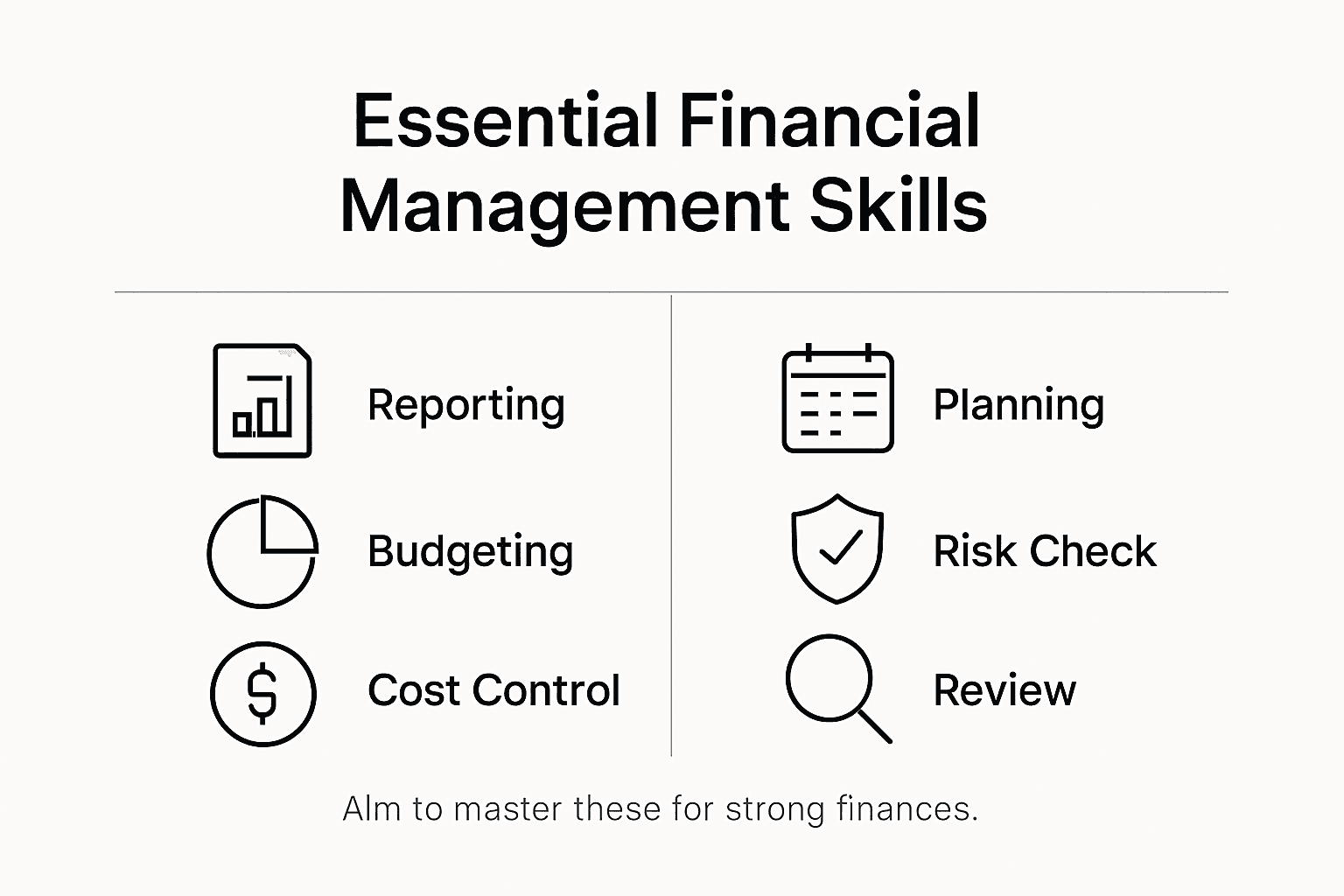
Additional critical skills involve advanced financial planning and risk management techniques. This includes developing robust budgeting processes, implementing effective expense tracking systems, and creating financial forecasts that anticipate potential market fluctuations. Kansas City service business owners should focus on building financial models that provide flexibility and resilience, allowing them to adapt quickly to changing economic conditions. Continuous learning and staying updated on financial management best practices are essential for maintaining a competitive edge in today’s dynamic business landscape.
Pro tip: Invest in quarterly financial skills workshops or online courses that specifically target small business financial management to continuously enhance your financial literacy and strategic decision-making capabilities.
Types of Financial Reports and Their Uses
Understanding financial reports is crucial for Kansas City service business owners to effectively manage and strategize their operations. Financial statements provide a comprehensive overview of a company’s financial health, offering insights that drive critical business decisions. These formal records serve as essential tools for tracking performance, identifying trends, and communicating financial status to stakeholders.

The four primary financial reports that every business owner should master include the income statement, balance sheet, cash flow statement, and statement of retained earnings. Each report offers unique perspectives on financial performance. The income statement reveals profitability by detailing revenues and expenses, while the balance sheet provides a snapshot of assets, liabilities, and owner’s equity. The comprehensive financial reporting framework enables business owners to assess their financial position from multiple angles, helping them make informed strategic decisions about investments, operational improvements, and resource allocation.
Beyond basic reporting, these financial documents serve critical diagnostic and predictive functions. The cash flow statement, for instance, tracks money movement through the business, highlighting potential liquidity challenges or opportunities. Business owners can use these reports to identify spending patterns, forecast future financial needs, and develop proactive financial strategies. By regularly analyzing these reports, Kansas City service business owners can spot potential financial risks early, optimize resource allocation, and create more resilient business models that can withstand economic fluctuations.
Here are four primary financial reports and how each supports business decision-making:
| Report Type | Main Purpose | Key Business Insight |
|---|---|---|
| Income Statement | Shows profitability | Reveals profit sources and expenses |
| Balance Sheet | Displays financial position | Measures assets versus liabilities |
| Cash Flow Statement | Tracks cash movement | Highlights liquidity and seasonality |
| Statement of Retained Earnings | Monitors reinvestment | Indicates growth and payout policies |
Pro tip: Schedule a monthly review of your financial reports with your bookkeeper or financial advisor to gain deeper insights and develop more strategic business planning approaches.
Utilizing QuickBooks Online for Small Businesses
QuickBooks Online represents a powerful financial management solution for Kansas City service business owners seeking streamlined accounting processes. Comprehensive accounting tutorials highlight the software’s robust capabilities in simplifying complex financial tasks like bookkeeping, invoicing, and expense tracking. Small business owners can leverage these digital tools to transform their financial management approach, reducing administrative burden and increasing operational efficiency.
The setup and navigation of QuickBooks Online requires strategic implementation to maximize its potential. Small business development resources recommend a systematic approach to account configuration, emphasizing the importance of accurate initial data entry and consistent transaction categorization. Key features include automated bank feed connections, customizable invoice templates, comprehensive reporting tools, and integrated payroll services. Business owners can create detailed financial reports, track income and expenses in real-time, and gain actionable insights into their company’s financial performance.
Beyond basic record-keeping, QuickBooks Online offers advanced financial management capabilities that support strategic decision-making. The platform enables users to generate profit and loss statements, monitor cash flow trends, track customer payments, and prepare tax documentation with remarkable ease. By centralizing financial data and providing intuitive visualization tools, QuickBooks Online helps Kansas City service business owners make more informed financial decisions, identify potential cost-saving opportunities, and develop more robust business strategies.
Pro tip: Schedule a quarterly review of your QuickBooks Online settings and connected accounts to ensure data accuracy and optimize your financial tracking processes.
Common Misconceptions and Mistakes to Avoid
Financial literacy for Kansas City service business owners is often clouded by pervasive myths that can seriously undermine business success. Exploring common financial misconceptions reveals that many entrepreneurs mistakenly believe financial education is optional or only relevant for wealthy businesses. In reality, understanding financial principles is crucial for businesses of all sizes and stages, regardless of current revenue or market position.
Several critical misconceptions can derail business financial management. Many owners incorrectly assume that intuition is sufficient for financial decision-making, overlooking the importance of structured financial planning. Practical financial strategies highlight common mistakes like mixing personal and business expenses, neglecting emergency funds, and failing to separate business finances. These errors can lead to cash flow problems, tax complications, and reduced business resilience. Small business owners must develop disciplined financial habits, create realistic budgets, and maintain clear distinctions between personal and business financial resources.
Another significant area of misunderstanding involves financial reporting and long-term planning. Business owners often view financial management as a reactive process, addressing issues only when they become critical. However, successful entrepreneurs understand that proactive financial literacy involves continuous learning, regular financial review, and strategic forecasting. This means consistently tracking key performance indicators, understanding financial statements, anticipating potential challenges, and developing flexible financial strategies that can adapt to changing business environments. By challenging these misconceptions and adopting a systematic approach to financial management, Kansas City service business owners can build more stable, profitable, and sustainable enterprises.
Compare common financial mistakes with recommended best practices for small business owners:
| Mistake | Risk Involved | Recommended Practice |
|---|---|---|
| Mixing personal/business funds | Causes tax and audit issues | Maintain separate accounts |
| Skipping regular reviews | Misses early problem signals | Conduct monthly audits |
| Relying on memory | Leads to forgotten expenses | Use tracking tools/software |
Pro tip: Conduct a monthly financial self-audit to identify and correct potential misconceptions or emerging financial management mistakes before they become significant problems.
Take Control of Your Business Finances with Expert Support
Many Kansas City service business owners struggle with mastering essential financial literacy skills like interpreting financial reports, managing cash flow, and strategic budgeting. These challenges can lead to missed growth opportunities and unexpected financial risks. If you feel overwhelmed by financial management or unsure how to transform your QuickBooks Online data into actionable insights, you are not alone. Your business deserves clear, accurate financial guidance to boost profitability and achieve stability.
Kenworthy Bookkeeping specializes in providing effortless bookkeeping services that meet the unique needs of small businesses. From expert bank reconciliations to detailed Profit and Loss reports and tax season preparation, we help you overcome financial misconceptions and maintain a healthy financial ecosystem. Our hands-on approach ensures that you receive customized solutions while freeing up your time to focus on growing your business.

Ready to elevate your financial literacy and streamline your bookkeeping? Visit Kenworthy Bookkeeping Consultation now to schedule your personalized consultation. Gain confidence in your financial decisions with trusted support and start turning your financial data into real business success today.
Frequently Asked Questions
What is business financial literacy?
Business financial literacy refers to the foundational knowledge and skills needed to manage business finances effectively, including interpreting financial statements, understanding cash flow, and making data-driven financial decisions.
Why is financial literacy important for business owners?
Financial literacy is crucial for business owners as it helps them navigate economic challenges, make informed decisions, and ensure long-term sustainability and operational success.
What are the essential skills for effective financial management?
Essential skills for effective financial management include financial reporting, budget preparation, cash flow analysis, strategic cost control, and advanced financial planning and risk management techniques.
How can I improve my business financial literacy?
To improve your business financial literacy, commit to regular study through resources such as workshops, online courses, and consultations with financial advisors, ideally dedicating at least one hour per week to financial management education.