
Year-end financial reporting guide for Missouri 2026
Year-end financial reporting can feel overwhelming for Missouri small business owners, especially when juggling tax compliance, filing deadlines, and documentation requirements. This guide walks you through Missouri-specific regulations and practical steps to simplify your bookkeeping process, maximize deductions, and ensure you’re ready for 2026 tax season with confidence.
Table of Contents
- Understanding Missouri Tax Requirements And Deadlines
- Preparing Your Year-End Financial Documents Efficiently
- Executing Electronic Filing And Payment For Missouri Small Businesses
- Verifying Your Year-End Reports And Ensuring Ongoing Compliance
- Get Professional Help To Simplify Your Financial Reporting
- Frequently Asked Questions
Key takeaways
| Point | Details |
|---|---|
| Missouri tax deadlines vary by filing frequency | Monthly, quarterly, and annual returns have different due dates depending on your business registration and location count. |
| Electronic filing streamlines compliance | Mandatory for businesses with 3+ locations, e-filing reduces errors and speeds processing for sales, use, and withholding taxes. |
| Proper expense categorization maximizes deductions | Accurate record keeping captures all eligible write-offs while reducing audit risks during tax preparation. |
| Regular financial reviews support accuracy | Ongoing reconciliation and planning throughout the year make end-of-year reporting smoother and more reliable. |
| Professional collaboration optimizes tax outcomes | Working with CPAs and bookkeepers helps identify credits, avoid penalties, and align financial goals with tax strategy. |
Understanding Missouri tax requirements and deadlines
Missouri small businesses must navigate several tax types to maintain compliance. You’ll typically encounter sales tax, use tax, withholding tax for employees, and income tax obligations depending on your business structure and activities. Each tax type carries specific filing requirements and deadlines that change based on your assigned filing frequency.
Filing deadlines in Missouri follow a structured schedule. Filing frequency for sales tax returns includes monthly, quarterly, and annual returns assigned at registration. Monthly filers typically submit by the last day of the following month, while quarterly and annual schedules vary. Missing these deadlines triggers penalties and interest charges that compound quickly.
Electronic filing is mandatory for businesses reporting sales or use tax from 3 or more locations. This requirement reduces processing errors and speeds refund times. Missouri small business owners can utilize electronic filing for individual income tax, sales tax, use tax, tire and battery fee, and withholding tax to streamline processes.
Understanding nexus rules prevents compliance gaps. You create nexus in Missouri through physical presence, employee activities, or meeting economic thresholds. Once nexus exists, you must collect and remit sales tax on applicable transactions. Review your business footprint annually to ensure you’re meeting all obligations.
Common Missouri tax types for small businesses:
- Sales and use tax for retail transactions
- Employer withholding tax for employee wages
- Corporate or individual income tax based on entity structure
- Industry-specific fees like tire and battery taxes
| Tax Type | Typical Filing Frequency | Electronic Filing Required |
|---|---|---|
| Sales Tax | Monthly, Quarterly, Annual | Yes (3+ locations) |
| Withholding Tax | Monthly, Quarterly | Available |
| Income Tax | Annual | Available |
| Use Tax | Monthly, Quarterly, Annual | Yes (3+ locations) |
Pro Tip: Set calendar reminders two weeks before each filing deadline to gather documents and review reports before submission day arrives.
Preparing your year-end financial documents efficiently
Accurate income and expense tracking forms the foundation of reliable tax reporting. You need complete records showing every dollar your business earned and spent throughout 2026. Missing transactions create deduction gaps and raise red flags during audits. Organize receipts, invoices, and bank statements in a consistent system from January through December.

Tracking income and expenses requires attention to detail and regular updates. Log every sale, payment, business purchase, and operating cost as transactions occur rather than scrambling at year-end. Digital tools like QuickBooks Online automate much of this process through bank feeds and categorization rules.
A common pitfall is the failure to properly categorize expenses, leading to missed deductions and potential audit flags. Each purchase needs the right category to capture available write-offs. Office supplies, vehicle expenses, professional services, and business expense deductions all follow different rules. Review categories monthly to catch errors before they multiply.
The choice of accounting method (cash vs. accrual) significantly impacts financial reporting. Cash basis recognizes income when received and expenses when paid, offering simplicity for small operations. Accrual basis records transactions when earned or incurred, providing a more accurate financial picture but requiring more complex tracking. Most small businesses use cash basis unless inventory or specific regulations require accrual.
Accounting software transforms categorization accuracy and reporting speed. Automated rules assign categories to recurring transactions, bank reconciliation catches discrepancies, and custom reports show your financial position instantly. Software also maintains the audit trail required for tax compliance and potential IRS inquiries.
Essential year-end document categories:
- All income sources including sales, services, and miscellaneous revenue
- Operating expenses sorted by tax category
- Asset purchases and depreciation schedules
- Payroll records and contractor payments
- Bank and credit card reconciliations
Pro Tip: Run a profit and loss report each month to spot unusual patterns or categorization errors while you still have time to investigate and correct them.
Executing electronic filing and payment for Missouri small businesses
Registering for MyTax Missouri creates your gateway to electronic filing. Visit the Department of Revenue website and create an account using your business information and tax identification numbers. The system links your filing obligations and payment history in one portal. You’ll receive email confirmations for each submission, creating a digital paper trail.
The electronic filing process follows clear steps. Log into MyTax Missouri, select the appropriate tax type and filing period, enter your figures from prepared financial reports, review all entries for accuracy, then submit. The system validates data in real time, catching common errors before submission. Most returns process within minutes, and you receive immediate confirmation.
Alternative payment methods, such as TXP Bank Project and online payments, offer flexibility for small businesses. You can schedule payments in advance, pay via credit card or electronic check, or arrange automatic withdrawals for recurring obligations. Each method carries different processing times and potential fees, so compare options before committing.
Waiver requests from mandatory electronic filing require specific circumstances. Businesses facing undue hardship due to technology limitations or other qualifying factors can apply for exemption. Submit Form 4670 explaining your situation and demonstrating why electronic filing creates unreasonable burden. Approval isn’t guaranteed, and you must reapply annually.
Electronically filed returns provide faster processing and accuracy benefits. You avoid mail delays, reduce transcription errors, and receive refunds quicker when overpayments occur. The system also stores past returns for easy reference when preparing current filings or responding to notices.
Electronic filing and payment steps:
- Create or log into your MyTax Missouri account
- Select the tax type and reporting period
- Enter financial data from your prepared reports
- Review all figures and calculated amounts
- Submit the return and receive confirmation
- Schedule or complete payment using your preferred method
- Save confirmation numbers and receipts for records
Pro Tip: File returns a few days before deadlines to allow time for technical issues or questions that might arise during the submission process.
Verifying your year-end reports and ensuring ongoing compliance
Reviewing filed tax returns against internal financial records catches discrepancies before they become problems. Pull your profit and loss statement, balance sheet, and tax returns side by side. Compare revenue figures, expense totals, and calculated tax amounts line by line. Differences signal data entry errors, missing transactions, or categorization mistakes requiring investigation.
Missouri LLCs are expected to maintain internal records to preserve liability protection. Keep meeting minutes, operating agreements, financial statements, and tax filings organized and accessible. These documents prove you’re operating as a legitimate business entity separate from personal finances. Courts can pierce corporate protection when documentation fails.
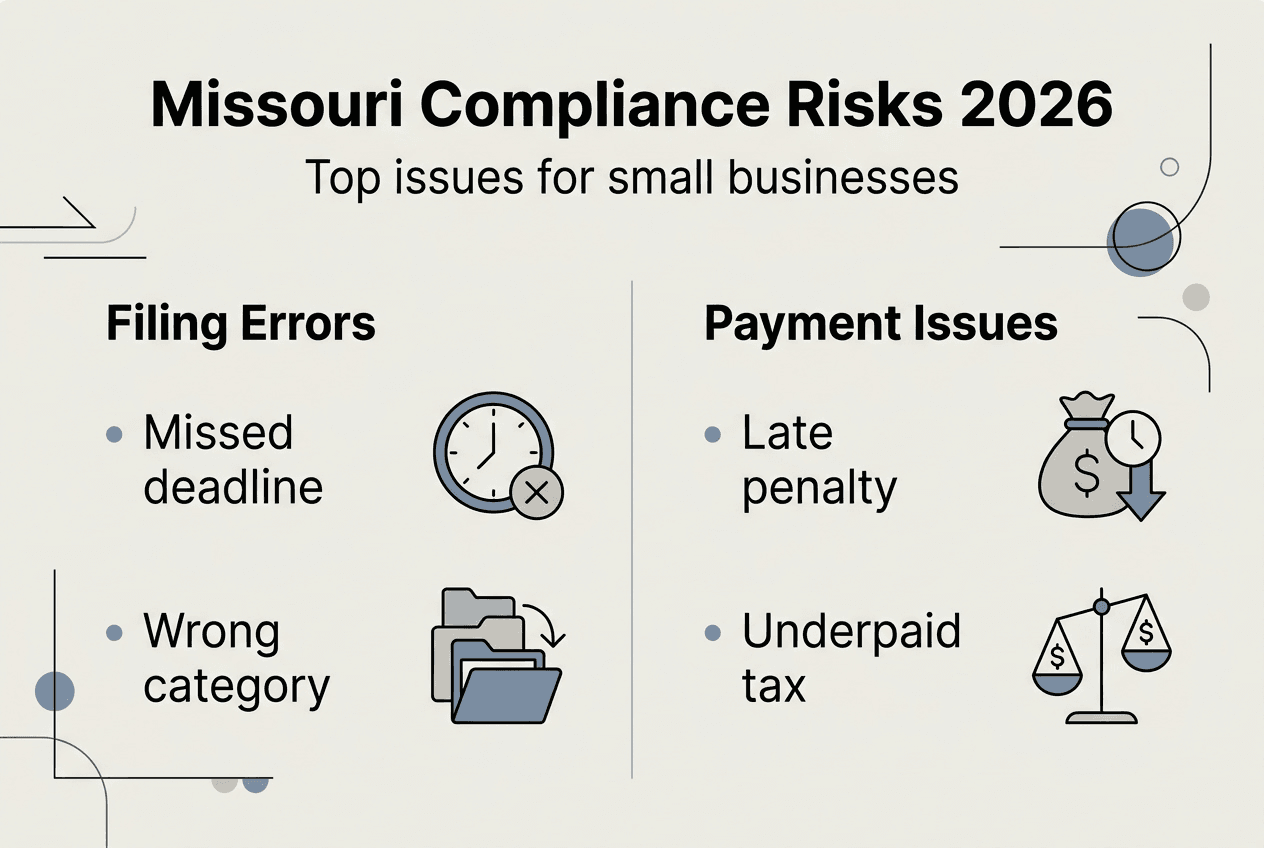
Failure to properly collect and remit sales tax is a common compliance risk for Missouri small businesses. You must charge correct rates based on customer location, file on time regardless of sales volume, and remit collected amounts promptly. Nexus rules change, rates update, and exemption certificates require validation. Review bookkeeping compliance Missouri 2026 requirements quarterly to stay current.
Common compliance pitfalls extend beyond sales tax. Late filing penalties compound monthly, estimated tax underpayment triggers interest charges, and misclassifying workers as contractors instead of employees creates massive liability. Establish systems preventing these errors through calendar alerts, professional reviews, and regular financial analysis.
Businesses should work with CPAs to maximize deductions and identify tax credits. Tax professionals spot opportunities you might miss, ensure compliance with changing regulations, and represent you if issues arise. They also help with strategic planning for future tax years, retirement contributions, and entity structure optimization.
| Compliance Area | Common Mistake | Prevention Strategy |
|---|---|---|
| Sales Tax | Incorrect rates or late filing | Use automated rate tables and calendar reminders |
| Expense Categorization | Mixing personal and business | Maintain separate accounts and review monthly |
| Record Retention | Discarding documents too soon | Keep records 6+ years and digitize for backup |
| Worker Classification | Misclassifying employees | Review IRS guidelines and consult professionals |
Year-end compliance checklist:
- Reconcile all bank and credit card accounts
- Verify expense categories align with tax requirements
- Confirm all income sources appear on financial statements
- Review sales tax collection and remittance for accuracy
- Update internal LLC or corporation documentation
- Schedule CPA consultation for tax planning and filing
- Organize receipts and supporting documents by category
Pro Tip: Create a year-end bookkeeping checklist in October so you’re gathering documents and reviewing records before the December rush begins.
Get professional help to simplify your financial reporting
Navigating Missouri tax requirements while running your business stretches time and attention thin. Professional bookkeeping support eliminates guesswork, reduces filing errors, and ensures you’re capturing every eligible deduction. Experts handle categorization, reconciliation, and reporting so you can focus on growing your business instead of wrestling with spreadsheets.
Kenworthy Bookkeeping specializes in helping Missouri small businesses streamline their financial processes using QuickBooks Online. We manage categorization, bank reconciliations, profit and loss reports, and tax season preparation with the care and precision your business deserves. Our comprehensive services give you clear financial visibility while maintaining compliance with state and federal requirements.
Schedule a bookkeeping consultation to discuss how professional support can transform your year-end reporting process. We’ll review your current systems, identify improvement opportunities, and create a customized plan that fits your business needs and budget. Let us handle the numbers while you handle what you do best.
Frequently asked questions
How do I know which tax forms I need to file for my Missouri small business?
Your filing requirements depend on business structure, activities, and where you create nexus. Missouri small businesses must file specific tax returns such as sales tax, withholding tax, and income tax based on their activities and nexus. Common forms include sales tax returns for retail operations, withholding returns for employers, and income tax returns matching your entity type. Review your business activities with a tax professional to ensure complete compliance.
What are the benefits of electronic filing for Missouri small businesses?
Electronically filed returns offer benefits such as receipt acknowledgment, faster refunds, accuracy, and convenience. You eliminate mail delays and transcription errors while gaining immediate confirmation of submission. The system validates entries in real time, catching mistakes before they become problems. Electronic filing also creates a digital record easily accessible for future reference or audit support.
How can I avoid common compliance mistakes when preparing year-end financial reports?
Focus on accurate sales tax collection, timely filing, and detailed record keeping throughout the year. Failure to properly collect and remit sales tax is a common compliance risk for small businesses in Missouri. Work with CPAs to review your processes, verify worker classifications, and maximize legitimate deductions. Set up calendar alerts for all filing deadlines, maintain separate business accounts, and reconcile financial records monthly rather than waiting until December. Regular professional reviews catch issues while they’re still easy to fix.
When should I start preparing for year-end financial reporting?
Start preparation in October by reviewing your current records and identifying gaps or errors. This timeline gives you two months to gather missing documents, correct categorization mistakes, and consult with professionals before year-end. Monthly record keeping throughout the year makes this process significantly easier. The businesses that struggle most at year-end are those trying to reconstruct an entire year of transactions in December.
What records should I keep after filing my Missouri tax returns?
Maintain all tax returns, supporting documents, receipts, invoices, and financial statements for at least six years. This retention period covers potential audit windows and legal requirements for business records. Store both digital and physical copies in organized systems with clear labels and dates. Include bank statements, reconciliations, payroll records, contractor payments, and correspondence with tax authorities. Proper record keeping protects you during audits and supports future business decisions.