

Financial Literacy: Boosting Small Business Profitability
Running a service business in Kansas City means more than just keeping customers happy—it also means making sense of your numbers. Without a clear grasp of your financial data, even the best work can lead to cash flow headaches and missed opportunities. Solid financial literacy empowers you to interpret financial statements, spot cash flow gaps early, and make every dollar count toward your company’s growth and stability.
Table of Contents
- Defining Financial Literacy For Business Success
- Core Components Of Financial Literacy Skills
- Applying Financial Literacy To Cash Flow Management
- Common Mistakes Small Businesses Should Avoid
Key Takeaways
| Point | Details |
|---|---|
| Financial Literacy | Understanding financial statements empowers business owners to make informed decisions and effectively manage resources. |
| Core Skills | Mastering budgeting, cash flow management, and asset protection is essential for sustainable business success. |
| Prevention of Mistakes | Regularly monitoring financial data and avoiding common pitfalls can save time and money while enhancing overall business performance. |
| Strategic Planning | Anticipating cash flow needs and setting clear pricing strategies lead to better financial outcomes and growth opportunities. |
Defining Financial Literacy for Business Success
Financial literacy is your ability to understand financial terminology, read financial statements, and make decisions based on solid numbers. It’s not about becoming an accountant—it’s about understanding how money flows through your business and what your numbers actually mean.
When you can read your own P&L reports and understand your cash flow position, you make better decisions. That’s the real power here. Understanding financial terminology and concepts enables you to analyze what’s happening in your business rather than guessing.
For Kansas City service business owners, financial literacy means knowing whether a project is actually profitable, understanding your labor costs, and spotting cash flow problems before they become crises. It’s the difference between running your business and letting your business run you.
What financial literacy actually covers:
- Reading and interpreting your P&L statement and balance sheet
- Understanding your profit margins on different services or projects
- Tracking cash flow and knowing when money comes in versus when bills are due
- Identifying which clients or services are most profitable
- Recognizing warning signs in your financial data
Your business operates in an increasingly competitive environment where margins matter more than ever. Owners who navigate market volatility strategically through solid financial knowledge make faster pivots, cut unprofitable work, and invest in growth intelligently.
This doesn’t mean you need to spend hours with spreadsheets. When you have systems in place—like proper bookkeeping in QuickBooks Online—your numbers stay organized and accessible. Clean financial data is the foundation of financial literacy.
Financial literacy isn’t about complex finance—it’s about understanding your numbers well enough to run your business with confidence and clarity.
Many Kansas City business owners realize too late that they’ve been operating blind. You know your industry inside and out, but your financial picture stays fuzzy. That’s where financial literacy changes everything.
Pro tip: Start by reviewing your last three months of P&L reports with fresh eyes. Identify which services generate the most profit and which customers cost you the most to serve—this single insight often reveals immediate opportunities to boost your bottom line.
Core Components of Financial Literacy Skills
Financial literacy isn’t one skill—it’s a toolkit. Mastering the core components gives you control over your business finances and the confidence to make smarter decisions.

Think of these components as the pillars holding up your financial foundation. Each one addresses a different area of how money moves through your business.
The five core components you need:
- Budgeting and planning — Knowing where your money goes and forecasting what you’ll need
- Saving and investing — Building reserves and making your money work for growth
- Earning and pricing — Understanding your actual costs and charging what you’re worth
- Borrowing and managing debt — Using credit wisely without overextending your business
- Protecting assets — Safeguarding your equipment, inventory, and revenue streams
For service-based businesses in Kansas City, budgeting is where most owners start feeling the impact. When you understand your monthly operating costs, labor expenses, and overhead, you can price projects correctly. No more underbidding or discovering mid-project that you’re losing money.
Here’s how five core financial literacy components empower Kansas City service businesses:
| Component | Practical Example | Positive Business Outcome |
|---|---|---|
| Budgeting & Planning | Forecasting busy seasons | Prevents cash shortages |
| Saving & Investing | Setting up a reserve fund | Ensures funds for growth or repairs |
| Earning & Pricing | Reviewing rates per service | Stops undercharging for time spent |
| Debt Management | Evaluating new equipment loan | Avoids surprise expenses |
| Asset Protection | Insuring key tools | Reduces risk of sudden disruptions |
Financial awareness and knowledge work together to help you spot what’s really happening with your cash. Your P&L tells you whether you’re profitable, but understanding your numbers tells you why.
Managing debt is critical for small service businesses. Many owners take on equipment loans or lines of credit without fully grasping the monthly impact on cash flow. When you understand borrowing costs, you make better decisions about what to finance versus what to save for first.
The difference between struggling owners and thriving ones often comes down to whether they understand their numbers or simply react to them.
Asset protection might sound corporate, but it’s not. Your tools, your customer relationships, and your reputation are assets. Protecting them means having systems in place so you don’t lose clients due to disorganization or miss work because critical equipment fails.
Saving and investing in your business compounds over time. Reinvesting profits into better tools, training, or marketing generates better returns than letting money sit in a business account untouched.
Pro tip: Start with your biggest financial weakness—if cash flow constantly surprises you, focus on budgeting first; if you’re unsure about profitability, master your P&L; if you’re carrying too much debt, prioritize debt management. Build one skill at a time rather than trying to fix everything at once.
Applying Financial Literacy to Cash Flow Management
Cash flow is the lifeblood of your service business. Without it, you can’t pay your team, buy supplies, or cover overhead—no matter how profitable you look on paper.
Financial literacy transforms how you manage cash. Instead of hoping money arrives when you need it, you anticipate cash flow needs and make decisions that keep money flowing.
How financial literacy improves your cash position:
- See exactly when money comes in versus when bills are due
- Identify which projects or clients drain your cash fastest
- Plan for seasonal slowdowns before they become emergencies
- Negotiate payment terms that work for your business
- Spot cash leaks that kill profitability
When you understand your financial statements, you can monitor cash flow performance and adjust operations before crisis hits. Most Kansas City owners struggle because they react to cash problems instead of preventing them.
Your P&L shows profit, but your cash flow statement shows reality. You could be profitable and still run out of money if clients pay late while you pay suppliers early. Financial literacy means understanding this difference and controlling it.
Budgeting and spending control are where financial literacy meets daily operations. When you budget by project or service line, you see which areas consume cash fastest. Then you adjust pricing, negotiate supplier terms, or cut inefficient work.
Many owners discover their biggest cash drain is small clients who require disproportionate follow-up. Financial literacy lets you see this in your numbers and make informed decisions about which clients to prioritize.
Financial literacy transforms cash flow from a mystery into something you control through informed decisions and strategic planning.
The payoff is real. Owners who track cash flow and understand their numbers don’t panic during slow months. They’ve already planned for them.
Pro tip: Pull your last 12 months of bank statements and identify the three months with lowest cash balances. Look for patterns—are they seasonal, tied to specific clients, or caused by payment delays? Understanding your cash rhythm lets you plan lines of credit or adjust pricing before the next low period arrives.
Common Mistakes Small Businesses Should Avoid
Most Kansas City business owners make the same financial mistakes—not because they’re careless, but because nobody taught them what to watch for. Learning from these pitfalls saves money, time, and stress.
The gap between successful owners and struggling ones usually comes down to one thing: whether they catch financial problems early or discover them too late.
The biggest mistakes to watch for:
- Ignoring your financial statements instead of reading them regularly
- Waiting months to reconcile accounts and fix errors
- Making business decisions without looking at actual numbers
- Mixing personal and business finances
- Not planning for seasonal cash flow swings
- Charging prices without understanding your true costs
Neglecting to monitor cash flow is where most owners get into trouble. You don’t realize money’s tight until it’s already a crisis. By then, you’re scrambling to borrow or cutting essential spending.
Not understanding your financial statements is equally dangerous. Your P&L and balance sheet tell you what’s actually happening, but only if you read them. Many owners pay for bookkeeping then never look at the reports.
Mixing personal and business money creates chaos. You can’t tell which projects are profitable, which customers actually cost money to serve, or whether your business is truly sustainable. It also creates a tax nightmare.
The costliest mistake isn’t poor financial decisions—it’s making decisions without financial data at all.
Not using financial information strategically means you’re leaving money on the table. You could be raising prices 15 percent and still be cheaper than competitors. You might not know which clients drain your resources or which services should be eliminated entirely.
Underestimating the importance of accurate financial records creates compounding problems. Small errors accumulate. What starts as a $200 miscategorization becomes a $5,000 problem when tax season arrives.
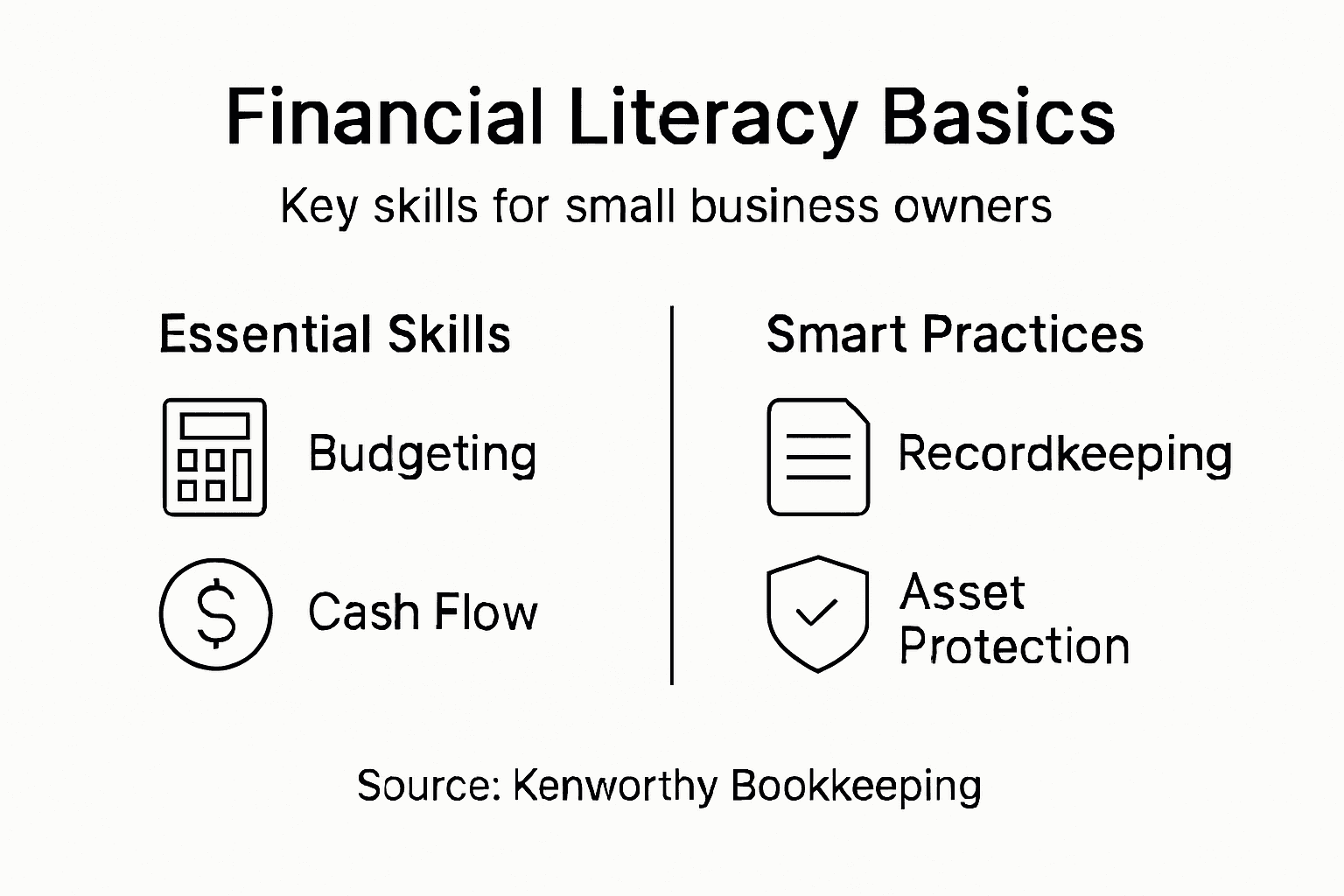
Common financial mistakes can be avoided by taking these proactive steps:
| Mistake | Why It Happens | Prevention Strategy |
|---|---|---|
| Ignoring reports | Overwhelmed by data | Schedule monthly review |
| Mixing finance types | Lack of separate accounts | Open dedicated business account |
| Late account reconciliation | Procrastination | Set regular reminders |
| Mispricing services | Guessing costs | Calculate actual expenses |
| Not forecasting cash flow | Trusting gut over data | Analyze past payment patterns |
Pro tip: Pick one mistake from this list—whichever applies most to your business right now—and fix it this month. Don’t try fixing everything simultaneously. Whether it’s starting proper bank reconciliations, separating personal and business finances, or scheduling monthly P&L reviews, one change creates momentum for the next.
Take Control of Your Business Finances with Expert Bookkeeping Support
Financial literacy is essential for Kansas City service business owners who want to stop guessing and start making decisions based on clear, reliable data. If you struggle with understanding your P&L reports, managing cash flow, or tracking profitability by client or service, you are not alone. The key to overcoming these challenges is having clean, organized financial data and accessible insights at your fingertips

At Kenworthy Bookkeeping, we specialize in making bookkeeping effortless and effective for small businesses. Our expert team uses QuickBooks Online to deliver precise categorization, timely bank reconciliations, and comprehensive financial reports so you can finally understand your numbers and boost profitability. Don’t wait until financial confusion becomes a crisis. Take the first step to regain control and confidence over your business finances now by scheduling a consultation at Kenworthy Bookkeeping. Let us help you turn financial literacy into smart business growth today.
Frequently Asked Questions
What is financial literacy for small business owners?
Financial literacy for small business owners refers to the ability to understand financial terminology, read financial statements, and make informed business decisions based on financial data. It helps owners analyze their business finances rather than just guessing.
Why is understanding my P&L statement important?
Understanding your Profit and Loss (P&L) statement is crucial because it reveals whether your business is profitable. It also helps you identify areas where costs may be too high or where you can improve profit margins by analyzing your revenue and expenses.
How can financial literacy improve cash flow management?
Financial literacy improves cash flow management by enabling business owners to anticipate when cash will come in and when bills are due. This helps prevent cash shortages by allowing them to plan accordingly and take proactive steps to ensure steady cash flow through budgeting and monitoring expenses.
What are common financial mistakes small business owners should avoid?
Common financial mistakes include ignoring financial statements, mixing personal and business finances, not planning for seasonal cash flow changes, and making pricing decisions without understanding actual costs. Avoiding these pitfalls can lead to better financial health and decision-making.