

Tax preparation checklist for Kansas small businesses 2025
Tax season catches many Kansas small business owners off guard, and the cost of being unprepared goes beyond stress. Missing a single document or deadline can mean losing valuable deductions or facing penalties that eat directly into your profits. Kansas has its own set of requirements that go beyond federal rules, and overlooking them is a mistake you can avoid. This step-by-step checklist is built specifically for Kansas business owners who want to file confidently, stay compliant, and keep more of what they earned in 2025.
Table of Contents
- Understand Kansas tax deadlines and penalties
- Gather your essential tax documents
- Reconcile accounts and organize records
- Maximize deductions and credits for Kansas businesses
- Your 2025 tax preparation checklist: Step-by-step summary
- Streamline your 2025 tax season with expert help
- Frequently asked questions
Key Takeaways
| Point | Details |
|---|---|
| Know your deadlines | Kansas personal property taxes are due March 15 and late filing penalties can be costly. |
| Organize essential documents | Collect detailed income, expense, payroll, and vehicle records before you start your 2025 tax prep. |
| Reconcile and categorize finances | Reconcile your accounts and organize everything by category for fast, accurate filing. |
| Maximize your deductions | Review all eligible Kansas business deductions to avoid missing valuable savings. |
| Use a comprehensive checklist | Follow a step-by-step action list to ensure nothing is missed for a smoother 2025 tax season. |
Understand Kansas tax deadlines and penalties
Knowing your deadlines is the foundation of a smooth tax season. Kansas business owners face both federal and state filing requirements, and the state has a few rules that often catch people off guard.
One of the most commonly missed obligations is the personal property tax rendition. According to the Kansas Department of Revenue rules, the rendition is due March 15 annually to your county assessor. Miss that date and you face late penalties ranging from 2% to 10% depending on how late you file. That is money you could have kept.
Here is a quick look at key Kansas and federal deadlines:
| Deadline | Obligation | Who It Affects |
|---|---|---|
| January 31 | W-2s and 1099s issued | All employers |
| March 15 | Personal property rendition | Kansas businesses with property |
| March 15 | S-Corp and partnership returns | Pass-through entities |
| April 15 | Individual and C-Corp returns | Sole proprietors, C-Corps |
| April 15 | Kansas state income tax return | All Kansas filers |
Missing the March 15 property rendition deadline is one of the most expensive and avoidable mistakes Kansas small business owners make each year.
For a broader look at how Kansas penalties work, the Kansas tax penalty overview breaks down what triggers fines and how to avoid them. You can also review the full Kansas tax season preparation guide for a deeper walkthrough of state-specific rules.
With the stakes clear, the next step is making sure you have every required document organized.
Gather your essential tax documents
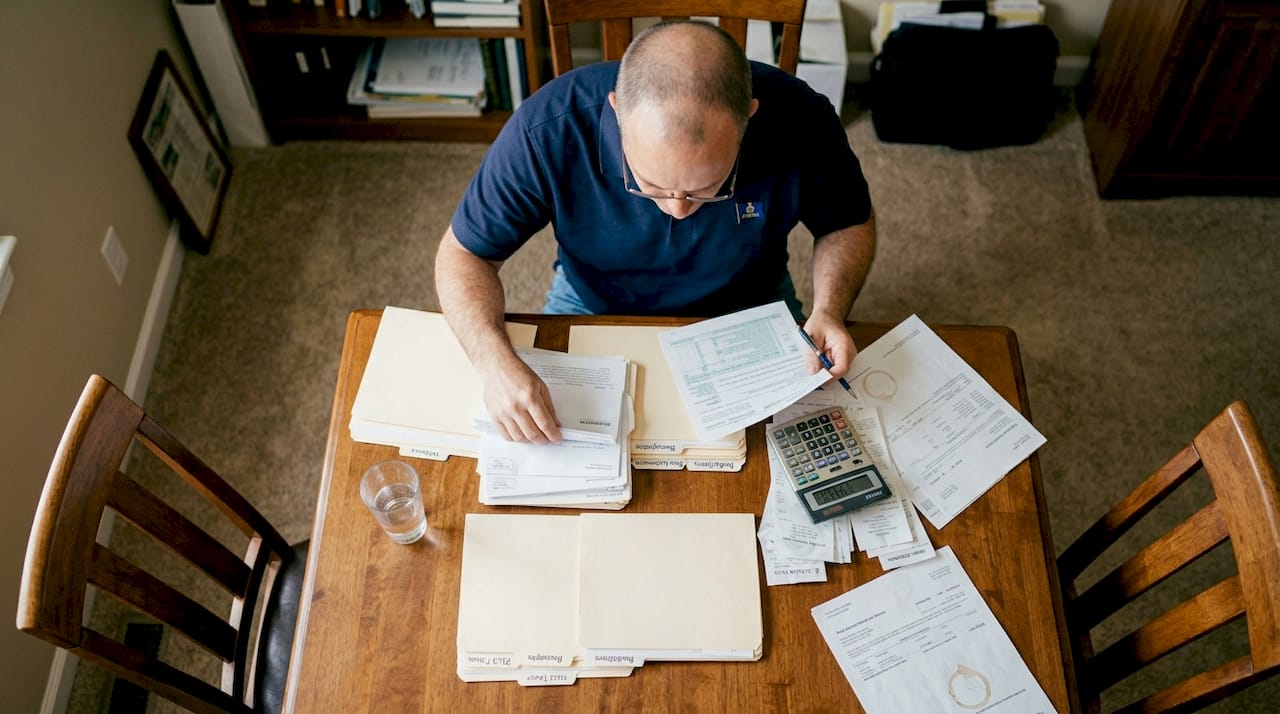
Having the right documents ready before you sit down to file saves hours and prevents costly errors. The list varies slightly depending on your business structure, but the core requirements are consistent.
According to the TurboTax tax preparation checklist, you need to gather income records including 1099s, sales records, expense receipts, bank statements, prior year returns, your EIN, mileage logs, W-2s for employees, and Schedules K-1 for pass-through entities.
Here is how document needs break down by business structure:
| Document | Sole Proprietor | Partnership | Corporation |
|---|---|---|---|
| Schedule C | Yes | No | No |
| Schedule K-1 | No | Yes | S-Corp only |
| W-2 (officer salary) | No | No | Yes |
| 1099-NEC received | Yes | Yes | Yes |
| Business bank statements | Yes | Yes | Yes |
| Mileage log | Yes | Yes | Yes |
| Prior year return | Yes | Yes | Yes |
Beyond the table above, make sure you also have:
- Payroll records and quarterly tax filings (Form 941)
- Vendor invoices and contracts
- Loan statements showing interest paid
- Depreciation schedules for equipment
- Records of any Kansas sales tax collected and remitted
For a full small business bookkeeping checklist that covers the year-round picture, that resource is worth bookmarking. You can also review key business expense deductions to make sure nothing slips through.
Pro Tip: Digitize every receipt and bank statement as you go. A simple folder system organized by month and category makes retrieval fast and keeps your preparer from spending billable hours hunting for records.
Once your documents are in order, effective organization and account reconciliation help prevent mistakes and save even more time.
Reconcile accounts and organize records
Clean books are the difference between a fast, accurate filing and a stressful scramble. Reconciliation means matching your internal records against your bank and credit card statements to confirm every transaction is accounted for.
According to KCSourceLink’s January checklist, you should reconcile books by January and organize expenses by category to save your preparer time and reduce errors. Here is a practical step-by-step approach:
- Download all bank and credit card statements for the full calendar year.
- Match each transaction to your internal records or accounting software entries.
- Flag and resolve discrepancies before moving forward. Do not leave unexplained differences.
- Categorize every expense using IRS-recognized categories such as office supplies, travel, meals, and utilities.
- Reconcile vendor accounts to confirm all bills paid are recorded correctly.
- Run a profit and loss (P&L) report to verify your totals match your categorized records.
- File all supporting documents by category so they are easy to reference during filing.
For a detailed walkthrough, the year-end bookkeeping steps guide covers this process thoroughly. The bank reconciliation checklist is also a practical tool, and if you want to understand the process at a deeper level, the account reconciliation guide explains the mechanics clearly.
Common mistakes to avoid during this step:
- Mixing personal and business transactions in the same account
- Forgetting to record cash payments made or received
- Leaving prior year adjustments unresolved
- Using vague categories like “miscellaneous” that flag audits
Pro Tip: If you use QuickBooks Online, the reconciliation tool walks you through each account step by step. Even a basic spreadsheet organized by month and category works well if your volume is low.
With your records clean and categorized, you can now confidently review deductions and credits specific to Kansas business owners.
Maximize deductions and credits for Kansas businesses
This is where preparation pays off. Kansas small business owners often leave money on the table simply because they do not know which deductions they qualify for or forget to document them properly.
The most commonly overlooked deductions include:
- Mileage: Track every business mile. The 2025 IRS standard mileage rate applies, and a mileage log is required to claim it.
- Home office: If you use a dedicated space exclusively for business, you can deduct a portion of rent or mortgage, utilities, and internet.
- Equipment depreciation: Large purchases like computers, machinery, or vehicles can be depreciated over time or expensed immediately under Section 179.
- Business meals: 50% of qualifying business meals are deductible. Keep receipts and note the business purpose.
- Property tax paid: Kansas businesses that pay property tax on business assets can deduct that amount at the federal level.
- Health insurance premiums: Self-employed owners may deduct 100% of premiums paid for themselves and their families.
Kansas also offers a property tax refund program for qualifying businesses, which is separate from the federal deduction. Review eligibility carefully because many owners skip this step entirely.
According to the sample tax document list, having organized income records and mileage logs in place is what separates businesses that claim every deduction from those that miss out. Studies suggest a significant portion of small business owners fail to claim deductions they legally qualify for, simply due to poor recordkeeping.
For a full breakdown, review top deductions for 2026, the 2025 business planning tips resource, and the 2025 finance checklist to make sure your strategy is complete.
The next step is to put everything together and use this checklist as your action plan for 2025.
Your 2025 tax preparation checklist: Step-by-step summary
Use this list to confirm you have covered every critical step before filing. Cross-check it against last year’s return to spot anything you may have missed.
- Confirm all deadlines. Note March 15 for property rendition and partnership returns, and April 15 for individual and C-Corp returns.
- Collect all income records. Pull 1099s, sales reports, and any other revenue documentation for the full year.
- Gather expense receipts. Organize by category: travel, meals, supplies, utilities, payroll, and equipment.
- Pull payroll records. Confirm W-2s and 1099-NECs were issued on time and match your records.
- Reconcile all accounts. Match bank, credit card, and vendor accounts to your books. Resolve every discrepancy.
- Run your P&L report. Verify income and expense totals are accurate and complete.
- Review deductions. Check mileage logs, home office use, depreciation schedules, and property tax paid.
- Check Kansas-specific requirements. Confirm your property rendition is filed and review eligibility for the Kansas property tax refund.
- Prepare for electronic filing. Use the Kansas Tax Payment Portal for state taxes, as noted in the stress-free tax filing checklist.
- Review last year’s return. Compare line by line to catch anything new or missing this year.
The year-end checklist and the bank reconciliation process guide are both useful companions as you work through these steps.
Streamline your 2025 tax season with expert help
Working through this checklist on your own is absolutely possible, and now you have a clear roadmap to do it. But if you want to save time, reduce audit risk, and make sure every Kansas-specific deduction is captured, working with an expert makes a real difference.

At Kenworthy Bookkeeping, we treat your books like they are our own business. We handle categorization, bank reconciliations, P&L reports, and full tax season preparation using QuickBooks Online, so nothing falls through the cracks. Our team serves small businesses across the Kansas City area with a level of care and attention that goes beyond basic number crunching. When you are ready to take the stress out of tax season, schedule your tax consultation and let us build a tailored plan for your business.
Frequently asked questions
What tax documents do Kansas small businesses need for 2025?
Kansas businesses should collect 1099s, sales records, W-2s, Schedules K-1, mileage logs, expense receipts, prior year tax returns, and bank statements before filing.
When are Kansas business property taxes due in 2025?
Kansas personal property renditions are due to the county assessor by March 15, with late penalties ranging from 2% to 10% depending on how late the filing is submitted.
How can I avoid mistakes when preparing my 2025 Kansas business taxes?
Organize all financial records by category, reconcile accounts by January, and use a detailed checklist to catch errors before they become costly problems.
What are the most overlooked business deductions in Kansas?
Mileage, home office use, equipment depreciation, property tax paid on business assets, and qualifying business meals are among the most frequently missed deductions for Kansas small business owners.