

Guide to monthly bookkeeping for small businesses in 2026
Running a small business in Kansas City means juggling countless responsibilities, and monthly bookkeeping often falls to the bottom of the list. Yet disorganized finances cost you time, money, and peace of mind. Without a clear system, you risk missing deductions, facing compliance issues, and making decisions based on incomplete data. This guide breaks down the essential steps to transform your monthly bookkeeping from overwhelming chaos into a streamlined routine that gives you real insight into your business health and profitability.
Table of Contents
- What You Need To Prepare For Monthly Bookkeeping
- Step-By-Step Monthly Bookkeeping Process
- Verifying And Reviewing Your Monthly Bookkeeping Records
- Streamline Your Bookkeeping With Expert Help
- Frequently Asked Questions About Monthly Bookkeeping
Key takeaways
| Point | Details |
|---|---|
| Consistency matters | Regular monthly bookkeeping keeps finances organized and ensures tax compliance throughout the year. |
| Follow a clear process | Recording income, categorizing expenses, and reconciling accounts systematically reduces errors and saves time. |
| Review catches mistakes | Monthly reviews of your records help spot discrepancies early and improve financial decision making. |
| Use the right tools | Checklists and cloud-based software streamline bookkeeping tasks and provide real-time financial visibility. |
What you need to prepare for monthly bookkeeping
Before diving into the numbers, set yourself up for success with proper preparation. Having organized financial documents and bookkeeping software speeds up monthly bookkeeping tasks and reduces the chance of missing critical information.
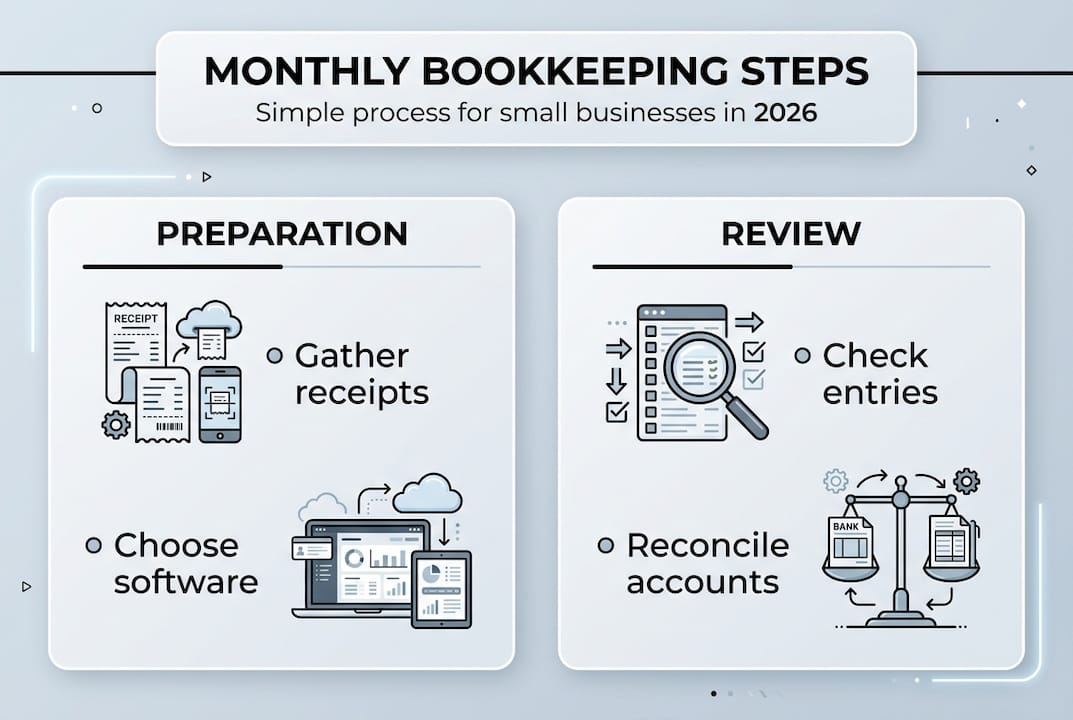
Start by gathering all financial documents from the previous month. This includes sales receipts, vendor invoices, bank statements, credit card statements, and payroll records. Create a dedicated folder, either physical or digital, where these documents live throughout the month. When it’s time to do your bookkeeping, everything is in one place.
Next, choose your bookkeeping system. Most small businesses benefit from cloud-based accounting software like QuickBooks Online, which automatically imports transactions and provides real-time access from anywhere. If you prefer manual methods, a well-organized spreadsheet or physical ledger can work, though it requires more discipline and time.
Establish a consistent schedule for your monthly bookkeeping tasks. Pick a specific date each month, ideally within the first week after month-end, when you’ll dedicate time to this work. Consistency builds habit, and habit reduces the mental resistance that makes bookkeeping feel like a chore.
Identify all accounts you need to track:
- Business checking accounts
- Savings accounts
- Credit cards used for business expenses
- Payment processor accounts like PayPal or Stripe
- Loan accounts
- Lines of credit
Create a bookkeeping checklist that covers every task you need to complete monthly. This becomes your roadmap, ensuring nothing falls through the cracks. Your checklist should include items like recording all income, entering expenses, reconciling accounts, and reviewing financial reports.
Pro Tip: Use cloud-based bookkeeping tools for real-time access and automatic backups. This protects your financial data from computer crashes and lets you check your numbers from your phone when needed.
Here’s a preparation checklist to get started:
| Preparation Task | Why It Matters |
|---|---|
| Gather all receipts and invoices | Ensures complete expense tracking and supports tax deductions |
| Choose accounting software | Automates transaction imports and simplifies reporting |
| Set monthly bookkeeping date | Creates consistency and prevents backlog |
| List all financial accounts | Ensures comprehensive tracking of money movement |
| Create task checklist | Provides clear roadmap and prevents missed steps |
Step-by-step monthly bookkeeping process
With preparation complete, follow this systematic approach to handle your monthly bookkeeping efficiently and accurately. Tracking income and expenses accurately each month is critical for business financial health and helps you understand where money comes from and where it goes.
Here’s your monthly workflow:
-
Record all income received. Enter every payment your business received during the month, including the date, amount, customer name, and invoice number. Don’t forget cash payments, which are easy to overlook. Match each payment to its corresponding invoice to track outstanding receivables.
-
Enter and categorize all expenses. Input every business expense with its receipt, date, vendor, amount, and appropriate category. Proper categorization matters because it affects your financial reports and tax deductions. Common categories include office supplies, marketing, utilities, professional services, and travel.
-
Reconcile bank accounts. Compare your bookkeeping records against your bank statements line by line. Every transaction in your bank statement should appear in your books, and vice versa. Mark transactions as cleared once verified. This process catches errors, fraudulent charges, and forgotten entries.
-
Reconcile credit card accounts. Follow the same reconciliation process for business credit cards. Verify each charge matches your records and that you’ve categorized everything correctly. Pay attention to recurring subscriptions that auto-charge monthly.
-
Update payroll information. If you have employees, ensure all payroll expenses, tax withholdings, and employer contributions are recorded accurately. Include your own owner’s draw or salary if applicable.
-
Review asset and liability accounts. Update loan balances, track depreciation on equipment and vehicles, and adjust prepaid expenses. These accounts often get neglected but significantly impact your financial picture.
-
Generate financial statements. Create or review your profit and loss statement and balance sheet. These reports show your business performance, cash position, and overall financial health for the month.
Pro Tip: Schedule bookkeeping tasks on the same day each month to build consistency and reduce backlog. Many business owners find the first Monday after month-end works well, when transactions have settled but details are still fresh.
Consider these bookkeeping tips for service owners to optimize your workflow further. Service-based businesses face unique challenges like tracking billable hours and project-based expenses that require special attention.
“The goal of monthly bookkeeping isn’t perfection on the first pass. It’s creating a reliable system that catches issues early and gives you confidence in your numbers when making business decisions.”
Break larger tasks into smaller chunks if your monthly volume feels overwhelming. Some business owners prefer weekly mini-sessions rather than one marathon monthly session. Find what works for your business rhythm and stick with it.
Verifying and reviewing your monthly bookkeeping records
Completing your bookkeeping entries is only half the battle. Verification ensures accuracy and catches mistakes before they compound into bigger problems. Monthly financial reviews help small businesses identify discrepancies and improve accuracy, turning bookkeeping from a compliance task into a strategic advantage.

Start your review by comparing your bank statement ending balance with your bookkeeping software’s cleared balance. These numbers must match exactly. If they don’t, you have unrecorded transactions, duplicate entries, or data entry errors to track down.
Look for these common bookkeeping errors:
- Duplicate transactions from manual entry and automatic imports
- Missing receipts or invoices that weren’t recorded
- Expenses categorized incorrectly affecting your reports
- Personal expenses mixed with business expenses
- Transposed numbers where digits got switched during entry
- Uncleared checks that never got cashed
- Bank fees or interest not recorded
Use a systematic approach to find discrepancies. Sort transactions by amount and look for duplicates. Review uncategorized items that might have been imported but not properly classified. Check that all major expenses have supporting documentation.
Create a comparison table to distinguish accurate bookkeeping from common mistakes:
| Accurate Practice | Common Mistake |
|---|---|
| Each transaction recorded once with receipt | Same expense entered manually and imported automatically |
| Business expenses only in business accounts | Personal purchases mixed with business spending |
| Specific category assigned to each expense | Everything dumped into “General Expenses” |
| All accounts reconciled monthly | Only checking account reconciled, credit cards ignored |
| Regular review of uncategorized items | Transactions left uncategorized for months |
Pay special attention to high-value transactions. A $5,000 equipment purchase miscategorized as office supplies significantly distorts your financial reports. Review these larger amounts individually to ensure proper treatment.
Adopt top bookkeeping habits that maintain clean financial data over time. Small consistent actions prevent the need for major cleanup projects later.
Pro Tip: Set aside a monthly review session with your accountant or bookkeeper for expert feedback. A professional can spot patterns you might miss and suggest improvements to your system. This investment in quality control pays dividends during tax season and when you need accurate numbers for business decisions.
Reconcile financially significant accounts separately. If you have multiple revenue streams or cost centers, review each one individually rather than looking only at totals. This granular approach reveals trends and issues that aggregated numbers hide.
Document any adjustments you make during your review. Note why you reclassified an expense or corrected an entry. This creates an audit trail and helps you avoid repeating the same mistakes next month.
Streamline your bookkeeping with expert help
You’ve learned the fundamentals of monthly bookkeeping, but implementing and maintaining this system takes time you might not have. Professional bookkeeping support can save time and reduce errors in your monthly financial records, letting you focus on growing your business instead of wrestling with spreadsheets.
Kenworthy Bookkeeping offers tailored monthly bookkeeping services for small businesses in Kansas City. We handle the entire process from transaction recording through reconciliation and financial reporting, using QuickBooks Online to keep your data organized and accessible.

Our bookkeeping consultation services help customize your bookkeeping workflow for maximum efficiency and compliance. We’ll assess your current system, identify gaps, and create a streamlined process that fits your business needs. Whether you need full-service monthly bookkeeping or just guidance setting up your own system, we provide the expertise and support to keep your finances on track.
Pro Tip: Early investment in bookkeeping services often pays off with better financial control and growth. Clean, accurate books help you secure financing, make confident pricing decisions, and spot profit opportunities you might otherwise miss.
Frequently asked questions about monthly bookkeeping
What tasks should I complete every month for bookkeeping?
Every month, record all income and expenses, reconcile bank and credit card accounts, update payroll information, review asset and liability balances, and generate financial statements. Following this bookkeeping basics guide ensures you maintain accurate, complete records that support tax compliance and business decisions.
How long should monthly bookkeeping take for a small business?
Most small businesses need two to four hours monthly for bookkeeping tasks, depending on transaction volume and system complexity. Service businesses with fewer transactions often finish faster, while retail or e-commerce businesses with high transaction volumes may need more time. Using automated tools and maintaining organized records throughout the month reduces this time significantly.
What’s the difference between bookkeeping and accounting?
Bookkeeping involves recording daily financial transactions, categorizing expenses, and reconciling accounts. Accounting takes that data and analyzes it to create financial statements, provide tax planning, and offer strategic financial advice. Think of bookkeeping as data entry and organization, while accounting is interpretation and strategy. Most small businesses need both functions.
Can I do my own bookkeeping or should I hire a professional?
You can handle your own bookkeeping if you have time, attention to detail, and basic financial knowledge. However, many business owners find that hiring a professional saves time, reduces errors, and provides peace of mind. Consider the value of your time and whether bookkeeping hours could be better spent on revenue-generating activities. Even if you do your own bookkeeping, having a professional review your work quarterly catches issues early.
What happens if I skip monthly bookkeeping?
Skipping monthly bookkeeping creates a backlog that becomes increasingly difficult and time-consuming to fix. You lose visibility into your financial position, making it harder to manage cash flow and make informed decisions. Come tax time, you’ll face a scrambling rush to organize records. Regular monthly bookkeeping prevents these problems and keeps your business finances healthy and compliant.